随着居民日常生活水平持续提升,养殖等领域优质蛋白需求大幅增加,供给存在不足。与此同时,城市餐厨垃圾产量大,传统处置工艺碳排放高、资源转化效率低、能耗偏高。蛋白供给缺口与餐厨废弃物处置难题叠加显现,亟需构建高效协同的资源化解决方案。
日前,中国科学院天津工业生物技术研究所开发出一套两阶段食品废弃物生物转化系统,实现了厨余垃圾向单细胞蛋白和油脂的高效转化。
研究团队通过微氧化或热处理工艺预处理厨余垃圾,发酵生成有机酸,提升废弃物可降解性,再借助海洋来源的微生物裂殖壶菌,将有机酸中的乳酸高效转化为单细胞蛋白。
After process optimization, each ton of kitchen waste is currently expected to produce 258.23kg of organic acid. The "conversion expert" Schizochytrium was selected for the study, using organic acids such as lactic acid and acetic acid as carbon and energy sources, and converting them into precursor molecules required for the synthesis of cellular materials through cellular metabolism. It can consume 90% of the organic acids within 48 hours, simultaneously synthesize bacterial proteins and intracellular lipids, and achieve efficient accumulation of single-cell proteins and lipids.
To put it simply, the core idea of this technology is to first decompose kitchen waste into "feed" for microorganisms, and then let the microorganisms "eat" to synthesize protein.
The team assessed that this bioconversion technology route can reduce greenhouse gas emissions and energy consumption, and can ultimately convert kitchen waste into high value-added protein and oil products, achieving "turning waste into treasure".
两类产物具有应用价值。所得单细胞蛋白可作为水产养殖、畜禽养殖等领域的优质蛋白原料,替代部分鱼粉、豆粕等传统饲料蛋白;裂殖壶菌合成的油脂富含二十二碳六烯酸(DHA)等多不饱和脂肪酸,可应用于功能食品、营养补充剂及饲料添加剂等领域。
未来,这项技术有望走进实际应用场景,让难以处置的食品废弃物创造新价值,助力构建绿色可持续的循环经济体系。
相关研究成果发表在Journal of Cleaner Productionsuperior.
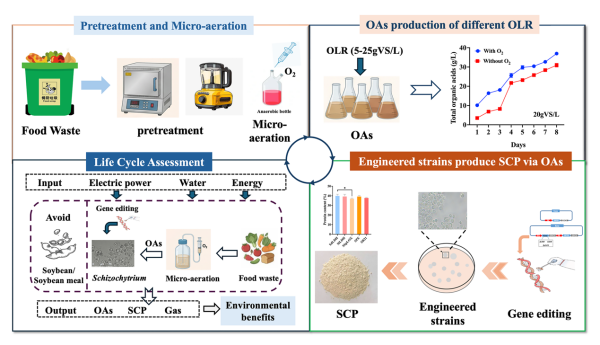
食品废弃物两阶段生物转化成单细胞蛋白和油脂
Source: https://www.cas.cn/syky/202608/t20260828_5119250.shtml