Two-dimensional transition metal borides have broad application prospects in the field of electrochemical energy storage due to their unique electronic structure, high conductivity and rich surface chemical properties. Molybdenum boride (MoB) can be obtained by selectively etching away the aluminum (Al) layer in layered molybdenum aluminum boron (MoAlB). However, this method often faces problems such as incomplete Al removal and re-stacking of MoB layers after etching, making it difficult to achieve two-dimensional nanosheets.充分剥离. This will reduce the available surface area of the material and prevent electrolyte ions from entering the interlayer active sites, thus restricting the performance of MoB in high-rate energy storage devices.
近日,中国科学院大连化学物理研究所科研团队在二维过渡金属硼化物的可控制备及微型储能应用方面取得进展。团队发展了一种无水锂离子溶剂辅助剥离策略,可将MoAlB衍生的层状MoB转化为高质量二维MoB纳米片,并构建了高性能微型超级电容器和柔性集成微系统。
研究采用氯化锌(ZnCl2)熔盐刻蚀法,选择性去除MoAlB中的Al层,得到具有Cl/O混合表面端基的层状MoB。随后,团队引入无水氯化锂-二甲基亚砜(LiCl–DMSO)插层策略,利用Li+–DMSO溶剂化配合物扩大层间距,并结合温和超声处理,制备出少层剥离MoB(d-MoB)纳米片。该纳米片物相纯度高、表面氧化程度低,平均厚度约3nm,横向尺寸约300nm,有效Increased contact surface area.
结合实验表征与理论计算,科研人员进一步阐明了溶剂辅助插层作用机制。相较于水合Li+,Li+–DMSO配合物具有较强的进入MoB层间并促进结构膨胀的能力。密度泛函理论计算表明,Li+–DMSO在MoB表面可实现良好吸附并产生电子局域效应。不同溶剂的对照插层实验也证实,Li+The solvation and coordination environment have an important impact on the interlayer expansion and peeling efficiency.
得益于少层结构、更多暴露的活性表面和缩短的离子传输路径,d-MoB纳米片展现出增强的电化学性能。基于该材料制备的平面叉指微型超级电容器,面积比电容为102.4mF cm−2, area energy density is 4μWh cm−2,并可在低至−30°C的条件下稳定工作。
团队还将微型超级电容器与无线充电线圈、d-MoB基压力传感器集成,构建了柔性无线充电—储能—传感微系统,展示了d-MoB在微型储能和柔性电子领域的应用潜力。
相关研究成果发表在《美国化学会志》(Journal of the American Chemical Society)上。研究工作得到国家自然科学基金等的支持。
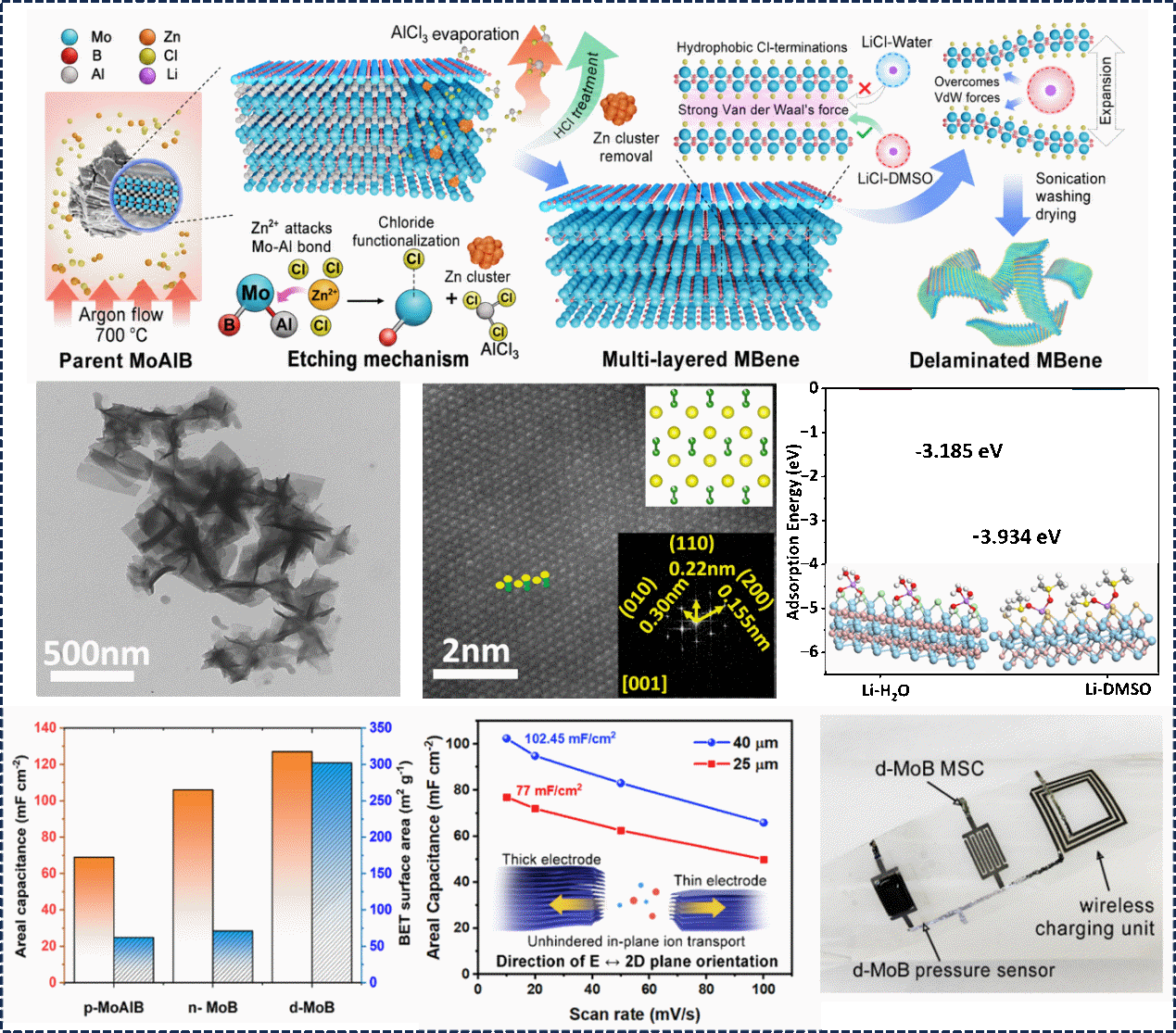
研究实现二维硼化物可控制备及微型储能应用
Source: https://www.cas.cn/syky/202608/t20260821_5118789.shtml