point
① Deep earthquakes (*1) and rock weakening are two contradictory mysteries in the Earth's deep plates.
② Discovered that phase change nanoparticles switch between “seismic slip” and “stable deformation” depending on temperature
③ Contributing to the understanding of Earth's unique plate movements and mantle convection
overview
It is known that two contradictory phenomena, ``deep earthquakes'' and ``plate weakening,'' occur at depths of about 400 to 700 km on oceanic plates that are subducting deep into the earth. However, the mechanism by which solid plates under ultra-high pressure crack and cause earthquakes, and why they weaken at the same time, were not fully understood. This research has experimentally revealed for the first time in the world that these two phenomena can be explained in a unified manner by the planar structure of nanoparticles and their deformation, which are formed as a result of the phase transition of minerals.
The research group includes Rikuto Honda, a doctoral student at the Kyushu University Graduate School of Science (at the time of the research, currently a part-time researcher at the Kyoto University Geothermal Research Institute), and Professor Tomoaki Kubo of the Faculty of Science.Associate Professor Masaaki Miyahara of the Hiroshima University Graduate School of Advanced Science and Engineering, Associate Professor Akio Suzuki of the Tohoku University Graduate School of Science, and High Energy In collaboration with Assistant Professor Hiroki Shibasaki of the Materials Structure Science Institute of the KEK (KEK), we conducted deformation experiments on olivine under high pressure conditions of approximately 20 GPa, equivalent to 600 km underground, and analyzed the results by combining in-situ synchrotron radiation observation and acoustic emission (AE) (*2) measurements. As a result, they discovered that when olivine undergoes a phase transition to ringwoodite (*3), a planar structure of nanoparticles is formed, and deformation is concentrated there. Furthermore, they revealed that the properties of these phase-transition nanoparticles change with temperature, causing seismic slip at low temperatures and weakening rocks through stable deformation at high temperatures.
The results of this study will provide a unified explanation of the occurrence of deep earthquakes and plate weakening, and will greatly contribute to the understanding of Earth's unique plate tectonics-type mantle convection. The results of this research were published in the international academic journal "Nature Communications" on April 16, 2026.
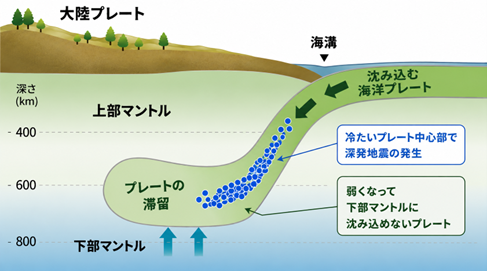
(Figure 1) Occurrence of deep earthquakes and plates
Stagnation
...Deep earthquakes are distributed along the cold core within a subducted oceanic plate at a depth of approximately 400 to 700 km. On the other hand, the plate bends around 600 km and stagnates above the lower mantle. In this way, the contradictory phenomena of earthquake occurrence and plate weakening and retention occur simultaneously in the same depth region.
A word from Dr. Honda:
The moment I observed AE and stress drop simultaneously for the first time, I was very surprised and excited, thinking that we had truly been able to reproduce a deep earthquake in the laboratory. In the future, we would like to investigate in more detail how the mechanism of deep earthquake occurrence changes depending on depth.
Research background and history
Unlike other rocky planets such as Mars and Venus, Earth's oceanic plates, which are cooled at the surface, sink into the Earth's interior. There are two major mysteries surrounding this deep plate movement in the Earth (Figure 1). One type is deep earthquakes, which most often occur at a depth of around 600 km. Since earthquakes occur in high-pressure environments where normal rock fractures cannot occur, their mechanism has remained a mystery for many years since their discovery in the 1920s. On the other hand, since the 1990s, a phenomenon in which plates bend and stagnate in the same region has been observed, particularly under Japan (plate stagnation (*4)). Why does a plate that is supposed to be cold and hard become weak and deform? This is also another big mystery. Until now, it has been thought that phase transitions in the olivine that composes plates are involved in deep earthquakes and plate weakening, but no experimental evidence has been obtained to explain both in a unified manner.
Research content and results
Using the D-111 high-pressure deformation device (*5) installed at beamline NE7A at Kyushu University and the KEK Synchrotron Radiation Facility (PF-AR), we conducted a deformation experiment on olivine under high pressure of approximately 20 GPa, which corresponds to a depth of approximately 600 km (Figure 2). The relationship between the deformation and phase transition that occurs at this time was investigated in detail by in-situ synchrotron X-ray observations (*6) and AE measurements, as well as by electron microscopy of recovered samples. The results revealed that a planar structure consisting of particles of several tens of nanometers is formed during the phase transition of olivine to ringwoodite. This structure is very weak compared to the surrounding olivine, and it was observed that deformation was concentrated there, forming a phase transition fault (Figure 3).
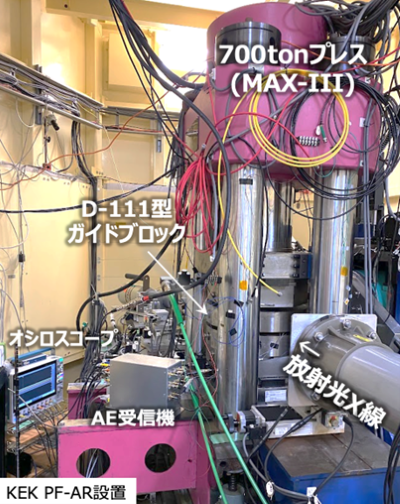
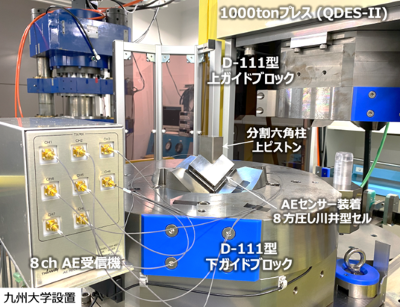
(Figure 2) D-111 type high pressure deformation device and AE measurement system
An experimental system that reproduces the high-pressure environment where deep earthquakes occur and simultaneously performs in-situ observation using synchrotron radiation X-rays and AE measurements. The sample is placed in a cell that is pressurized from eight directions and deformed from above and below. Mechanical behavior during deformation and AE signals associated with microfractures can be recorded simultaneously.
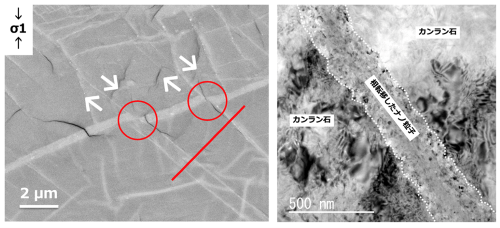
(Figure 3) Planar structure and deformation concentration of nanoparticles formed due to phase transition (electron microscopy observation)
The figure on the left shows how deformation is concentrated along the planar structure (white band) formed in olivine, causing faults (white arrows, red circles). The image on the right is an enlarged image of its planar structure (red line in the image on the left), and it can be seen that it is composed of ringwoodite nanoparticles formed by phase transition from olivine. The planar structure of such nanoparticles is weaker than the surrounding crystals and acts as a weakened zone where deformation is locally concentrated.
More importantly, the behavior of these phase-transition nanoparticles changes significantly with temperature. At approximately 760 to 860°C, rapid declines in rock strength and AE occurred repeatedly at the same time, and a phenomenon corresponding to earthquakes (seismic slip) was observed (Figure 4). On the other hand, at higher temperatures, no stress drop or AE is observed, and the phase change nanoparticles spread throughout the sample, which stabilizes the deformation and weakens the entire rock.
These results show that phase transition nanoparticles are a common factor causing deep earthquakes and plate weakening, and that the interaction between phase transition and deformation changes with temperature, which can explain both in a unified manner.
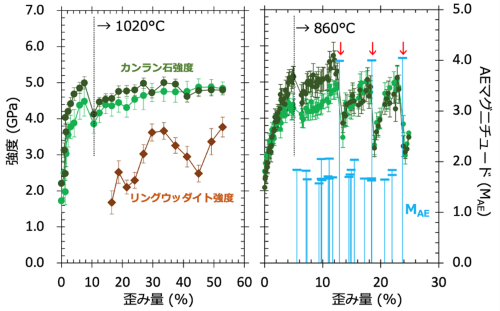
(Figure 4) Rock deformation behavior that changes with temperature and occurrence of seismic slip
Under low-temperature conditions (860℃, right), the strength of olivine (green) rapidly decreases, and at the same time large AE (light blue) occurs, and unstable slip corresponding to earthquakes is observed (red arrow). On the other hand, under high temperature conditions (1020℃, left), no such stress drop or AE is observed, deformation progresses stably, and ringwoodite (brown) with low strength is predominant. Pressure is about 20GPa, deformation speed is about 4.1-8.5x10⁻⁵/s.
Future developments
The deformation mechanism of deep plates revealed in this study is closely related to surface geological activity and material circulation within the Earth, and will provide important clues to our understanding. In order to elucidate these phenomena, further development of experimental technology that reproduces the deep earth environment and observes it in situ is essential. In recent years, high-speed in-situ observations on a subsecond scale using synchrotron radiation have become possible, and it is expected that our understanding of dynamic phenomena in the Earth's interior, such as plate earthquakes and mantle convection, will make even greater progress in the future.
Glossary
(*1) Deep earthquake
Earthquakes occur inside subducted plates at a depth of approximately 400 to 700 km (Figure 1). The epicenter is characteristically distributed in a planar manner in the particularly cold part of the plate, and is called a ``deep earthquake surface.'' Large-scale earthquakes with a magnitude of 8 may occur.
(*2) Acoustic emission (AE)
High-frequency elastic waves that are generated due to microscopic fractures in materials. In this study, we investigated microfractures and seismic slips that occur inside a sample by detecting them with a piezoelectric element attached to a high-voltage device and recording them with an oscilloscope.
(*3) Ringwoodite
Olivine is a high-pressure phase mineral that is stable in a high-pressure environment approximately 520 to 660 km underground. It is formed by phase transition of olivine under high pressure inside a subducting plate, and its relationship with deep earthquakes and plate deformation is attracting attention.
(*4) Plate stagnation
A phenomenon in which a subducted plate bends significantly at a depth of approximately 400 to 700 km, spreads horizontally, and stagnates (Figure 1). It is especially observed under the western Pacific Ocean. It has been pointed out that the cold plate itself is becoming weaker than expected due to multiple factors, including resistance from the lower mantle and receding ocean trenches.
(※5) D-111 type high pressure deformation device
An experimental device that can compress rock samples from eight directions and apply force from two more directions to deform them under high pressure. Although the sample is small (mm scale), it is suitable for experiments under high pressure conditions such as deep in the earth. By using synchrotron radiation, it is possible to observe the state of the sample during deformation on the spot.
(*6) In-situ observation using synchrotron radiation X-rays
Synchrotron radiation is high-brightness, high-energy light generated by an accelerator, which allows us to examine the internal structure and state of matter in detail. In this study, it was used to observe the strength and deformation of samples on the spot.
Acknowledgment
This research was supported by JSPS Scientific Research Grants (JP18H05232, JP25247089, JP24H00274, JP23KJ1743). Synchrotron radiation utilization experiments at PF-AR were carried out as part of the High Energy Accelerator Research Organization (High Energy Accelerator Research Organization), Institute of Materials Structure Science, Synchrotron Radiation Joint Use Experiment Project (Project Numbers: 2018G591 and 2020G672).
Paper information
Magazine: Nature Communications
Title: The olivine-ringwoodite transformation triggers deep slab seismicity and rheological weakening
Author name: Rikuto Honda, Tomoaki Kubo, Masaaki Miyahara, Takuya Iwasato, Yuichiro Mori, Yuji Higo, Yumiko Tsubokawa, Yuta Goto, Akio Suzuki & Yuki Shibazaki
DOI: 10.1038/s41467-026-71661-z
- Press release material (1.57 MB)
- Publication journal (Nature Communications)
- Hiroshima University Researcher Guidebook (Associate Professor Masaaki Miyahara)
Tomoaki Kubo, Professor, Faculty of Science, Kyushu University
TEL: 092-802-4195
Mail: kubo.tomoaki.037*m.kyushu-u.ac.jp
Kyushu University Public Relations Division
TEL: 092-802-2130 FAX: 092-802-2139
Mail: koho*jimu.kyushu-u.ac.jp
Hiroshima University Public Relations Group
TEL: 082-424-4518 FAX: 082-424-6040
Mail: koho*office.hiroshima-u.ac.jp
Tohoku University Graduate School of Science Public Relations and Outreach Support Office
TEL: 022-795-6708
Mail: sci-pr*mail.sci.tohoku.ac.jp
High Energy Accelerator Research Organization Public Relations Office
TEL: 029-879-6047
Mail: press*kek.jp
(Please replace * with half-width @)