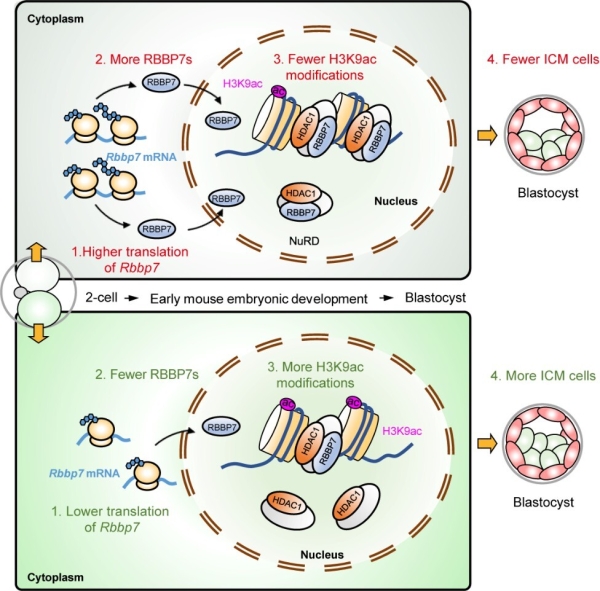
The first cell fate decision of a fertilized mammalian egg is a core scientific issue in developmental biology and is also relevant to embryo quality assessment in assisted reproduction. Although previous studies have revealed that the two-cell stage non-coding RNA LincGET mediates fate bias, the key protein factors that regulate this process have not yet been identified.
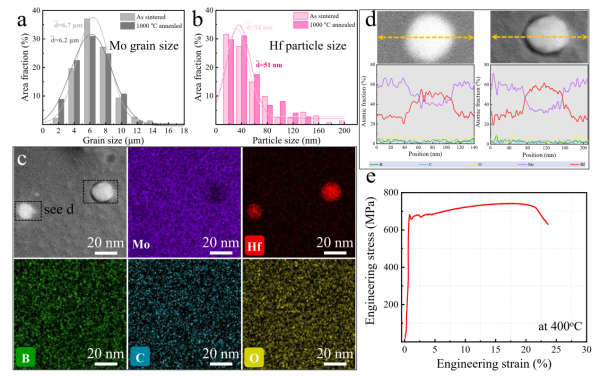
Recently, the Hefei Institute of Physical Sciences, Chinese Academy of Sciences, has made progress in the research of high-performance molybdenum alloys. By designing a solid-state reaction, the research team used HfB 2 to react with impurity oxygen in molybdenum powder to form high-density, highly thermally stable and evenly distributed nano-Hf particles inside the molybdenum grains. This solved the problem of traditional dispersed particles being prone to agglomeration and coarsening, and achieved a synergistic improvement in the strength, plasticity and high-temperature stability of molybdenum alloys.
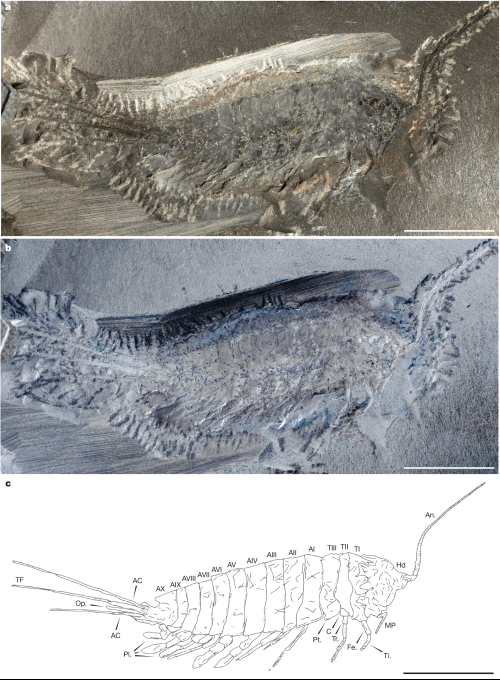
The establishment of complex terrestrial ecosystems is a milestone in the history of the evolution of life on Earth. It marks the complete escape of life from the constraints of the ocean and opens a new stage in the evolution of terrestrial biodiversity. Molecular clock estimates, trace fossils, and evidence from specific buried biota indicate that the evolutionary process of arthropod landings can be traced back to the Cambrian-Ordovician period, much earlier than recognized by traditional fossil records. As the animal group with the highest species diversity on Earth, there has been a long-standing research gap in the early origins and landing evolution history of insects.