[Points of this research result]
- Among the Edaashi jellyfish that inhabit the Tohoku region, there are a light type that releases gametes in response to light stimuli (dark → light) and a dark type that releases gametes in response to dark stimuli (light → dark), and both types coexist in Mutsu Bay and some areas of the Sea of Japan.
- There are differences in the DNA base sequences of the light and dark types, suggesting that the two types belong to systematically different groups.
- Individuals obtained by crossing light and dark types (F1 hybrids) developed normally and exhibited an intermediate property of releasing gametes under both light and dark stimuli. However, the next generation could not be obtained from the F1 hybrid.
- Since there was reproductive isolation both before and after mating between the light and dark types of Edaashi jellies, it is inferred that the two types are in the process of speciation or are already separate species.
【overview】
Many jellyfish release gametes (females release eggs, males release sperm) in response to changes in light. It is broadly divided into species that release gametes in response to light stimuli (dark → light) and species that respond to dark stimuli (light → dark), and it has been thought that Edaashi jellyfish have both types (light type and dark type) within the same species. This time, a research group led by researcher Noriyo Takeda of the Hiroshima University Graduate School of Integrated Life Sciences, professor Ryusaku Deguchi of the Miyagi University of Education Graduate School of Education, associate professor Kazunori Tachibana of the Tokyo University of Science, and research director Hiroshi Namikawa of the National Museum of Nature and Science conducted a detailed analysis of the relationship between the light and dark types of Edaashi jellyfish that live in the Tohoku region. Field research revealed that both types coexist in parts of Mutsu Bay and the Sea of Japan, and that gamete release times actually differ even in the field. Additionally, DNA analysis revealed that there are differences in the base sequences of the light and dark types, suggesting that the two types belong to different systematic groups. Furthermore, as a result of crossbreeding experiments, it was shown that individuals obtained by crossing light and dark types (F1 hybrids) exhibit an intermediate property of releasing gametes under both light and dark stimuli, but that F1 hybrids are unable to produce the next generation. Both premating and postmating reproductive isolation exists between the light and dark types of Edaea jellyfish.(Note 1)This suggests that both types are in the process of speciation, or that they are already separate species. Differences in response to the light environment caused shifts in the time of gamete release, which may have led to speciation, and this is considered an extremely important discovery in elucidating the mechanism of biological evolution.
The results of this research are scheduled to be published in the scientific journal Zoological Science, Volume 43, Issue 3 (June 2026). The preliminary version will be published in March 2026.
[Paper information]
Title: Light and dark types ofCladonema pacificum(Cnidaria, Hydrozoa): Reproductive isolation between the two types leading to speciation
Author: Noriyo Takeda, Takahito Hoshi, Fumiya Satoh, Keita Nishizumi, Nahomi Hongo-Yamakawa, Saki Ishimori, Haruka Satoh-Sugawara, Hiroshi Namikawa, Kazunori Tachibana, Ryusaku Deguchi* (*Corresponding author)
Journal: Zoological Science 43 (3)
DOI: 10.2108/zs250033
URL: https://doi.org/10.2108/zs250033
【background】
In many jellyfish, the timing of gamete release (egg release in females and sperm release in males) is determined by changes in the light environment. Each species is roughly divided into either the ``light type,'' which releases gametes when the light changes from a dark state, or the ``dark type,'' which releases gametes when the light becomes dark. It has been known that Edaashi jellyfish coexist within the same species, with light and dark types (Figure 1), which are morphologically indistinguishable, but the distribution range, phylogenetic relationships, and traits of offspring of both types were completely unknown. Therefore, in this study, we conducted a detailed analysis of the Edaashi jellyfish that inhabit the Tohoku region and aimed to clarify the relationship between the two types.
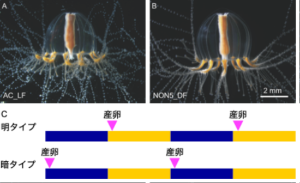
Figure 1. Edaashi jellyfish (Cladonema pacificum) light type and dark type
A. B are micrographs of the light type (AC_LF) and dark type (NON_DF).
C is the timing of spawning of light and dark types.
[Contents of research results]
The Edaashi jellyfish is a semi-sessile jellyfish that lives attached to seaweed and is distributed along the coasts of Japan. In this study, we collected Edaashi jellyfish from multiple coastal areas in the Tohoku region and confirmed in the laboratory whether they release gametes in response to light or dark stimuli. As a result, it was found that only the dark type was mainly seen on the Pacific side, whereas the light and dark types inhabited the same areas in Mutsu Bay and parts of the Sea of Japan side (Figure 2). Field observations of both types, which live in the same place, revealed that the gamete release times were actually very different, and it was thought that there was almost no chance for eggs and sperm of the different types to meet. Also, COI of mitochondrial DNA(Note 2)and nuclear DNA ITS1(Note 3)Analysis of the nucleotide sequences suggested that both types belong to systematically different groups. Furthermore, individuals obtained by crossing light and dark types (F1 hybrids) exhibited intermediate characteristics, releasing gametes under both light and dark stimuli, but not releasing gametes unless there was a greater change in light.However, the next generation could not be produced from eggs or sperm of F1 hybrids. These results suggest that there is a difference between the light type and the dark type due to pre-mating isolation due to differences in gamete release time and hybrid sterility.(Note 4)It was shown that reproductive isolation of both post-mating isolation and post-mating isolation is established. It is speculated that both types are in the process of speciation or are already separate species.
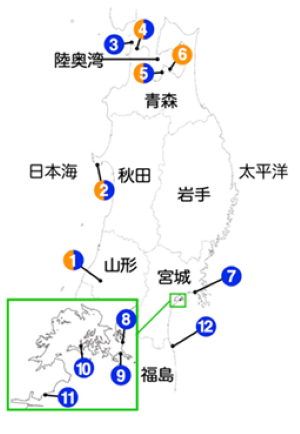
Figure 2. Distribution map of Edaashi jellyfish that inhabits the Tohoku region
The blue circle indicates the dark type, and the orange circle indicates the name type.
[Future development]
This study showed that differences in response to light environments may be the driving force that leads to reproductive isolation and speciation in jellyfish. In the future, by clarifying the differences in the substances involved in photoreception between the light and dark types at the molecular level, we may be able to understand how both types have "evolved." Edaashi jellyfish are easy to collect and raise, and methods for controlling their life cycle in the laboratory have been established (Figure 3). It has also been selected for the National Institute for Basic Biology's ``Joint Research on Development of New Model Organisms'', and(Note 5)In addition to analysis, distribution of individuals and sharing of breeding and experimental techniques are underway. In the future, it is expected that various studies using Edaashi jellyfish will be developed.
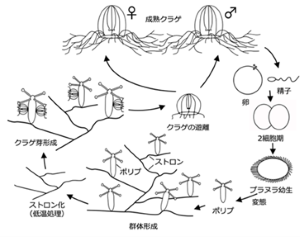
Figure 3. Life cycle of Edaashi jellyfish
[Acknowledgment]
This research was supported by the Japan Society for the Promotion of Science Grants-in-Aid for Scientific Research (Project Numbers 17K07482, 20K06736, 20K21421, 24K09593) and the Fisheries Invertebrate Research Institute.
[Term explanation]
Note 1. Reproductive isolation: The inability of multiple biological populations to interbreed with each other due to some genetic differences. There is pre-mating isolation due to differences in appearance locations and gamete release times, and post-mating isolation including resulting offspring being sterile.
Note 2. COI: cytochrome C oxidase subunit I gene on mitochondrial DNA. It is often used for species identification because there is large variation in base sequences between species.
Note 3. ITS1: internal transcribed spacer 1 on nuclear DNA (located between 18S and 5.8S rRNA genes). Like COI, there is large variation in the base sequence between species.
Note 4. Hybrid sterility: A situation in which hybrids obtained through cross-breeding lack reproductive ability. In the case of F1 hybrids of Edaashi jellyfish, the female releases eggs and the male releases sperm, and the fertilized eggs can develop into planula larvae, but are unable to metamorphose into polyps.
Note 5. Genome: The entire genetic information of an organism (all DNA base sequences).
Noriyo Takeda
Hiroshima University Graduate School of Integrated Life Sciences
e-mail: ntakeda*hiroshima-u.ac.jp
Exit Ryusaku
Miyagi University of Education Graduate School of Teaching
E-mail: deguchi*staff.miyakyo-u.ac.jp
Hiroshima University Public Relations Group
e-mail: koho*office.hiroshima-u.ac.jp
(Please replace * with half-width @)