A research group led by Lecturer Keisuke Kobayashi, Lecturer Kenichiro Nagai, Professor Emeritus Hiroshi Toda, Professor Taichi Oshiro, and Professor Shinichi Nishimura of the Graduate School of Integrative Life Sciences, Hiroshima University, from Kitasato University's Faculty of Pharmaceutical Sciences, is conducting research on the fungal-derived peptide ``nectriatide'' and its derivatives (NCTs) to improve the effectiveness of the existing antifungal drug amphotericin B (AmB).*1We have biochemically elucidated the mechanism that enhances the effect of
In this study, NCTs were derived from the fungal cell membrane lipid ergosterol (Erg).*2We have revealed a new mechanism of action that enhances AmB's antifungal effect by binding to AmB and accumulating it in the cell membrane.
This finding that a compound that does not exhibit antifungal activity on its own can enhance the effectiveness of existing drugs has important implications as a new drug discovery strategy that compensates for the shortcomings of existing drugs and maximizes their potential.
The results of this research were published in the international academic journal "ACS Omega" on May 13, 2026.
Key points of research results
◆ NCTs, a compound that shows no antifungal activity, potentiates the effect of existing antifungal drug AmB by up to 32 times
◆ Elucidation of a new mechanism of action in which NCTs bind to the fungal cell membrane lipid ergosterol and accumulate AmB in the membrane.
◆ NCTs do not increase the cytotoxicity of AmB and are expected to be applied to treatments with reduced side effects
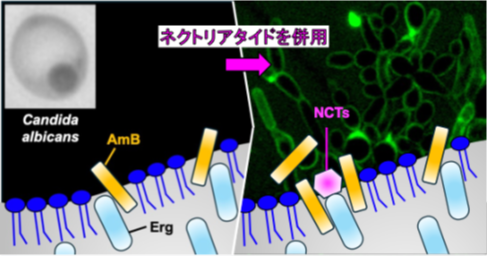
Figure 1 Schematic diagram of research results
Nectriatide and its derivatives (NCTs) bind to Erg;Candida albicansAccumulates AmB on the cell membrane of cells and enhances the antifungal activity of AmB.
Research background
Deep fungal infections are increasing worldwide due to the increase in immunocompromised patients and COVID-19 infected patients, and are infectious diseases that cause serious symptoms. In particular, Candida genus fungi are one of the main causative agents of deep-seated mycoses. Although amphotericin B (AmB), a typical therapeutic drug, has strong fungicidal activity and a broad antifungal spectrum, it exhibits side effects such as nephrotoxicity, and ensuring safety in clinical practice is a major issue.
Therefore, the research group came up with the idea that if there is a compound that enhances the effect of AmB even though it does not exhibit antifungal activity, it might be possible to maintain and enhance the therapeutic effect while reducing the dose of AmB, and has been conducting exploratory research using microbial resources. This approach is attracting attention as a new drug discovery strategy called "potentiator" that strengthens existing drugs.
Research content and results
In this study, we investigated a compound (potentiator) that enhances the effect of AmB.*3), we used the fungal-derived cyclic tetrapeptide "nectoriatide" and its derivatives (NCTs), which were discovered from microbial resources. Although these compounds do not exhibit antifungal activity (anticandida activity) alone, their antifungal activity is enhanced up to 32-fold when combined with AmB (Figure 2).
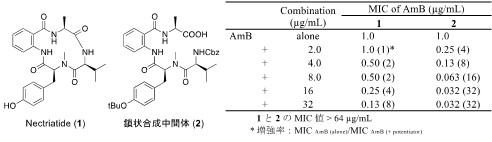
Figure 2 Structures of nectoriatide (1) and chain synthetic intermediate (2) and AmB antifungal activity enhancement effect
In order to clarify this mechanism of action, we created fluorescently labeled and biotin-labeled products and performed biochemical analysis. First, the fluorescent label was added to Candida (C. albicans), fluorescence localization to the cell membrane was observed, suggesting that NCTs bind to cell membrane components. Next, we conducted a binding test to cell membrane lipid molecules using the biotin-labeled product and found that it selectively binds to ergosterol, a lipid that specifically exists in fungal cell membranes. On the other hand, interestingly, NCTs did not bind to cholesterol present in human cell membranes, and supporting this result, NCTs did not enhance the hemolytic activity (cytotoxicity) of AmB. Furthermore, LC-MS analysis revealed that the coexistence of NCTs increases the amount of AmB that binds to Candida. AmB is also a drug that exerts antifungal activity by binding to ergosterol, and the mechanism of action was shown to be that NCTs act like a "glue" on the cell membrane, efficiently attracting AmB to the fungus and increasing its effect (Figure 1).
Based on the above results, this study demonstrated a potentiator strategy in which a compound without antifungal activity enhances the effects of existing drugs, and clarified its mechanism of action.
Future developments
The results of this study demonstrate the possibility of reducing the dosage of AmB and the frequency of its side effects by using NCTs in combination, and are expected to contribute to the development of safer antifungal treatments.
Furthermore, the concept of "potentiator" demonstrated in this study is a new strategy that is expected to be applied not only to antifungal drugs but also to other infectious disease treatments and drug discovery fields.
In the future, we will proceed with detailed drug efficacy evaluation and safety verification in animal models, and develop research with a view to clinical application.
Paper information
Magazine: ACS Omega
Paper title: Nectriatides with No Antifungal Activity Bind to Ergosterol and Potentiate the Antifungal Activity of Amphotericin B
Author: Kobayashi K, Miyake R, Nagai K, Sato Y, Seki R, Sakai-Kato K, Nishimura S, Ohshiro T, Tomoda H.
DOI:10.1021/acsomega.5c12037
■This research was accomplished with support from JSPS Scientific Research Grants JP19K05719, JP21K15284, JP22K05333, JP25K10019, Tokyo Biochemistry Research Group (currently Chugai Pharmaceutical Science Foundation), Pharmaceutical Research Foundation, and Kitasato University Academic Research Fund.
Glossary
*1 Amphotericin B (AmB)
Although it is a powerful antifungal drug, side effects are an issue.
*2 Ergosterol (Erg)
A lipid present in fungal cell membranes, which corresponds to cholesterol present in human cell membranes.
*3 Potentiator
Substances that do not exhibit pharmacological effects on their own, but enhance the effects of other drugs.
- Press release materials (375.05 KB)
- Article publication journal (ACS Omega)
- Hiroshima University Researcher Guidebook (Professor Shinichi Nishimura)
≪Research related≫
Department of Microbial Drug Manufacturing, Faculty of Pharmaceutical Sciences, Kitasato University
Professor Taichi Oshiro
e-mail: ohshirot*pharm.kitasato-u.ac.jp
Lecturer: Keisuke Kobayashi
e-mail: kobayashikei*pharm.kitasato-u.ac.jp
≪Regarding interviews≫
Kitasato Research Institute Public Relations Office
5-9-1 Shirokane, Minato-ku, Tokyo 108-8641
TEL: 03-5791-6422
e-mail: kohoh*kitasato-u.ac.jp
Hiroshima University Public Relations Group
1-3-2 Kagamiyama, Higashihiroshima City, Hiroshima Prefecture 739-8511
TEL: 082-424-4518
e-mail: koho*office.hiroshima-u.ac.jp
(Please replace * with half-width @)