overview
Associate Professor Atsushi Taruya of Kyoto University's Institute for Fundamental Physics, Special Researcher Kota Nomura of Kyoto University's Graduate School of Science, Associate Professor Atsushi Nishizawa of Hiroshima University's Graduate School of Advanced Science and Engineering, and Professor Noburo Himemoto of Nihon University's College of Industrial Science and Technology have searched for ultralight axions and dark photons, which are promising candidates for "dark matter," which accounts for about 27% of the total energy in the universe but whose identity is unknown. The research group has developed a new method that uses the Earth's magnetic field to treat the entire Earth as a "detector" (Figure 1).
The research group developed a new theoretical method that takes into account the electrical conductivity of the atmosphere, and expanded the searchable frequency range by incorporating electromagnetic responses in the Earth-ionosphere cavity. Using approximately 10 years of geomagnetic field data released by the British Geological Survey, they searched for extremely low-frequency electromagnetic waves produced by ultralight dark matter.
As a result, axion achieved limits that far exceeded conventional direct search experiments in a wide mass range, and obtained upper limits that were approximately 100 times stricter in some masses. We also achieved the world's highest sensitivity for direct ground-based searches for dark photons over a wide mass range, and found multiple signals that may originate from dark matter. Whether these signals actually originate from dark matter is expected to be verified through simultaneous observations around the world.
The results of this research were published in the Japanese academic journal "Progress of Theoretical and Experimental Physics" (PTEP) on May 23, 2026 and June 8, 2026 (papers 1 and 2, respectively), and in the American academic journal "Physical Review D" on May 11, 2026 (paper 3). A paper highlighting some of the results was published at PTEP on September 26, 2025 (Paper 4).
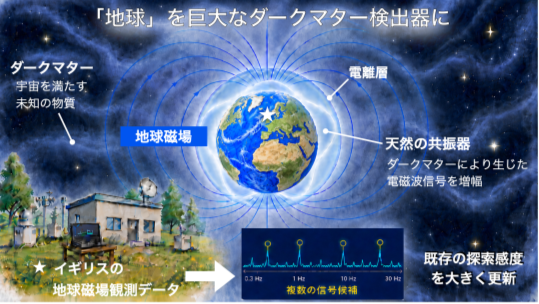
[Figure 1] Conceptual diagram of dark matter search using geomagnetic field data
Axions and dark photons generate extremely low-frequency electromagnetic waves due to the Earth's magnetic field and dynamic mixing, which are resonantly amplified within the Earth-ionosphere cavity. By analyzing approximately 10 years of data, we achieved the world's highest sensitivity in searching for signals derived from dark matter.
(Created by Himemoto and Taruie based on Open AI ChatGPT (GPT-5.5 Thinking))
1. background
Unknown matter in the universe “dark matter”Note 1” accounts for approximately 27% of the total energy, but its true nature is still unknown. A very wide range of mass candidates has been proposed, from 10⁻²² eV to 10⁶⁶ eV. "eV (electron volt)" is a unit often used to express the mass of elementary particles, and the mass of an electron is approximately 500,000 eV. In other words, dark matter candidates range from 27 orders of magnitude lighter than electrons to 60 orders of magnitude heavier, and we have almost no clues. One of the leading candidates “Axion”Note 2' is a particle proposed in 1977 to solve the 'strong CP problem' in particle physics, and this research focused on ultralight axions of 10⁻¹⁵ to 10⁻¹³ eV, which are 19 to 21 orders of magnitude lighter than the electron mass. Similarly, a strong candidate “Dark Photon”Note 3” is also subject to search.
Standard axion search experiments utilize the phenomenon of converting axions into light (electromagnetic waves) in a strong magnetic field, but there is a limit to the size of space in which a magnetic field can be applied in a laboratory. On the other hand, the earth's magnetic field spreads throughout the earth.注4has a spatial scale that cannot be realized in the laboratory, and interacts with axions to generate electromagnetic waves in the extremely low frequency band (ELF: 0.3 to 100Hz). This electromagnetic wave is the earth-ionosphere cavityNote 5is transmitted, and depending on the frequency, it is amplified by resonance. However, previous theories can only handle frequencies below 1Hz, and predictions at higher frequencies have not been possible. This research has developed a new theory to overcome this problem, expanded the search range to approximately 30Hz, and achieved the world's highest sensitivity (Figure 1).
2. Research methods/results
(1) Building a theoretical framework (paper 1 and paper 4)
Associate Professor Taruie, Associate Professor Nishizawa, and Professor Himemoto developed a new electromagnetic wave calculation method that takes into account the electrical conductivity of the atmosphere, and achieved reliable predictions even at high frequencies. According to this theory, the earth-ionosphere cavityNote 5It was found that the signal is strengthened at a specific frequency (approximately 8 Hz) due to the influence of turbulence, and that the strength and direction of the signal differ depending on the geographical location, indicating that high search sensitivity is expected, especially in Southeast Asia.
(2) Analysis of observational data and axion search (Papers 2 and 4)
Based on the theoretical predictions constructed in (1), Associate Professor Nishizawa, Associate Professor Taruya, and Professor Himemoto analyzed geomagnetic field data (approximately 10 years, from 2012 to 2022) from the Eskdalemuir Observatory published by the British Geological Survey. After removing artificial noise, we selected signal candidates based on the characteristic that dark matter continues to appear at a nearly constant frequency for a long period of time, as predicted by theory, and conducted statistical analysis. As a result, 10-15~10-13Axion-photon coupling constant that greatly exceeds CAST in a wide eV mass bandgaγNote 6I got the limit of (Figure 2 left). Especially at an axion mass of 3×10⁻¹⁴ eV,gaγ≲4×10-13GeV-1We obtained an upper limit that is about 100 times stricter than CAST. This result matches or exceeds the limits set by X-ray astronomical observations (Chandra/NuSTAR) obtained under certain theoretical assumptions, and has achieved the world's highest sensitivity as a ground search in this mass band.
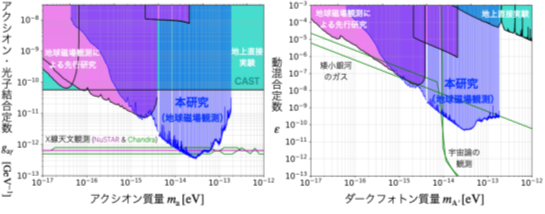
[Figure 2] Axion dark photon search results (95% confidence level)
Search results for ultralight "axions" (left) and "dark photons" (right) using geomagnetic field data observed over about 10 years. The horizontal axis represents the dark matter mass, and the vertical axis represents the strength of the coupling with photons. The smaller the value, the more sensitive the result is that it is possible to search for even weaker interactions. The area above the blue line represents the area excluded in this study, and other colors represent limitations due to conventional experiments and observations such as CAST. For Axion, we achieved a limit about 100 times stricter than CAST at a mass of around 3×10⁻¹⁴ eV, and for dark photons, we achieved the world's highest sensitivity limit as a direct search on the ground.
(3) Dark photon search (paper 3)
Special Researcher Nomura, Associate Professor Nishizawa, Associate Professor Taruya, and Professor Himemoto extended the theory in (1) to dark photons and quantitatively predicted signals in the high frequency band for the first time. Dark photons differ from axions in that they generate electromagnetic waves even in the absence of the Earth's magnetic field, so the expected signal characteristics are different. Analyzing the same data, we found that the mass range 10-15~2×10-13In eV, the dynamic mixing constant εNote 7Achieved the world's highest sensitivity limit as a direct ground search for (Figure 2 right).
3. Ripple effects/future plans
This research opens the door to utilizing existing geomagnetic field observation data in the search for dark matter, based on a new idea of using the entire Earth as a "dark matter detector." It can be applied to any equipment that can observe extremely low frequency bands (ELF: 0.3 to 100Hz), and it is possible to utilize the observation network that has been established around the world without constructing new special large-scale experimental equipment, so it is expected to develop into a low-cost, wide-area dark matter search. In the future, we hope to conduct follow-up observations and simultaneous analysis at multiple observatories targeting the signal candidates found in this research. In particular, axion-derived signals exhibit different characteristics depending on the structure of the earth's magnetic field at each observation point, while dark photons show almost no geographical differences, so it is possible to identify the identity of signal candidates and even the type of dark matter from these differences. The theory developed in this research is expected to serve as the basis for next-generation dark matter exploration.
4. About the research project
This research was supported by Grants-in-Aid for Scientific Research (JSPS KAKENHI).
Atsushi Taruya (assignment number: JP20H05861, JP23K20844, JP23K25868, JP26H02044)
Atsushi Nishizawa (assignment number: JP23K03408, JP23H00110, JP23H04893)
Nobuo Himemoto (assignment number: JP21K03580, JP25K07288)
Kota Nomura (assignment number: JP24KJ0117, JP25K17389)
We also used geomagnetic field data and geomagnetic reference field (IGRF-13) models published by the British Geological Survey (BGS) from Eskdale Muir Observatory, and received valuable information on extremely low frequency magnetic field measurements from KAGRA's Physical Environment Monitoring Group.
Glossary
Note 1. Dark matter:An unknown substance that accounts for approximately 27% of the total energy in the universe. Although they cannot be directly observed because they do not emit light, their existence has been confirmed through observations such as the rotational speed of galaxies and gravitational lensing effects.
Note 2. Axion:A virtual particle proposed in 1977 to solve the ``strong CP problem'' that interacts weakly with photons. A promising dark matter candidate, with an originally assumed mass of 10-6~10-3eV, but string theory and other theories suggest lighter "axion-like particles (ALPs)", and this research has a mass of 10-15~10-13Targets ultra-lightweight bands around eV.
Note 3. Dark photon:A virtual photon with mass that interacts with normal photons through weak "dynamic mixing." One of the dark matter candidates proposed as a hidden gauge boson in the Standard Model.
Note 4. Earth's magnetic field:Earth's unique magnetic field (geomagnetic field). A dipole magnetic field mainly generated by internal liquid iron convection, with a strength of 20 to 65 at the earth's surface.μT(MicroTesla).
Note 5. Earth-Ionosphere Cavity:A spherical cavity between the earth's surface (radius of about 6400 km) and the ionosphere (altitude of about 100 km). It functions as a resonator that confines extremely low frequency electromagnetic waves.
Note 6. Axion-photon coupling constant (gaγ):A parameter expressing the strength of the interaction between axions and photons (unit: GeV-1). Determine the efficiency of electromagnetic wave generation under the earth's magnetic field.
Note 7. Dynamic mixing constant (ε):A dimensionless parameter that describes the strength of the "mixing" of dark photons and normal photons. The smaller the value, the more difficult it is to detect.
Researcher's comments
Although the existence of "dark matter" in the universe was confirmed, its identity remained unknown for decades. We wondered if we could use the Earth itself to explore this. The Earth's magnetic field is a huge natural magnetic field that envelops the entire Earth, providing a spatial scale that is simply impossible to achieve in the laboratory. Furthermore, the Earth-ionosphere cavity also acts as a natural resonator that amplifies electromagnetic waves near the dark matter mass we are looking for. Searching for faint signals from space in 10 years' worth of Earth's magnetic field observation data - I am very happy that this attempt has led to the world's most sensitive results. At the same time, we are looking forward to elucidating the identity of the detected signal candidates.
(Atsushi Taruya: Associate Professor, Institute for Fundamental Physics, Kyoto University)
Paper title and author
[Paper 1]Signature of axion dark matter in low-frequency terrestrial electromagnetic fields: formulation and predictions
(Japanese translation) Axion dark matter signature in the low-frequency Earth's electromagnetic field: formulation and theoretical predictions
Author: Atsushi Taruya, Atsushi Nishizawa, Yoshiaki Himemoto
Magazine: Progress of Theoretical and Experimental Physics 2026, 073B06 (published on May 23, 2026)
DOI:10.1093/ptep/ptag097
[Paper 2]Axion dark matter search from terrestrial magnetic fields at extremely low frequencies
(Japanese translation)Axion dark matter search using extremely low frequency geomagnetic field
Author: Atsushi Nishizawa, Atsushi Taruya, Yoshiaki Himemoto
Magazine: Progress of Theoretical and Experimental Physics 2026, 073E02 (published on June 8, 2026)
DOI: 10.1093/ptep/ptag108
[Paper 3]Searching for dark photon dark matter from terrestrial magnetic fields
(Japanese translation) Search for dark photons and dark matter using the earth's magnetic field
Author: Kimihiro Nomura, Atsushi Nishizawa, Atsushi Taruya, Yoshiaki Himemoto
Magazine: Physical Review D 113, L101303 (published on May 11, 2026)
DOI: 10.1103/kw4j-8v12
[Paper 4]Hunting Axion Dark Matter Signatures in Low-Frequency Terrestrial Magnetic Fields
(Japanese translation) Search for axion dark matter signatures hidden in the low-frequency geomagnetic field
Author: Atsushi Taruya, Atsushi Nishizawa, Yoshiaki Himemoto
Magazine: Progress of Theoretical and Experimental Physics 2025, 111E01 (published on September 26, 2025)
DOI: 10.1093/ptep/ptaf136
Paper 4 is a letter paper that highlights the main results of Papers 1 and 2.
- Press release materials (5.15 MB)
- Publication journal (Progress of Theoretical and Experimental Physics 2026)
- Hiroshima University Researcher Guidebook (Associate Professor Atsushi Nishizawa)
Atsushi Taruya
Kyoto University Institute for Fundamental Physics, Associate Professor
TEL: 075-753-7033
E-mail: ataruya*yukawa.kyoto-u.ac.jp
Kyoto University Public Relations Office International Public Relations Section
TEL: 075-753-5727
FAX: 075-753-2094
E-mail: comms*mail2.adm.kyoto-u.ac.jp
Hiroshima University Public Relations Group
TEL: 082-424-4518
FAX: 082-424-6040
E-mail: koho*office.hiroshima-u.ac.jp
Nihon University College of Industrial Engineering General Affairs Division
TEL: 047-474-2201
FAX: 047-479-2432
E-mail: cit.shomu*nihon-u.ac.jp
(Please replace * with half-width @)