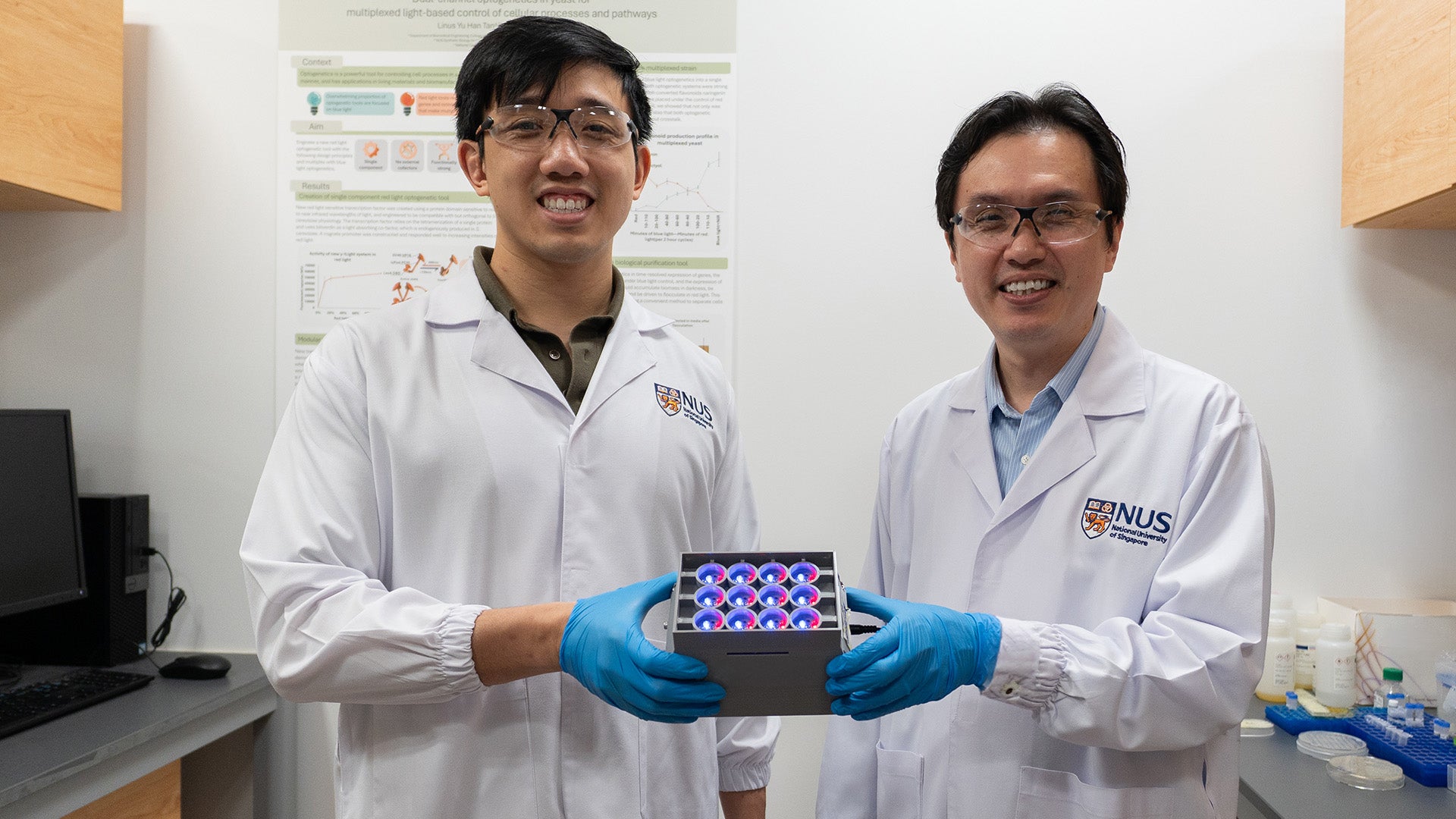
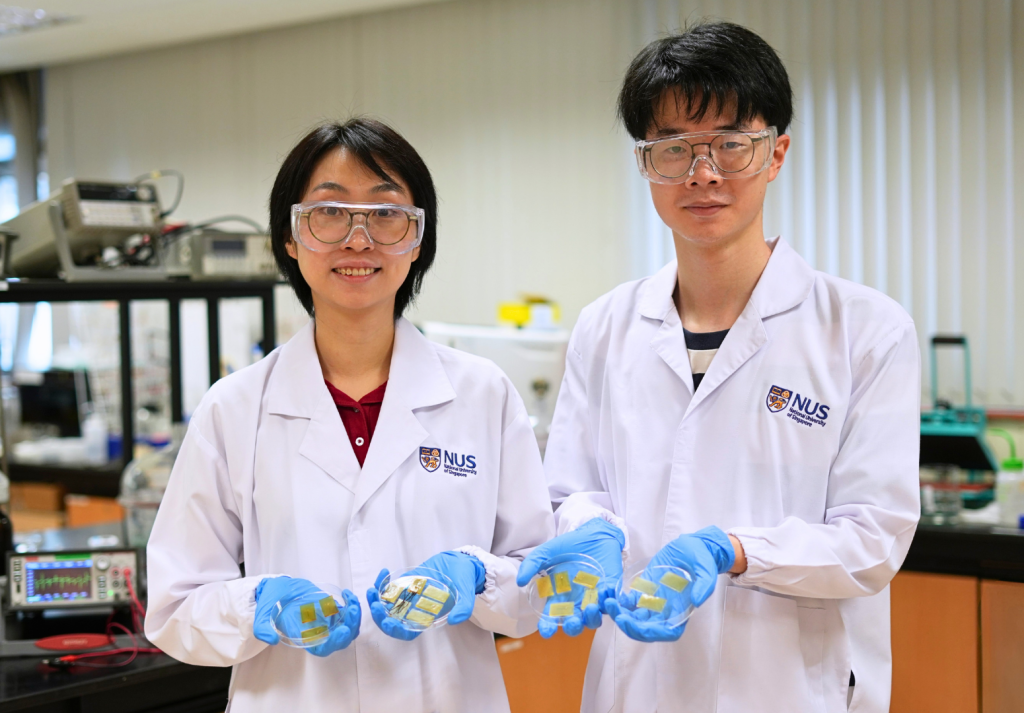
Associate Professor Poh Chueh Loo (right) and Linus Tan Yu Han (left) engineered baker’s yeast to sense and respond to different colours of light, enabling new ways to control cellular behaviour with red and blue light. Baker’s yeast is one of biotechnology’s most important microorganisms. It has long been used to leaven bread and ferment beer. More recently, advances in synthetic biology have ena
Prof Heng Chye Kiang (7th from the right), Dr Xue Xuan, first author of the paper (8th from right), and Prof TC Chang, fourth author of the paper (9th from right) at a presentation of their research. Researchers from the National University of Singapore (NUS) College of Design and Engineering (CDE), led by Professor Heng Chye Kiang ( Department of Architecture ), have developed a computational fra
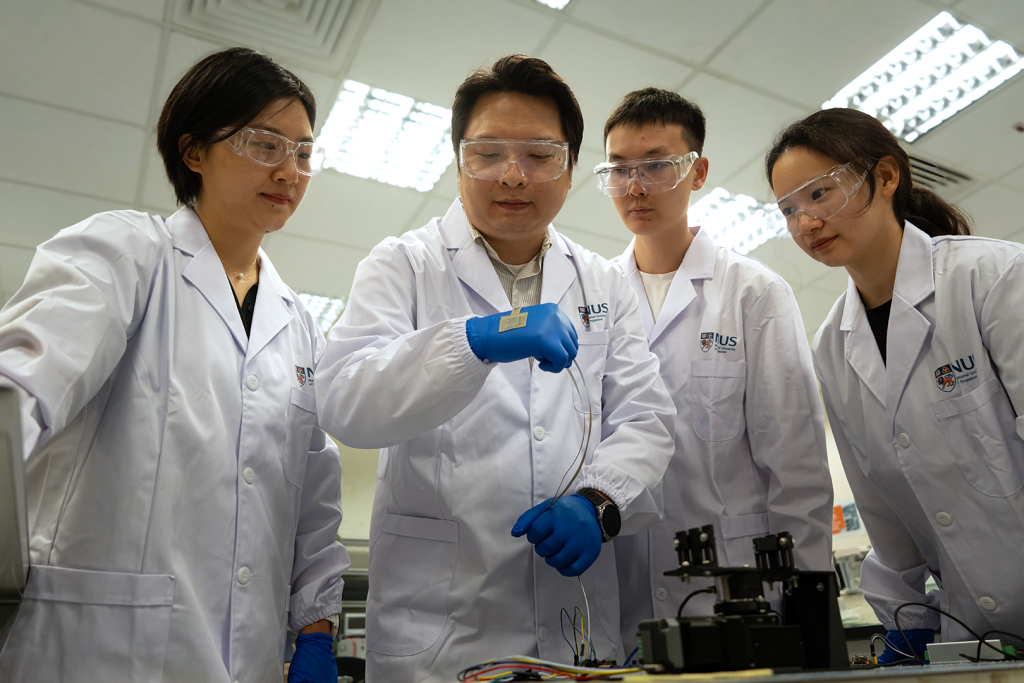
Asst Prof Zhai Wei, Research Fellow Dr Dang Chao, PhD candidates Qi Haobo and Jin Yidan (from left to right) test the performance of soft skin sensors based on the reported substrate. Soft sensors convert movement, temperature and moisture into electrical signals. Repeated bending and friction can cause their metal conductors to peel from the underlying polymer, while physical damage, such as cuts
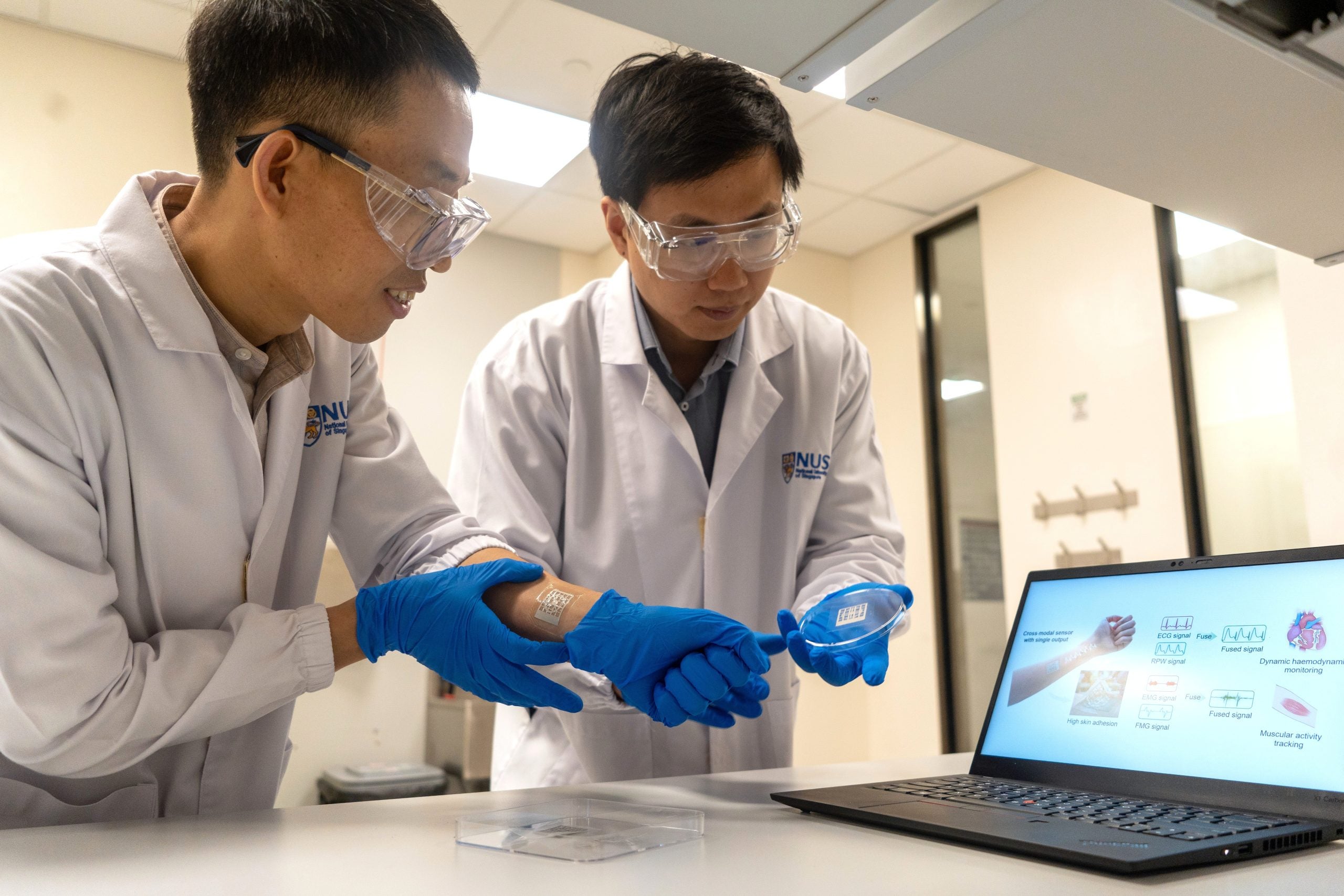
NUS CDE researchers, Asst Prof Liu Yuxin (right) and Dr Wu Xiaodong developed an epidermal sensor that can monitor electrocardiography, electromyography, radial pulse, and force myography from a single output channel. Wearable health monitors have grown increasingly capable, but most are still limited by the fact that tracking different types of body signals still requires separate sensors, each w
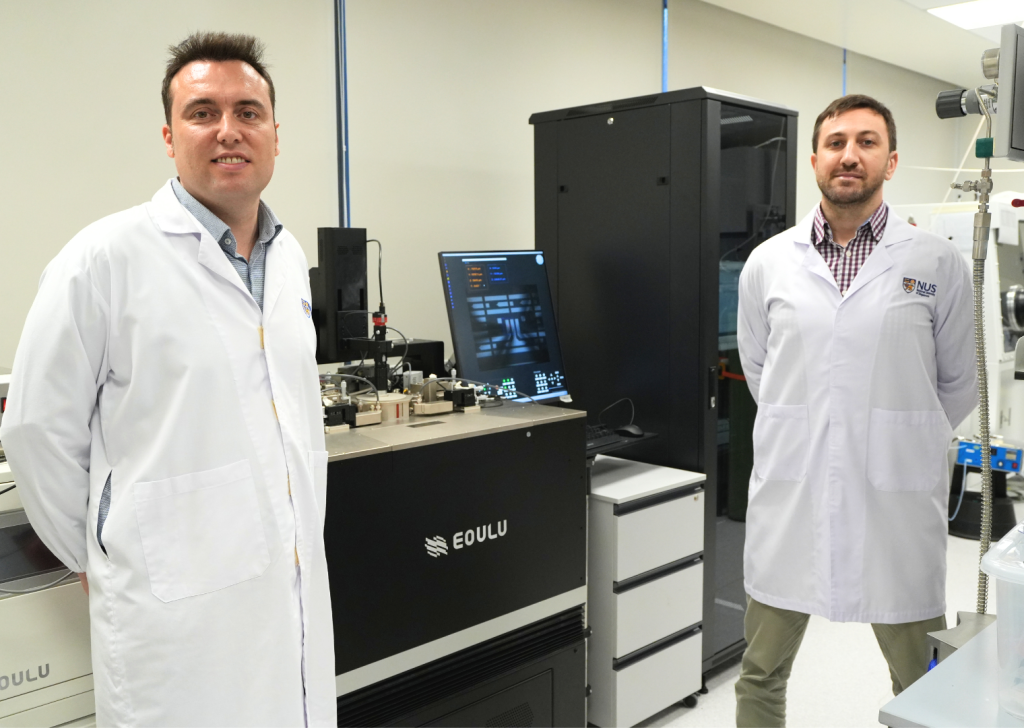
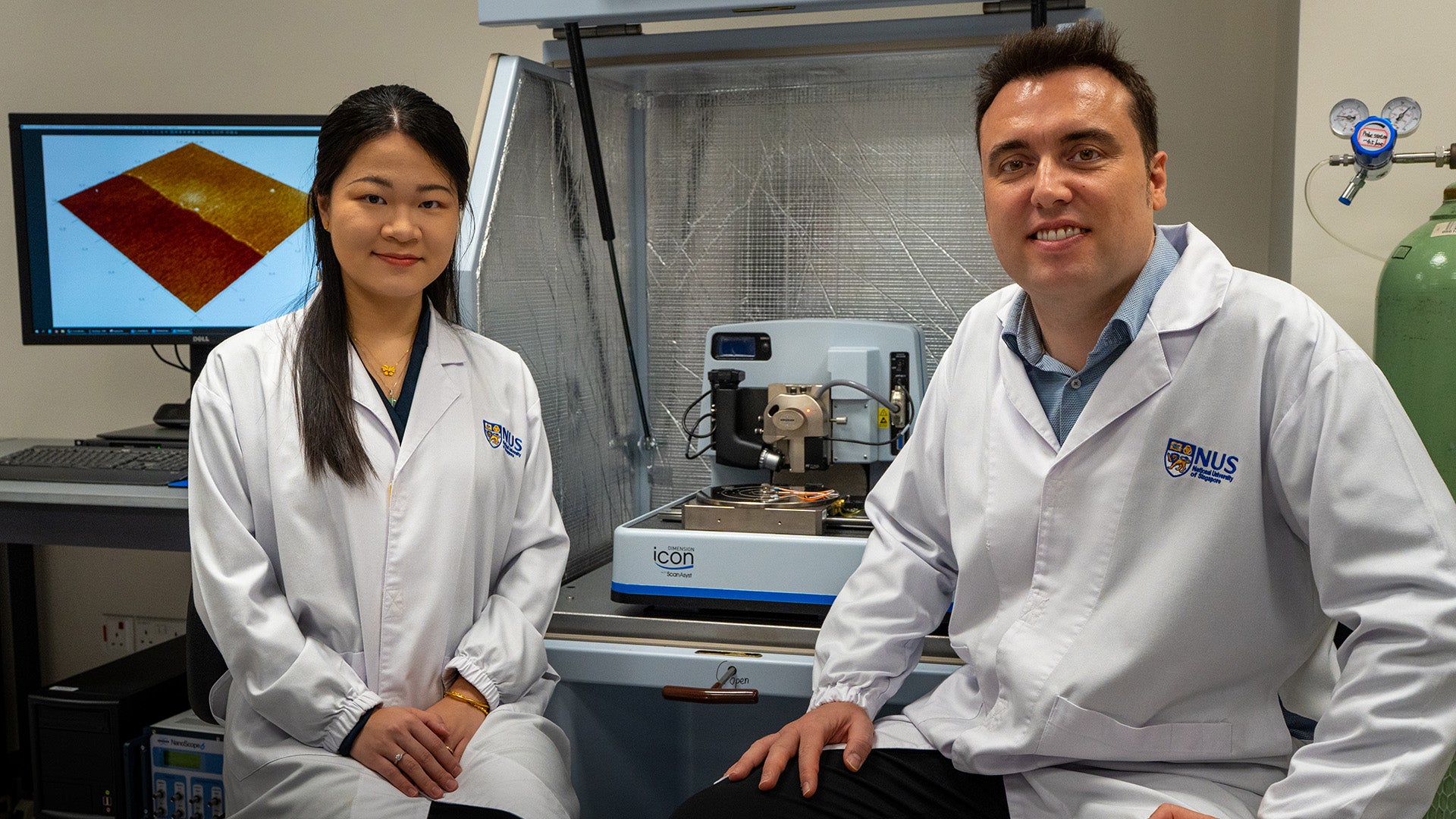
Assoc Prof Mario Lanza (left) and Dr Sebastian Pazos (right), whose team integrated 2D materials on gallium nitride microchips to develop high-frequency switches for 5G and 6G telecommunication. Our mobile phones today handle far more wireless signals and services than earlier generations. The same is true of the sophisticated equipment behind mobile networks, such as base stations, and emerging t
Asst Prof Tan Yu Jun (left), PhD student Mr Zhou Jinrun (right), and their team developed a self-healing electronic skin that can detect touch and damage, repair itself even under water, and enable more durable underwater devices. Underwater environments are among the harshest operating conditions for electronic devices. Divers and underwater robots depend on sensors to navigate, communicate and h
The agreement was signed by SHINE Director Prof Aaron Voon-Yew Thean Deputy President (Academic Affairs) and Provost (left), and STATS ChipPAC CEO Li Zheng (right). On 6 July 2026, Singapore Hybrid-Integrated Next-Generation µ-Electronics Centre (SHINE) at CDE has signed a Research Collaboration Agreement with STATS ChipPAC to advance photonic packaging technologies that could power the next gener
Congratulations to our students who received the CDE Innovation and Research Award and the NUS Outstanding Undergraduate Researcher Prize for AY2025/2026! Each year, CDE recognises the College’s strongest student research projects through the CDE Innovation and Research Award (IRA). From these outstanding projects, the top ten IRA recipients are nominated for the university-level Outstanding Under
Assoc Prof Mario Lanza (right) with first author of the research, Dr Yue Yuan (left). The researchers’ findings could help guide the development of future electronic components that are smaller, thinner and more energy-efficient. Researchers at CDE have identified a key design principle for building reliable electronics from materials only one atomic layer thick, giving engineers a clearer way to
Lead researchers Prof Benjamin Tee (right) and Prof Cecilia Laschi (left) with co-first author of the paper, Research Fellow Yu Kelu (centre), holding samples of the soft sensor. Built from flexible, compliant materials, soft robots are gaining relevance for tasks ranging from minimally invasive surgery to deep-sea exploration but remain held back by a fundamental constraint. To sense their surrou
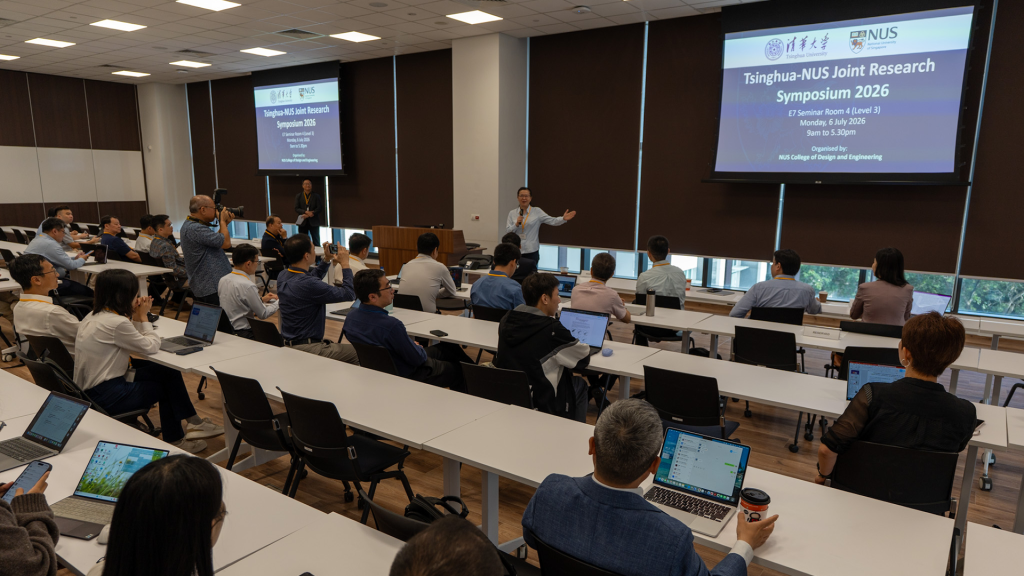
Prof Teo Kie Leong, Dean of CDE, opened the symposium saying he hoped it would open the door to "many more collaborations between NUS and Tsinghua researchers in the years ahead". Spanning fields from AI and urban planning to advanced manufacturing and materials innovation, researchers from NUS and China’s Tsinghua University came together to share progress from projects supported under the two un
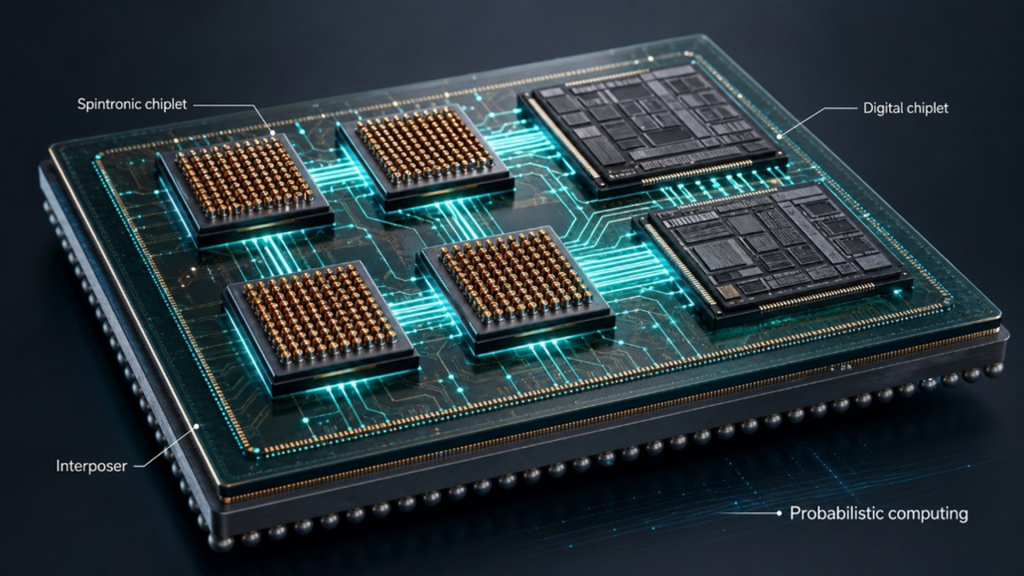
Prof Yang Hyunsoo’s research explores how spintronic hardware could open new paths to more efficient computing for complex real-world problems. Solving complex optimisation problems is central to many modern technologies, from logistics and financial modelling to chip design, communications and artificial intelligence (AI). However, as these problems grow in size, conventional computers often requ