Key points of this research result
- The Hiroshima University Graduate School of Medical Science's ``Mibyou and Preventive Medicine Joint Research Course'' has over 1,300 strains of plant lactic acid bacteria isolated and identified from a variety of plants. We are cultivating these plant lactic acid bacteria using water extracts of herbal medicines as a medium, and are conducting research to utilize the ``physiologically active substances'' newly produced in the resulting fermentation liquid for the improvement of pre-symptomatic conditions and preventive medicine.
- This time, it was collected from banana leaves.Lactobacillus(L.)plantarumWhen SN13T was cultured in Stevia extract and the resulting fermentation liquid (FSLE) was orally administered to mice transplanted with pancreatic cancer cells, the growth of pancreatic cancer was significantly suppressed compared to the non-administered group, and along with this, improvements in inflammation, enhancement of antioxidant capacity, and increase in apoptotic signals were observed.
- From these results, it is considered that the anticancer effect of this fermentation liquid is due to the activation of apoptosis via the mitochondrial pathway.
overview
In Chinese medicine, medicinal plants have long been used as medicines to support human health and treat diseases. These medicinal plants contain components that protect the body (antioxidant and anti-inflammatory effects).
The ``Mibyou/Preventive Medicine Joint Research Course'' aimed to create a new active ingredient by preparing a crude drug fermentation liquid by combining lactic acid bacteria isolated from various plants and various crude drug extracts, and fermenting it.
As a result, they discovered that a combination of lactic acid bacteria derived from banana leaves and the sweet plant ``stevia'' was most effective against human pancreatic cancer PANC-1 cells (*3). Furthermore, they discovered that the active ingredient is chlorogenic acid methyl ester (CAME) (*4), and found that CAME induces cancer cell apoptosis in PANC-1 cells.1).
This time, we verified whether the efficacy confirmed in cell tests could be reproduced in vivo. As a result, in an experiment using model mice transplanted with PANC-1 cells, the growth of pancreatic cancer tumors was significantly suppressed in the group treated with fermented stevia extract (FSLE) from the SN13T strain compared to the non-treated group.
Furthermore, along with this suppression of tumor growth, a decrease in the production of the inflammatory cytokine IL-6 in vivo and activation of the Nrf2/HO-1 pathway (*5), an antioxidant signal, were observed.
Published paper
●Magazine published:Antioxidants(Q1, IF: 6.6)
●Paper title
Anti-Tumor Activity of Stevia Leaf Extract Fermented by the Plant-DerivedLactiplantibacillus plantarumSN13T in a Pancreatic Tumor Xenograft Model
● Author:Rentao Zhang1, Danshiitsoodol Narandalai1,*, Masafumi Noda1and Masanori Sugiyama1,*
1)Department of Probiotic Science for Preventive Medicine, Graduate School of Biomedical and Health Sciences, Hiroshima University
*corresponding authors
●Electronic version access destinationhttps://doi.org/10.3390/antiox15050581
background
Pancreatic cancer is a malignant tumor that progresses rapidly, and its prognosis is known to be extremely poor due to the difficulty of early detection and the limited effectiveness of chemotherapy. The use of existing anticancer drugs in the treatment of pancreatic cancer places a heavy physical burden on patients and causes significant side effects, and good treatment results have not been achieved. Therefore, there is an urgent need to develop new treatments that are effective and highly safe. On the other hand, medicinal plants, which are the raw materials for traditional Chinese medicine and crude drug preparations, contain a wide variety of plant secondary metabolites, such as glycosides, phenolic acids, flavonoids, and tannins, and are expected to have high physiological activity.
In our laboratory, we are proceeding with the exploration and isolation of lactic acid bacteria from plant resources such as medicinal plants, fruits, vegetables, flowers and leaves.To date, we have constructed a library containing over 1,300 plant lactic acid bacteria strains, and have been conducting fermentation technology research using this unique library.
In this study, we cultured the preserved lactic acid bacteria strains of our laboratory in extracts of various herbal medicines, and selected the combination of lactic acid bacteria and herbal medicines that showed the highest anticancer activity in the resulting fermented fluids. Furthermore, they attempted to elucidate the mechanism of anticancer effects using pancreatic cancer model mice.
Contents of research results
Mice in which tumors were formed using pancreatic cancer cell PANC-1 were given a physiological saline administration group (NC group), an unfermented stevia leaf extract administration group (Unfer group),L.plantarumThey were randomly divided into four groups: a group administered with fermented stevia extract by SN13T (Fer group), and a group administered with capecitabine (PC group; 400 mg/kg, 200 μL). Body weight and tumor volume were continuously measured during the experimental period. Serum, tumor, liver, and kidney samples were collected at the end of the study and subjected to biochemical tests, hematoxylin and eosin (H&E) staining and immunohistochemistry (IHC) staining, cytokine measurements, Western blotting and qPCR (quantitative PCR) analysis, and antioxidant capacity measurements. As a result, the fermented extract reduced tumor volume and weight and significantly inhibited tumor growth. Serum proinflammatory cytokines (IL-6, TNF-α, IL-1β) were significantly reduced, and liver damage markers (ALT, AST) and lactate dehydrogenase (LDH) were improved. In tumor tissues, administration of the fermented extract was found to be associated with increased protein expression of cleaved caspase-3 and Bax, and decreased Bcl-2 levels. In particular, the expression of Nrf2 protein in tumor tissue was reduced (down-regulated), and IL-6 within the tumor was also reduced. On the other hand, in the liver, mRNA expression of Nrf2 and HO-1 increased with treatment, enhanced superoxide dismutase (SOD) activity, and decreased malondialdehyde (MDA) levels.
Future developments
Stevia is (Stevia rebaudiana) leaves contain a large amount of diterpene glycosides such as ``stevioside'' and ``rebaudioside A,'' and are used as a natural sweetener because they are hundreds of times sweeter than sugar but have almost no calories. In this research paper, plant lactic acid bacteriaL.plantarumUsing a model mouse with pancreatic cancer, it was revealed that the Stevia fermentation solution produced by SN13T has both antitumor activity and excellent cell tissue protection effects. In the future, we will analyze the chemical structures of ``biologically active substances'' such as chlorogenic acid methyl ester (CAME), which has already been identified. Furthermore, we plan to focus on the Nrf2 pathway, explore upstream regulatory factors such as Keap1 and p62, and introduce a multi-omics approach to elucidate the molecular basis and signal network of FSLE's antitumor activity. The goal is to develop this material into practical use in the future as a safe and highly effective naturally derived anti-cancer material.
Reference materials
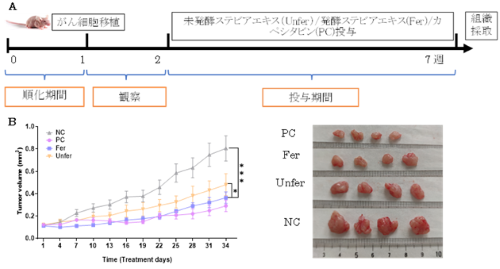
Figure 1. Antitumor effect of fermented stevia extract on tumor growth in pancreatic cancer xenograft model.
A.in vivoExperimental methods;B.Inhibitory effect on pancreatic cancer growth using model mice
1)Zhang R, Danshiitsoodol N, Noda M, Yonezawa S, Kanno K, Sugiyama M. Stevia leaf extract fermented with plant-derivedLactobacillus plantarumSN13T displays anticancer activity to pancreatic cancer PANC-1 cell line.Int J Mol Sci. 2025 Apr 28;26(9):4186.
Glossary
*1: Pancreatic cancer cell transplanted mouse (model mouse)
An experimental mouse made by transplanting human cancer cells. It is used to examine the effects of medicines and foods in the body.
*2: Stevia fermentation liquid (FSLE)
Stevia (sweet plant) leaf extract is added to plant lactic acid bacteria (L.plantarumA liquid made by fermenting with SN13T).
*3: Human pancreatic cancer PANC-1 cells
Experimental cancer cells made from human pancreatic cancer.
*4: Chlorogenic acid methyl ester (CAME)
A newly discovered ingredient in Stevia fermentation liquid, which is thought to have the ability to suppress the proliferation of cancer cells and cause cells to die on their own (apoptosis).
*5: Nrf2/HO-1 pathway
One of the mechanisms (defense system) that works to protect the body from oxidative stress. It is important for its antioxidant effect.
- Press release materials (472.47 KB)
- Article publication journal (Antioxidants)
- Hiroshima University Researcher Guidebook (Professor Masanori Sugiyama)
Graduate School of Medical Sciences
Professor Masanori Sugiyama, Mibyou/Preventive Medicine Joint Research Course
Tel: 082-257-5280 FAX: 082-257-5284
E-mail: sugi*hiroshima-u.ac.jp
(Please replace * with half-width @)