Key points of this research result
- We have developed a new cell cycle-dependent genome editing system using small SauCas9 that can be delivered with a single adeno-associated virus (AAV), which is widely used in gene therapy.
- We analyzed 10 types of anti-CRISPR (Acr) proteins, identified candidates that can strongly control SauCas9, and succeeded in constructing a fusion protein that functions according to the cell cycle.
- With the developed system, we were able to increase precise gene repair (HDR) efficiency by up to 4.7 times while suppressing the increase in unwanted mutations (indels) even under AAV delivery conditions.
- This result is expected to lead to the realization of safer and more accurate in-vivo gene therapy.
overview
A research group led by graduate student Erina Matsuki and professor Wataru Nomura of the Hiroshima University Graduate School of Medical Sciences is conducting research on in vivo (in vivoWe have developed a cell cycle-dependent genome editing system using a small SauCas9 that can be loaded onto a single AAV (adeno-associated virus) vector, with an eye on application to gene therapy (in the body).
In this study, we focused on the fact that precise repair (HDR) in genome editing is activated during the S/G2 phase, and fused potential candidates selected from 10 types of anti-CRISPR (Acr) proteins with a specific degron region of Cdt1. This made it possible to suppress SauCas9 activity in the error-prone G1 phase and activate it only in the S/G2 phase, where HDR is active.
As a result of introducing this system into human cells (293A cells and HeLa cells) using AAV2, we succeeded in increasing the efficiency of precise gene repair (HDR) by up to 4.7 times while suppressing the increase in unnecessary mutations in the target gene (EMX1).
The results of this research will overcome the limitations of transport capacity and greatly contribute to the realization of highly accurate and safe gene therapy in the body. The results of this research were published online in the academic journal "Molecular Therapy Advances" on May 6, 2020.
Published paper
Paper title
SauCas9-based cell cycle-dependent genome editing via AAV delivery
author
Irina Matsuki1, Kanae Kishi1, Ayane Kishi1, Kohei Nagase2, Kiyomi Nigorikawa1,2, Wataru Nomura1,2,*
1. Hiroshima University Faculty of Pharmaceutical Sciences
2. Hiroshima University Graduate School of Medical Sciences *Corresponding author
Published magazine
Molecular Therapy Advances (IF=4.7)
DOI number
DOI: 10.1016/j.omta.2026.201751
*This research result was supported by Grants-in-Aid for Scientific Research (JP22H02201, JP20K21253), JST SPRING (JPMJSP2132), and JSPS. This work was supported by J-PEAKS (JPJS00420230011), the Takeda Science Foundation, the Naito Memorial Foundation for the Promotion of Science, the Uehara Memorial Life Science Foundation, the Mochida Memorial Foundation for Medical and Pharmaceutical Sciences, and the Kenzo Suzuki Memorial Foundation for Applied Medical Science.
background
Genome editing using the CRISPR-Cas9 system is expected to be a trump card for gene therapy, but the biggest challenge has been that ``HDR (homologous recombination repair),'' which pinpoints disease-causing genes, is significantly less efficient than ``NHEJ (non-homologous end joining),'' which is prone to errors. In response, our research group has developed a cell cycle control technology that takes advantage of the property that HDR is only active during the S/G2 phase of the cell cycle and pauses Cas9 during the G1 phase.
However, medical applications (in vivoAAV (adeno-associated virus), which is widely used for delivery, has an extremely small gene capacity of approximately 4.7 kb. It has been the mainstream until nowS. pyogenesThe derived Cas9 (SpyCas9) has a large gene size, making it difficult to pack the control cassette and donor sequence into one AAV at the same time, making it necessary to rely on inefficient combinations of multiple vectors.
Therefore, there has been a strong desire to develop an autonomous cell cycle-controlled genome editing platform using a compact Cas9 ortholog that fits in a single AAV.
Contents of research results
In this study, we focused on SauCas9 derived from S. aureus, which has a small gene size of approximately 3.2 kb and is suitable for single packaging into AAV.
First, we screened the inhibitory activity of 10 types of anti-CRISPR (Acr) proteins as "brakes" to suppress SauCas9 activity when necessary, and found that AcrIIA5, A13, A14, A15, and C1 have extremely strong inhibitory abilities.
Next, these Acr groups were fused with the minimal degron region (30-120 residues) of Cdt1, which is selectively degraded by the ubiquitin proteasome system during the S/G2 phase of the cell cycle, and assembled into an AAV vector along with gRNA and HDR donor template.
When this AAV system was introduced into human cells, interestingly, more dramatic effects were observed with AcrIIA11+Cdt1 and AcrIIA16+Cdt1 fusions, which have an appropriate inhibition/dissociation balance, than with too strong inhibitors. As a result of achieving appropriate inhibition in the G1 phase and precise release in the S/G2 phase, we succeeded in significantly increasing accurate gene knock-in (HDR efficiency) by approximately 2 times in 293A cells and up to 4.7 times in HeLa cells without causing an excessive increase in unnecessary mutations (indels) in the target gene (EMX1).
We also demonstrated that the optimal ratio of introduction (MOI) of the vector was between 1:2 and 1:5.
Future developments
The integrated system of "small SauCas9 x cell cycle control Acr-Cdt1 x single AAV delivery" established this time will be a powerful tool to deliver extremely high-precision gene repair to specific tissues and cells in the body with a minimum number of packages. In the future, we will verify the effects in adult tissues where many cells are in the stationary phase and in an environment where the cycles of individual cells are asynchronous, further optimize efficiency, and verify the integration of large therapeutic transgenes (therapeutic genes).in vivoThis will lead to the development of gene therapy preparations.
[Reference materials]
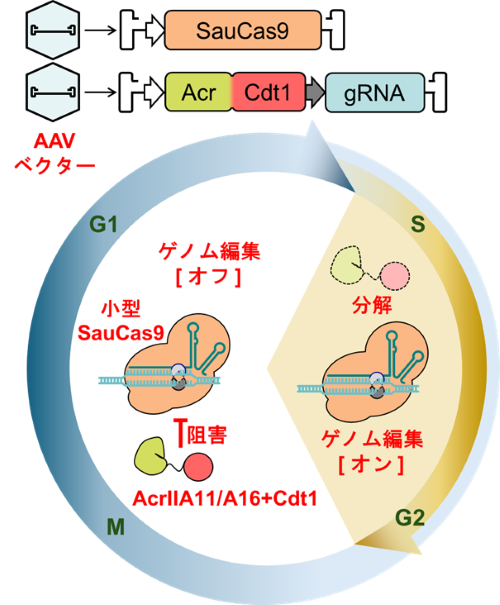
Figure 1. Overview of autonomously controlled genome editing mechanism using AAV vectors
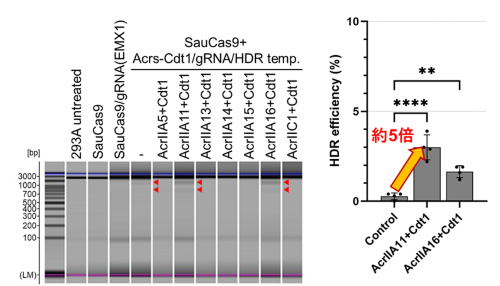
Figure 2. Genome editing using the cell cycle improves homologous recombination genome editing efficiency.
- Press release materials (663.74 KB)
- Publication journal (Molecular Therapy Advances)
- Hiroshima University Researcher Guidebook (Professor Wataru Nomura)
Wataru Nomura, Professor, Graduate School of Medical Sciences, Hiroshima University
Tel: 082-257-5308
E-mail: wnomura*hiroshima-u.ac.jp
(Please replace * with half-width @)