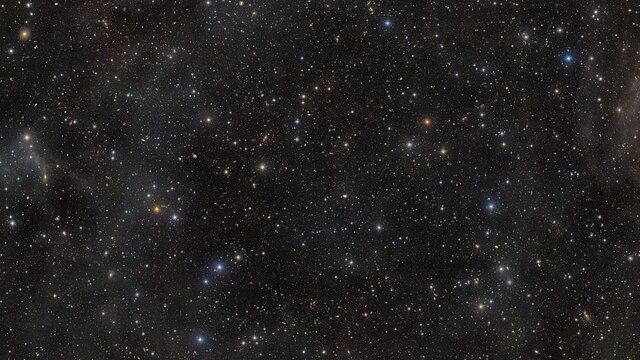
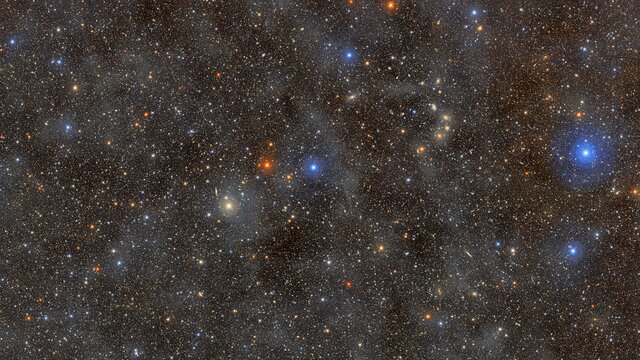
A new image from NSF–DOE Vera C. Rubin Observatory offers a spectacularly deep view into a famous region of sky known as the COSMOS field. Located in the constellation Sextans, COSMOS is one of the most observed patches of the Universe — and Rubin’s new image adds a powerful new view of this well-known cosmic landmark.
The wait is over: NSF–DOE Rubin Observatory, funded by the U.S. National Science Foundation and the U.S. Department of Energy’s Office of Science, is now capturing the cosmos in unprecedented detail, transforming the way we study the dynamic Universe.
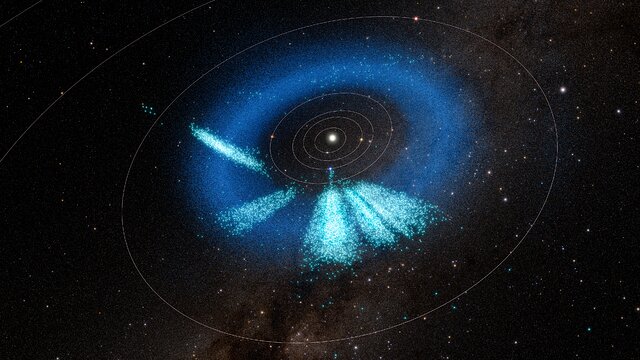
Scientists at NSF–DOE Vera C. Rubin Observatory, jointly funded by the U.S. National Science Foundation and the U.S. Department of Energy's Office of Science, have submitted an unprecedented set of asteroid detections to the IAU Minor Planet Center, including hundreds of distant worlds beyond Neptune and 33 previously unknown near-Earth asteroids.
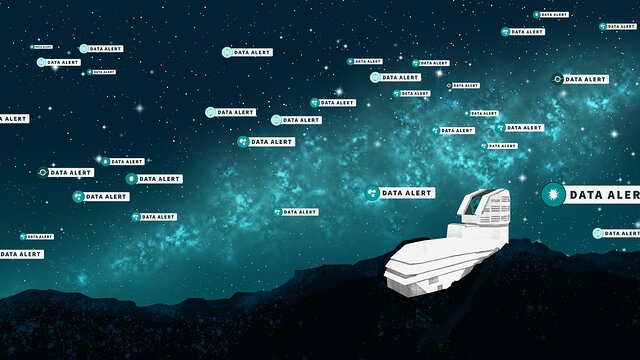
NSF–DOE Rubin Observatory has issued its first scientific alerts, marking a historic milestone in astrophysics. Expected to increase to seven million alerts per night, these first alerts start a new era of dynamic, real-time observation of the night sky.
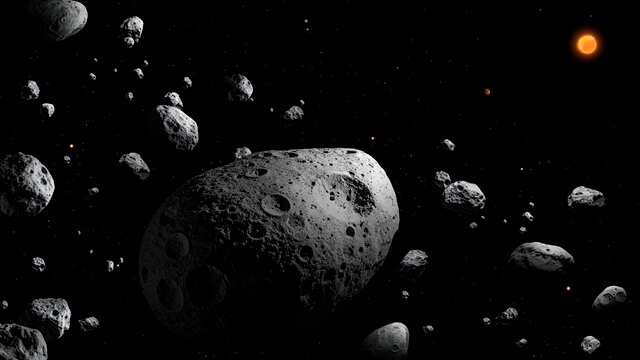
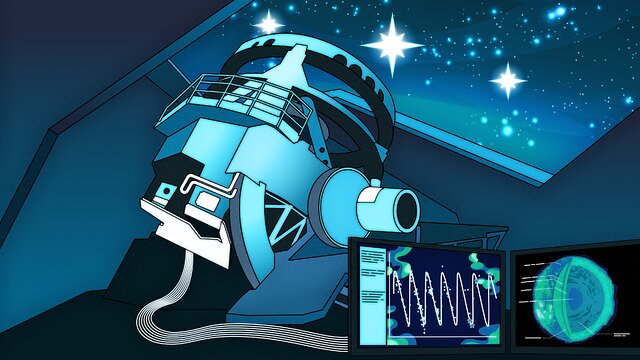
Astronomers analyzing data from NSF–DOE Vera C. Rubin Observatory, jointly funded by the U.S. National Science Foundation and the U.S. Department of Energy's Office of Science, have discovered the fastest-ever spinning asteroid with a diameter over half a kilometer — a feat uniquely enabled by Rubin. The study provides crucial information about asteroid composition and evolution, and demonstrates how Rubin is pushing the boundaries of what we can discover within our own Solar System.
From distant stars and galaxies to asteroids whizzing through the Solar System, this next-generation facility unveils its first imagery and brings the night sky to life like never before
NSF–DOE Vera C. Rubin Observatory, funded by the U.S. National Science Foundation and the U.S. Department of Energy’s Office of Science, will soon collect an unprecedented amount of data on the changing southern night sky. By observing millions of stars that change in brightness, Rubin will allow for studies of the inner workings of variable stars and help define the edges of our galaxy.
NSF–DOE Vera C. Rubin Observatory, funded by the U.S. National Science Foundation and the U.S. Department of Energy’s Office of Science, will soon witness the explosions of millions of dying stars. Scientists use the light from these events to measure cosmic distances and study dark energy’s effect on the Universe’s expansion. Over its 10-year Legacy Survey of Space and Time, Rubin could change our understanding of how — and when — the Universe formed.
NSF–DOE Vera C. Rubin Observatory celebrated a landmark moment in astronomy and astrophysics with the dedication of the Simonyi Survey Telescope on 4 October 2024. With the Simonyi family as guests of honor, Rubin Observatory recognized the pivotal role of Charles and Lisa Simonyi’s philanthropy in advancing construction of the Observatory and supporting research that will soon transform our understanding of the Universe.
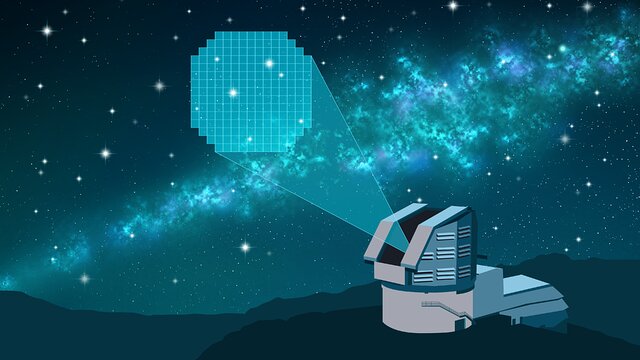
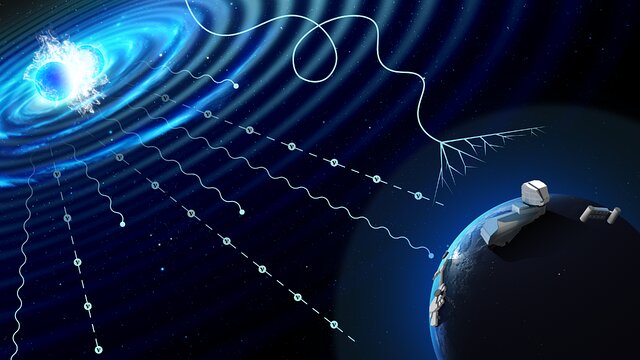
Photons, neutrinos, cosmic rays and gravitational waves all carry information about the Universe. Multi-messenger astronomy brings together these four signals to investigate astronomical events from multiple cosmic perspectives. With its sensitive camera and suite of filters, NSF–DOE Vera C. Rubin Observatory will increase the population of known multi-messenger sources by obtaining crucial color information and localizing events for follow-up observations by other telescopes.
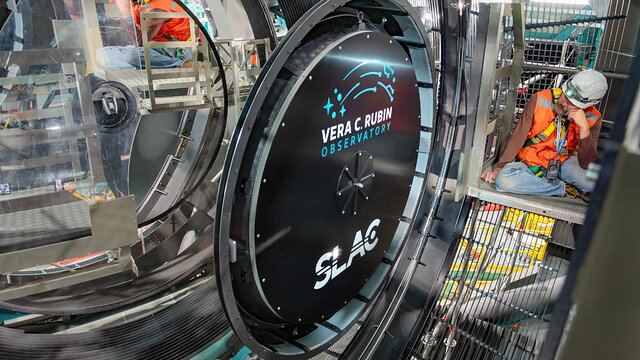
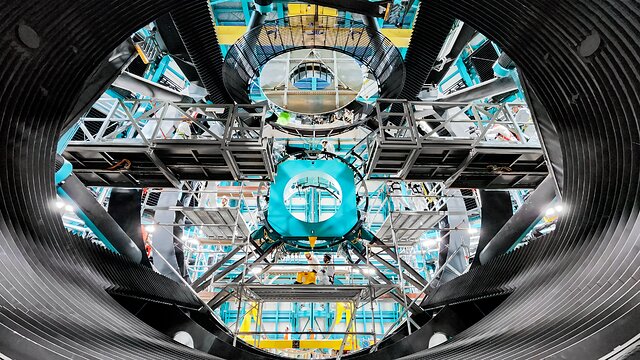
Vera C. Rubin Observatory’s 3.5-meter secondary mirror has been installed on the Simonyi Survey Telescope on Cerro Pachón in Chile. The glass mirror — made by Corning Advanced Optics and polished by L3Harris Technologies — is the first permanent component of the telescope’s state-of-the-art, wide-field optical system to be installed and will soon contribute to a better understanding of our Universe.