"To subjugate a woman, you need to transform her into a witch or a witch", explains the professor and researcher in Modern History at the UAB Montserrat Jiménez, and she argues this scientifically in her new bookWitches and hags(UAB Publications Service), which has just been published. This essay connects history, misogyny, symbolic violence and contemporary culture, establishing links between the witches of yesterday and the discourses that still today devalue some groups.
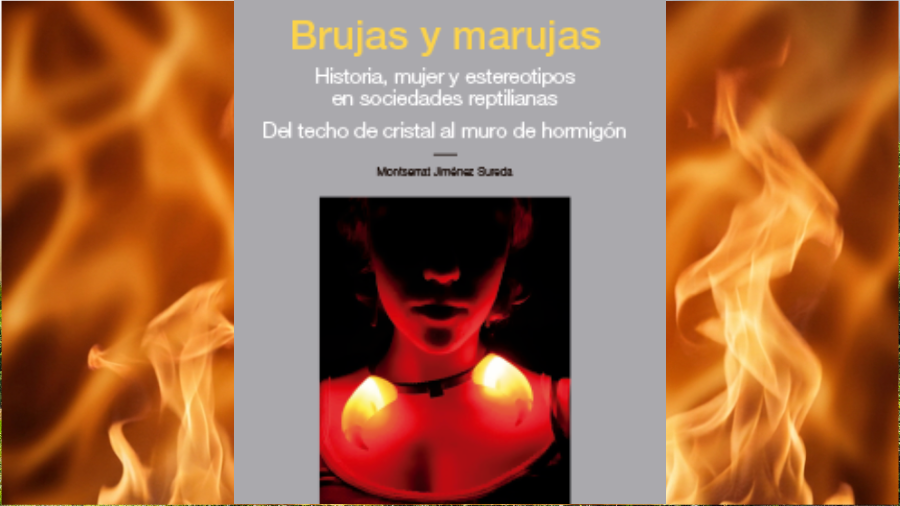
It is a work that combines historical rigor and moral reflection and invites the reader to ask who the monsters really are: the supposed witches or those who point out, condemn and destroy them.
"Why does one human being mistreat another?" is the question from which the new book startsWitches and hags History, women and stereotypes in reptilian societies. From the crystal ceiling to the concrete wall (edited by the UAB Publications Service), by Montserrat Jiménez Sureda, professor and researcher in Modern History at the Universitat Autònoma de Barcelona (UAB), which explores as a fundamental mechanism of violence the need to turn the other into a stereotype, a dehumanized caricature that justifies their submission. In the case of women, this transformation adopts two masks: the witch and Mrs. Maria. you canread a sample chapter here.
For the author of the book, "to subjugate a woman, you need to transform her into a witch or a 'witch'". Both have in common "the devaluation that certain accounts make of it". The book shows, in short, how the micro-history allows us to see that the witch was, among other things, a social instrument for the resolution of community conflicts, focusing them on a simple Turk's head. It is a work that combines historical rigor and moral reflection and invites the reader to ask who the monsters really are: the supposed witches or those who point out, condemn and destroy them.
Stories to point out and pursue those who were uncomfortable
Through a lucid and provocative analysis, the work shows how societies have constructed narratives to point out and persecute those who were uncomfortable. This essay connects history, misogyny, symbolic violence and contemporary culture, establishing links between the witches of yesterday and the discourses that still today devalue some groups.
The book explains the principles of the witchcraft phenomenon and how it interacted with European folklore. The author considers that witchcraft is also a story and has its own grammar that is developed profusely in this book. Thus, analyze the words used as a spell, likeabracadabra; takes a tour of treatises on witchcraft as a distinct literary genre and explains the dispute between believers and atheists regarding the existence of witches. It also exposes the various diseases that were attributed to witches, such as goat's foot or cold sores; the animals that were believed to be loyal to it, such as bats, toads or owls, and the mineral, animal and plant elements that families used to protect themselves from it.
The author also deals with people with mental health problems who, far from receiving the empathy and support that their condition deserved, were accused and abused because they were presumed to have a relationship with the devil.
In the second part, the book claims the historical role of housewives, since it has been a sector that has suffered the historiographical harassment of exclusion. For this reason, the author locates the origin of the plurality of jobs that make up a home, in order to value the work of those who performed themgratia et amore. "Ironing, cleaning, saving, cooking, doing the laundry are approached from history, the history of art, sociology and psychology, as well as the spaces into which a home has been compartmentalized, which was a small business with an employer at the head", says the author.
This book is the result of research carried out in the framework of the project "La sociabilidad epistolar: familias y redes (s. XVIII-XIX)", financed by the Ministry of Science, Innovation and Universities, within the framework of the Research Group in Political Studies, Identities, Institutions and Corruption (GREPIC) of the Department of Modern and Contemporary History of the UAB. Montserrat Jiménez Sureda has been a professor at Venice International University and is currently full professor of Modern History at the UAB. She is the author of numerous articles and publications, mainly focused on history and women, witches, and the Church.
UAB PUBLICATIONS SERVICE BOOK FILE:
TO PURCHASE THE BOOK:
you canbuy the book online hereorbuy the paper book here