Researcher information
Researcher name
Toru Matsumoto
Researcher name
Takaaki Noguchi
Researcher name
Yohei Igami
概要
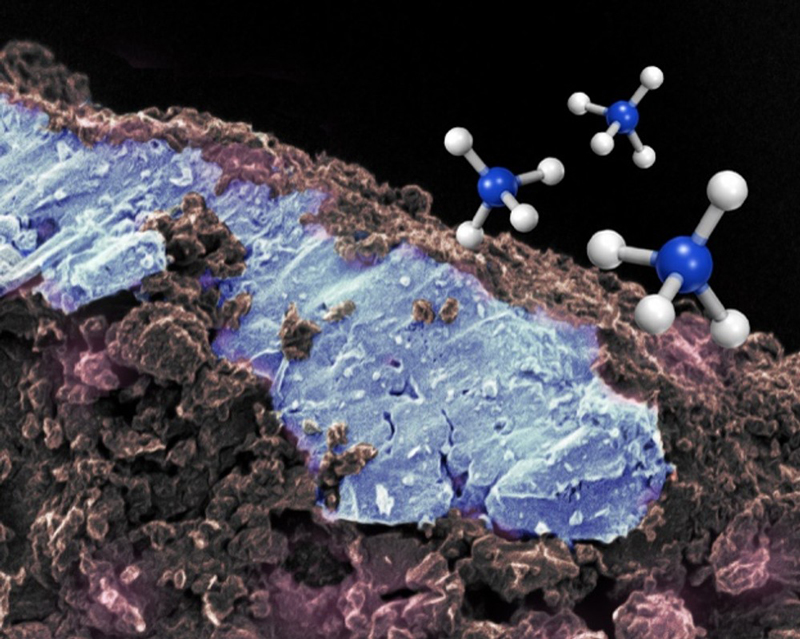
Kyoto University Hakubi Center/Graduate School of Science Assistant Professor Toru Matsumoto, Kyoto University, National Institutes of Natural Sciences Research groups including the Institute for Molecular Science, Hiroshima University, Tokyo University of Science, Ehime University, and the High-Intensity Photon Research Center (JASRI) are using X-rays and infrared light to separate the sand from asteroid Ryugu brought back by the asteroid explorer Hayabusa2. As a result of analysis, we discovered that nitrogen compounds such as nitrogen-containing salt crystals (nitrates), ammonia, and organic substances in which carbon and nitrogen are strongly bonded gather around salt crystals that are easily soluble in water, such as sodium carbonate and rock salt.
Ryugu is made up of fragments of a large celestial body that was formed about 4.5 billion years ago. Water used to flow inside the celestial body that is Ryugu's parent body, but as time passed, water decreased due to freezing and evaporation. At that time, salt crystals precipitated from the concentrated brine left behind, and nitrogen compounds are also thought to have been highly concentrated.
Organic substances such as amino acids and nucleobases, which are the building blocks of life, have already been discovered in Ryugu's sands, and nitrogen compounds such as ammonia are thought to have played a central role in their synthesis. This research shows that not only did water exist in Ryugu's parent body, but there was also a ``mechanism in which water decreased and components were concentrated,'' allowing reactive substances such as ammonia to encounter high concentrations and promoting reactions that evolved into complex living materials.
このような濃い塩水スープは、リュウグウだけでなく、地下に塩水が存在すると予想される準惑星セレスなどの太陽系の水天体でも存在するかもしれません。リュウグウの研究は、地球以外の天体で、生命の材料がどこで、どのように形づくられるかを紐解く手がかりになると期待されます。
In addition to specific assistant professor Toru Matsumoto, this achievement was supported by Hayato Yuzawa, chief engineer at the Institute for Molecular Science, Associate Professor Mizuho Koike from Hiroshima University, Associate Professor Yoko Hibukawa from Tokyo University of Science, Professor Takaaki Noguchi from the Graduate School of Science at Kyoto University, Tatsu Yada, chief research and development staff at JAXA, and Daiki Suga from the Center for Bright Photon Science. Researcher Minoru Ina, Senior Researcher Hiroshi Sakuma of the National Institute for Materials Science, Lecturer Yohei Shirase of Ehime University, Yuki Kitamura (then master's student at the Graduate School of Science, Kyoto University), Associate Professor Yohei Igami of the Graduate School of Science, Kyoto University, and Professor Ryo Miyake of the same department, and others.It was published in the international scientific journal "Nature". Published in Astronomy on August 27, 2026.
Researcher's comments
「リュウグウの砂に含まれる塩の結晶は、湿気にさらされるだけでも溶けてしまうほど変化しやすく、地上で雨風にさらされる隕石からはほとんど見つかっていません。宇宙から直接持ち帰ったリュウグウの砂を分析したことで、母天体内部の塩水環境が、少しずつ明らかになってきました。今後、NASAの探査機が持ち帰った小惑星ベヌーの試料の分析も進み、リュウグウとの共通点や違いが明らかになれば、生命の材料となる物質が宇宙でどのように、どこまで作られたのか、そしてそれらが地球へ運ばれた可能性があるのかについて、さらに理解が深まると期待しています。」(松本徹)
Source: https://www.kyoto-u.ac.jp/ja/research-news/2026-09-03-1