presenter
Tetsuro Hirono, Department of Earth Studies, Graduate School of Science, Osaka Public UniversityProfessor, Department of Earth Science, Faculty of Science, Mr. Sei Fukuda (at the time of research: Bachelor's course)4year)
overview
This research group conducted a detailed analysis of the faults distributed on the Boso Peninsula, and discovered that materials flow turbulently inside the fault during earthquakes.*1For the first time in the world, we have discovered traces of violent fluid flow (vortex-like structure). Furthermore, through hydrodynamic analysis, thermal pressure can be reduced during earthquakes.*2The results showed that the fault clay was fluidized, and its viscosity may have been reduced to the same level as water. This ultra-low viscosity weakens the fault rapidly, indicating the possibility of promoting large fault slips.
These results indicate that during a huge earthquake at a plate subduction boundary,It is expected that this will contribute to evaluating the slipperiness of faults and estimating the scale of tsunamis caused.
The results of this research were published online in the international academic journal "Scientific Reports" on June 27, 2026.
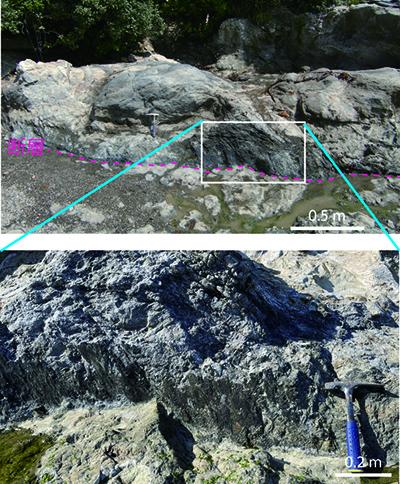
figure1:(above)Lithological map of the Boso Peninsula
(under)Traces of "turbulent flow" that occurred within the fault during an earthquake
point
- about1500For the first time in the world, researchers have discovered traces of fault material flowing like a turbulent flow during an earthquake from a fault that developed in the strata 10,000 years ago.
- Hydrodynamic analysis estimated that the viscosity of the fault material during the earthquake was extremely low, comparable to that of water at room temperature and pressure..
- It has been shown that thermal pressure during an earthquake causes the fault material to become significantly fluidized, potentially causing rapid weakening of the fault and large-scale fault slip.
It has been thought that during huge subduction zone earthquakes, such as the Great East Japan Earthquake, plate boundary faults near the ocean trench slip on a large scale, causing huge tsunamis. However, through this research, we were able to clarify why faults slip on a large scale and what happens on faults when they slip.

Professor Tetsuro Hirono
Research background
2011yearIn the Tohoku Earthquake, it has been thought that the fault became slippery at the plate boundary near the ocean trench, causing a huge slip and causing the huge tsunami. This state of slippery faults is called ``fault slip weakening,'' and is thought to have a strong influence on the magnitude of earthquakes and tsunamis. "Thermal pressureization" has been proposed as the main mechanism for weakening fault slip, and evidence for this has been inferred from differences in the types and concentrations of elements that make up faults, but no traces that can be observed on actual faults have been discovered until now.
Research content
In this research, we collected samples from a fault that developed in a geological formation approximately 15 million years ago (the Yasuda Group distributed in Kamogawa City on the Boso Peninsula) and conducted detailed observations using a polarizing microscope and an electron microscope. As a result, for the first time in the world, we discovered traces (vortex-like structures) indicating that ``turbulent flow'' was occurring inside the fault. This turbulent flow structure is caused by this fault during earthquakes.It is presumed that this is a trace of fault clay being fluidized due to thermal pressure.
Furthermore, due to the geometrical characteristics of the turbulent structure, the Couette-Poiseuille flow*3and laminar flow*4Critical Reynolds number for transition to turbulence from*5We performed a fluid dynamic analysis assuming that. As a result, the viscosity of the fault during an earthquake is1.2×10-4~2.3 ×10⁻³Pa sIt was estimated that the value was extremely low, comparable to that of water at room temperature and pressure.
The turbulent flow structure within the fault itself is pseudotachylyte, which is melted and fluidized by frictional heat generation.*6Although there have been reports, this is the world's first discovery of a fault that has caused thermal pressure.
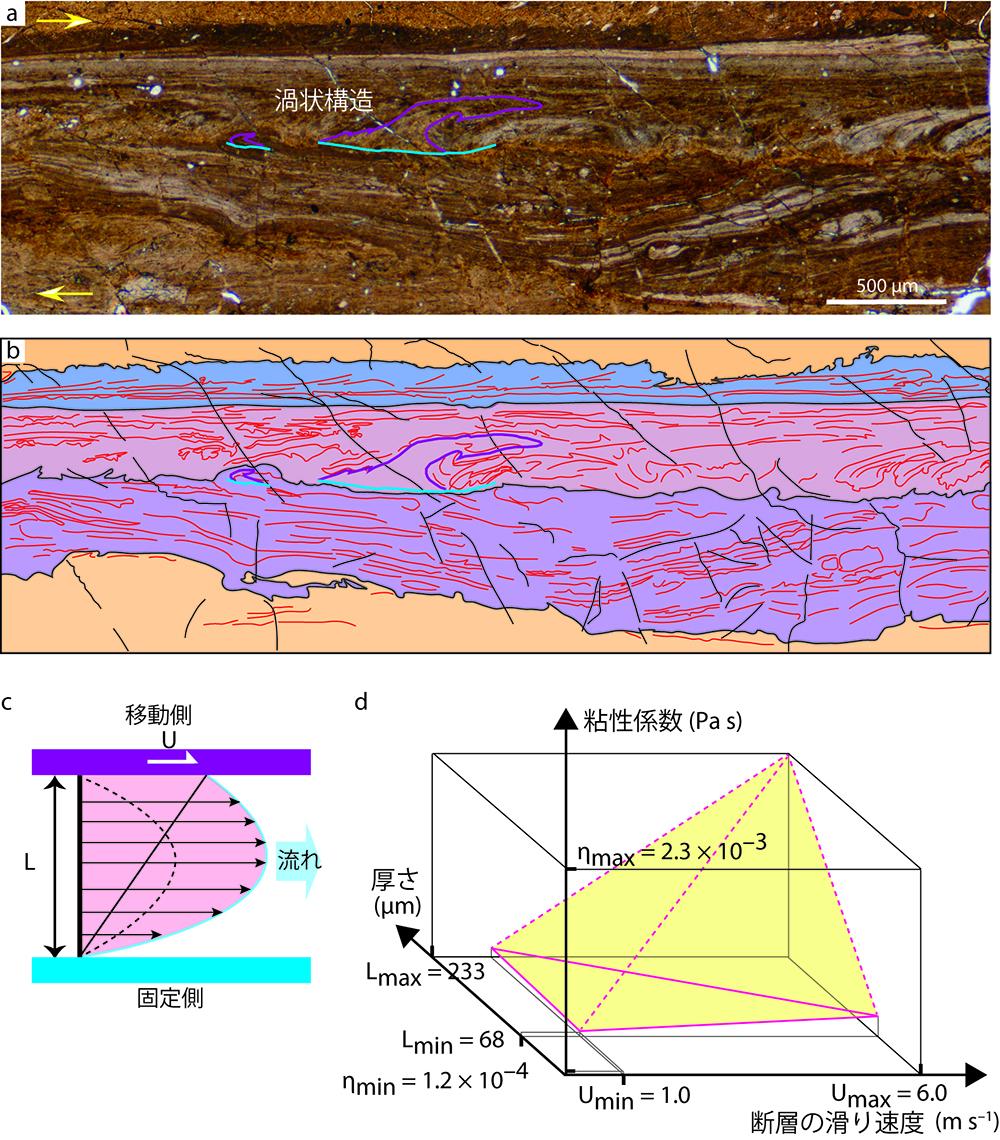
figure2:Turbulence-like structures preserved within faults and their hydrodynamic analysis
Expected effects and future developments
This study showed that thermal pressure during an earthquake significantly fluidizes fault material, making the fault extremely slippery. Such low viscosity on faults during earthquakes can promote significant slip weakening of faults, which can lead to huge tsunamis. Therefore, by applying the research method used in this study to the evaluation of faults in Nankai Trough earthquakes, which are feared to occur in the future, as well as plate boundary faults and terrestrial active faults caused by subduction-zone earthquakes around the world, it is expected to contribute to the evaluation of the scale of fault slips and tsunami disaster prevention.
Funding information
This research isJapan Society for the Promotion of Science (JSPS) Grants-in-Aid for Scientific Research Fundamental Research (C) (Project number: JP25K07460)This project was carried out with the support of
Glossary
*1Turbulent flow: A flow in which parts of the fluid mix and move irregularly, and the direction of flow (streamlines) exhibits small irregular fluctuations.
*2thermal pressureization:Due to frictional heat generation, the pressure of the fluid inside the fault increases and the frictional force(shear resistance)The effect of decreasing.
*3Couette Poiseuille flow: A flow style in which Couette flow due to shear between parallel plates and Poiseuille flow driven by pressure difference exist simultaneously.
*4 Laminar flow: Refers to a state in which fluid flows smoothly without turbulence in layers, where streamlines are almost parallel and there is little mixing.
*5 Reynolds number: “Inertia force÷A dimensionless number that expresses viscous force; small values tend to cause laminar flow, and large values tend to cause turbulent flow.
*6 Pseudotachylyte: Rock that partially melts due to frictional heat generated by a fault, then cools and solidifies.
Magazine information
[Publication magazine]Scientific Reports
[Paper title]Coseismic turbulence-like flow of fault material along the shallow portion of a plate-subduction-related fault
【author】Tatsuru Fukuta & Tetsuro Hirono
[Publication URL]https://doi.org/10.1038/s41598-026-57630-y
Contact information regarding research detailsOsaka Public University Graduate School of Science
Professor Tetsuro Hirono
TEL:06-6605-2591
E-mail:hirono[at]omu.ac.jp
*Please change [at] to @.
Contact for press inquiriesOsaka Public University Public Relations Division
Person in charge: Kubo
TEL: 06-6967-1834
E-mail: koho-list[at]ml.omu.ac.jp
*Please change [at] to @.
Source: https://www.omu.ac.jp/info/research_news/entry-25238.html