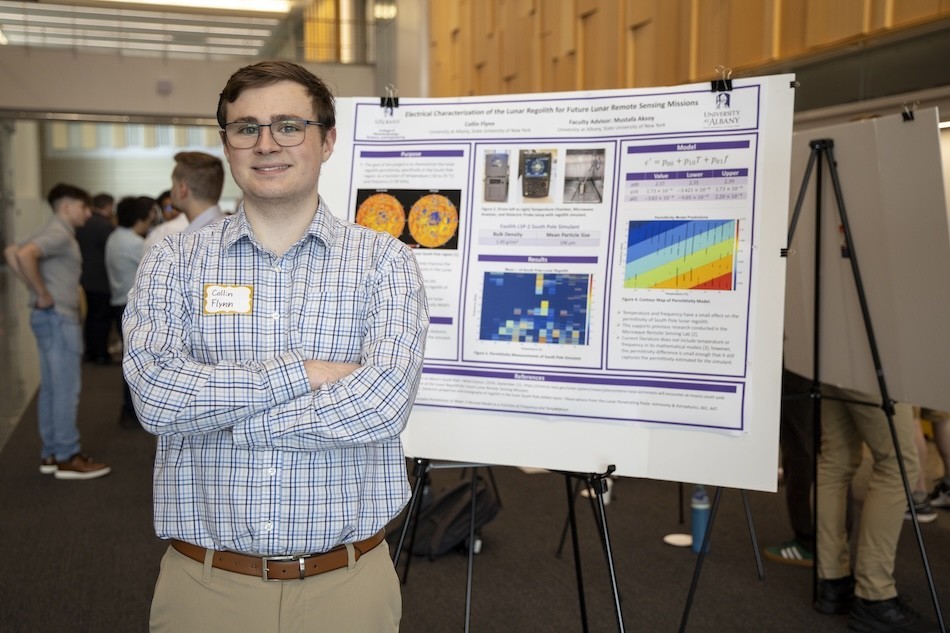
UAlbany sophomore Collin Flynn spent his summer studying the electrical properties of moon soil in support of ongoing efforts to get humans back to the moon, thanks to a 10-week research opportunity provided through the College of Nanotechnology, Science, and Engineering's Summer Undergraduate Research Program.
ResearchEnvironment & ClimateTechnology & Innovation#University at Albany#research#climate#decarbonization#advanced materials#innovation
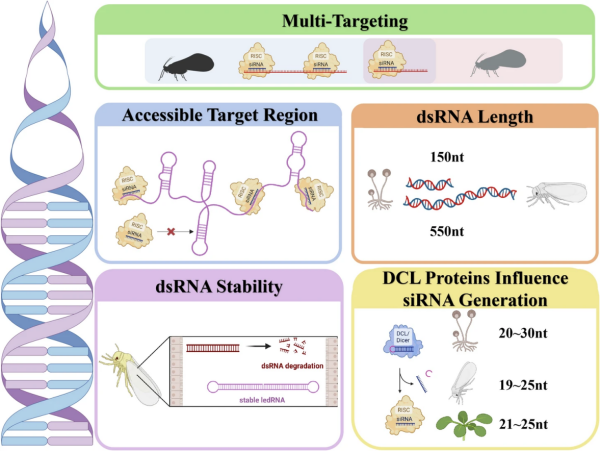
A research team has recently published a systematic reference framework for advancing Spray-Induced Gene Silencing (SIGS) from proof-of-concept toward industrialization. Led by Prof. ZHANG Tao from the Xinjiang Institute of Ecology and Geography (XIEG) of the Chinese Academy of Sciences (CAS), in collaboration with researchers from the Institute of Germplasm Resources and Biotechnology under the T
Life SciencesEnvironment & ClimateBioengineering#Chinese Academy of Sciences#Research News#Bioengineering#genomics#biology#climate#decarbonization
Methane emissions from cattle and sheep contribute to global greenhouse gas emissions and reflect a loss of dietary energy that could otherwise support animal growth and productivity, which is a major challenge for sustainable livestock production. M ost existing approaches to reduce methane emissions focus primarily on suppressing methanogenesis. In a study published in The Innovation , a researc
Life SciencesEnvironment & ClimateSustainable Development#Chinese Academy of Sciences#Research News#Sustainable Development#Pollutants#genomics#biology#climate#decarbonization
Researchers use atomic data to measure distinct cosmic elements
Research NewsSpace & AstronomyEnvironment & Climate#Ohio State University#Science#astronomy#Share on: X#More Ohio State News#View all headlines - More Ohio State News#astrophysics#climate
The Department of Energy’s (DOE) Oak Ridge National Laboratory (ORNL) earned a new lab record with 22 R&D 100 Awards in 2026 for technologies that advance energy, manufacturing, computing, biotechnology and other fields. ORNL led 18 of the winning technologies and contributed to four additional award-winning projects led by partner institutions.
Fusion EnergyLife SciencesEnvironment & Climate#Oak Ridge National Laboratory#fusion#plasma physics#genomics#biology#climate#decarbonization#grid
Environment & ClimateUniversity of Maryland Robert H. Smith School of Business
The University of Maryland’s Robert H. Smith School of Business has named John Stewart as Director and Executive-in-Residence for the Smith Enterprise Risk Consortium (SERC), the school’s applied risk‑management hub connecting academic expertise with industry practice.
Environment & ClimateBusiness#University of Maryland Robert H. Smith School of Business#John Stewart#Prabhudev Konana#William Longbrake#Smith Enterprise Risk Consortium#[email protected]#climate#decarbonization
Graphene is an exceptionally useful material for creating batteries, catalysts, and electronic devices. Yet producing graphene typically requires temperatures as high as 900°C, limiting energy efficiency and making structural control difficult. To make graphene production more practical, a recent study has overcome this long-standing temperature barrier. In a study published in the Journal of the
The four projects, funded by the Leverhulme Trust and Wellcome , span all areas of the University and cover topics ranging from healthcare and artificial intelligence to waste management, pollution and sustainable technology. Funded by the Leverhulme Trust, the first of these DTPS will train the next generation of researchers to tackle the global waste crisis through interdisciplinary research and
Medical ResearchEnvironment & ClimateTechnology & Innovation#Queen Mary University of London#QMUL Latest News#Humanities And Social Sciences#medical research#clinical research#climate#decarbonization#advanced materials
Environment & ClimateWashington University in St. Louis
Machine learning doesn’t replace human intelligence, but it can outlast human endurance, which makes it a very helpful tool for chemistry and material discovery. Scientists know the machine learning models can make predictions based on the vast reams of data it is trained on, but can it take it a step further and massively scale up testing out those predictions? “We already see that AI is powerful
Environment & ClimateTechnology & InnovationData & Computer Science#Washington University in St. Louis#Newsroom#climate#decarbonization#advanced materials#innovation
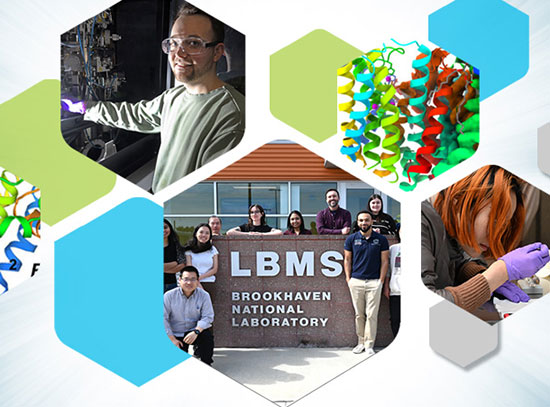
LBMS marks five years as a leading cryo-EM facility, advancing biological discovery through cutting-edge imaging and collaboration.
Medical ResearchLife SciencesEnvironment & Climate#Brookhaven National Laboratory#medical research#clinical research#genomics#biology#climate#decarbonization
Researchers uncover a critical molecular switch that helps bacteria survive environmental stress and antibiotic exposure.
Medical ResearchLife SciencesEnvironment & Climate#Brookhaven National Laboratory#medical research#clinical research#genomics#biology#climate#decarbonization
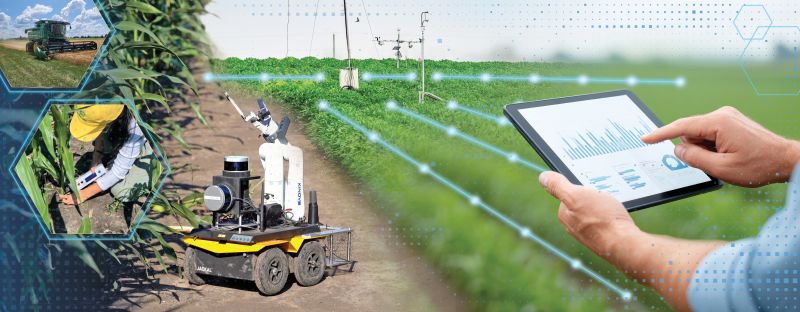
Precision agriculture is revolutionizing the way farmers grow crops, lowering costs, maximizing yields, optimizing the use of irrigation water, addressing farming labor challenges and securing the supply of safe, high-quality food.
Medical ResearchEnvironment & Climate#U.S. National Science Foundation#Science Matters#medical research#clinical research#climate#decarbonization
Environment & ClimateUniversity of California, Riverside
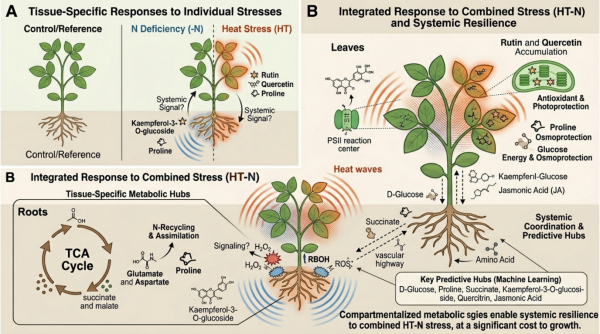
A new study has recently revealed how soybean roots and leaves employ distinct metabolic strategies under nitrogen deficiency and high-temperature stress, which may help guide the development of soybean varieties with enhanced heat tolerance and improved nitrogen-use efficiency. Led by Associate Prof . Mohsin Tanveer from the Xinjiang Institute of Ecology and Geography (XIEG) of the Chinese Academ
Environment & ClimateClimate#Chinese Academy of Sciences#Research News#climate#decarbonization