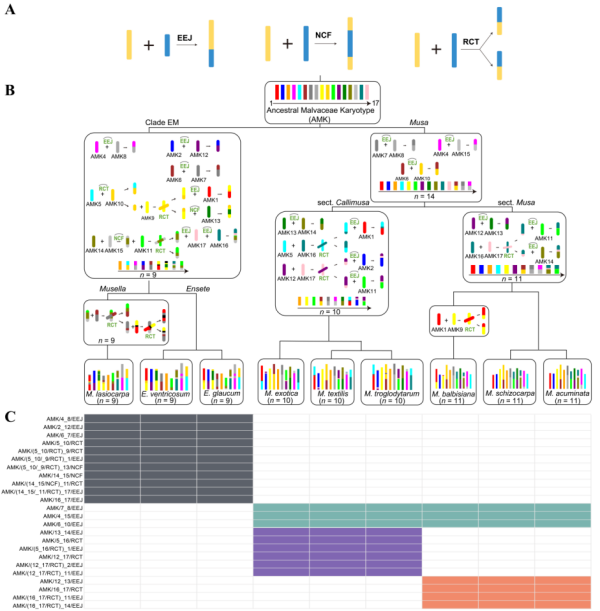
现代主栽香蕉品种高度依赖营养繁殖,存在遗传基础狭窄、遗传多样性低等问题。芭蕉科现存约80个物种,不同类群在染色体基数(如 n =11、10和9)以及花苞颜色等性状上呈现多样性,是研究植物染色体结构演化和花器官性状分化的理想类群。然而,这些不同染色体基数的演化形成机制、染色体结构变异与花苞颜色分化的内在关联,长期以来缺乏基因组与细胞遗传学层面的直接证据。
Life Sciences#Chinese Academy of Sciences#科研进展#CAS#genomics#biology
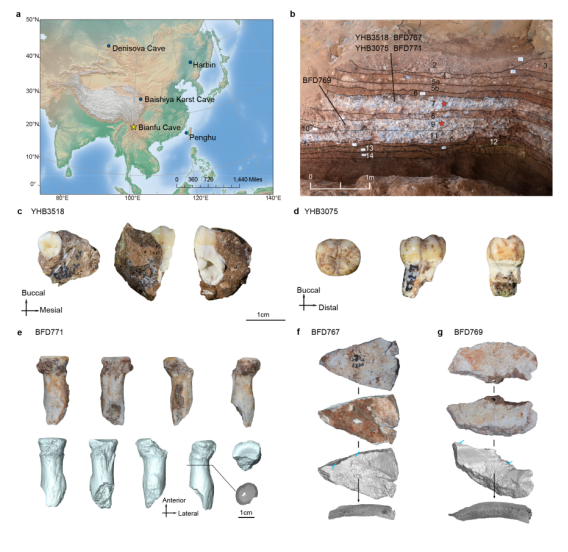
Scientists recently discovered various Denisovan remains in Southwest China dating back to the late Middle Pleistocene, including the first Denisovan radius—one of two long bones in the forearm. Denisovans are a genetically identified archaic hominin group believed to have been widely distributed across Asia. However, due to the limited number of fossil remains, especially postcranial bones—those
Life SciencesEnvironment & ClimatePaleontology#Chinese Academy of Sciences#Research News#paleontology#genomics#biology#climate#decarbonization
Understanding how domestication reshapes brain structure and function remains a fundamental question in evolutionary biology. The hippocampus is a key brain region involved in memory and stress regulation, and it has been thought to undergo "simplification" during domestication. However, the cellular mechanisms underlying these changes remain poorly understood. In a study published in PNAS on Sept
Life SciencesEvolution#Chinese Academy of Sciences#Research News#Evolution#genomics#biology
In her new leadership role, Chiappinelli will build cancer research programs while continuing her work on how ancient viral DNA can trigger anti-tumor immune responses.
Medical ResearchLife Sciences#George Washington University#Research News#SMHS#medical research#clinical research#genomics#biology
A University of Minnesota-led multi-institutional research team has discovered a highly potent small molecule that blocks Ebola virus entry by stabilizing the virus's entry protein and provides strong protection when given orally in a preclinical model.
Medical ResearchLife SciencesResearch#University of Minnesota Medical School#UMN Medical School#research#medical research#clinical research#genomics#biology
Scientists have recently found that a long‑term dominant diatom in China's South-to-North Water Diversion Project maintains its edge through a mutually reinforced cycle with bacteria , whereas a short‑term dominant species lacks such a close partnership and is far less resilient . The study, led by researchers from the Institute of Hydrobiology (IHB) of the Chinese Academy of Sciences, was publish
Life SciencesEnvironment & ClimateBiodiversity#Chinese Academy of Sciences#Research News#biodiversity#genomics#biology#climate#decarbonization