Recently, the National Space Science Center of the Chinese Academy of Sciences has conducted research on the problem of determining the surface geometric parameters of the coronal magnetic field source. It analyzed the forward and inverse problems of the potential field source surface model (PFSS) from the perspective of free boundary problems and shape optimization, and combined with the near-solar in-situ observations of the PSP satellite to construct a source surface radius optimization algorithm. This study used ACE satellite observations for independent verification to reveal the overall trend of optimal source surface radius changes with solar activity and the trade-off relationship between different observation indicators.
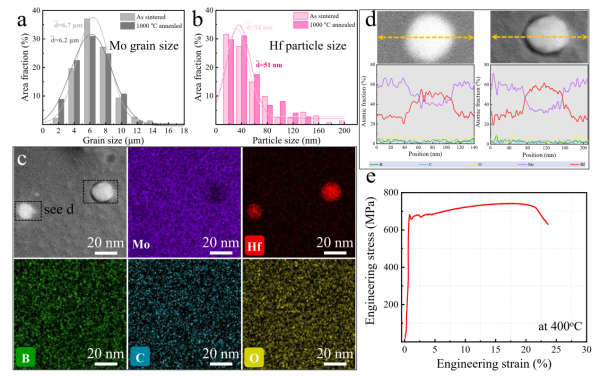
Recently, the Hefei Institute of Physical Sciences, Chinese Academy of Sciences, has made progress in the research of high-performance molybdenum alloys. By designing a solid-state reaction, the research team used HfB 2 to react with impurity oxygen in molybdenum powder to form high-density, highly thermally stable and evenly distributed nano-Hf particles inside the molybdenum grains. This solved the problem of traditional dispersed particles being prone to agglomeration and coarsening, and achieved a synergistic improvement in the strength, plasticity and high-temperature stability of molybdenum alloys.
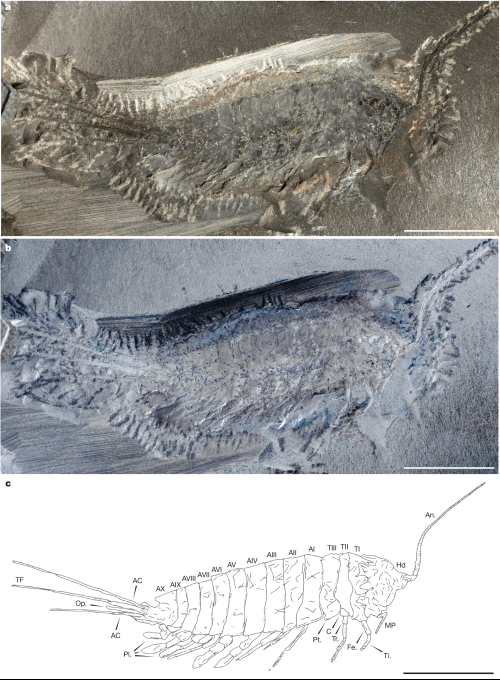
The establishment of complex terrestrial ecosystems is a milestone in the history of the evolution of life on Earth. It marks the complete escape of life from the constraints of the ocean and opens a new stage in the evolution of terrestrial biodiversity. Molecular clock estimates, trace fossils, and evidence from specific buried biota indicate that the evolutionary process of arthropod landings can be traced back to the Cambrian-Ordovician period, much earlier than recognized by traditional fossil records. As the animal group with the highest species diversity on Earth, there has been a long-standing research gap in the early origins and landing evolution history of insects.