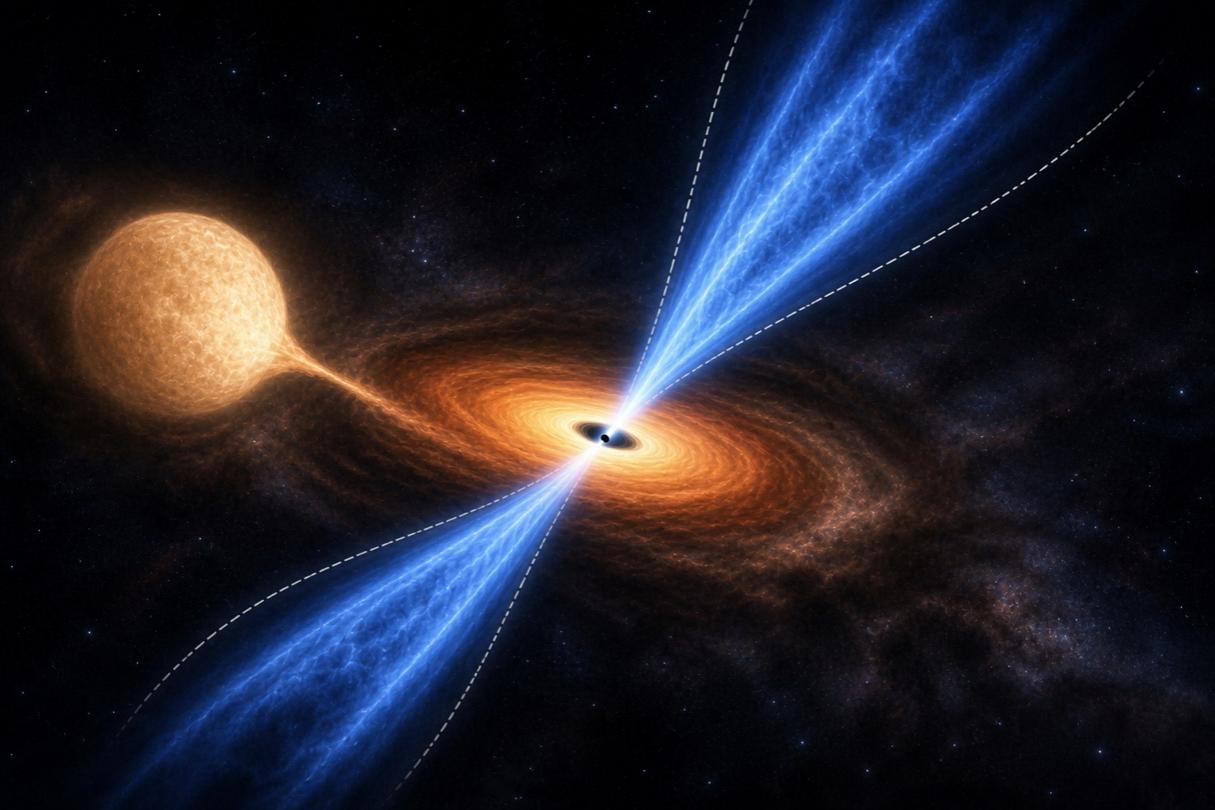
Active galactic nuclei (AGN), powered by accreting supermassive black holes, and X-ray binaries (XRBs), powered by accreting neutron stars or stellar-mass black holes, are two representative classes of compact accreting systems. Relativistic collimated jets are among the most spectacular phenomena in these systems. Understanding how these powerful outflows are launched, accelerated, and collimated
Space & AstronomyAstronomy#Chinese Academy of Sciences#Research News#astronomy#astrophysics
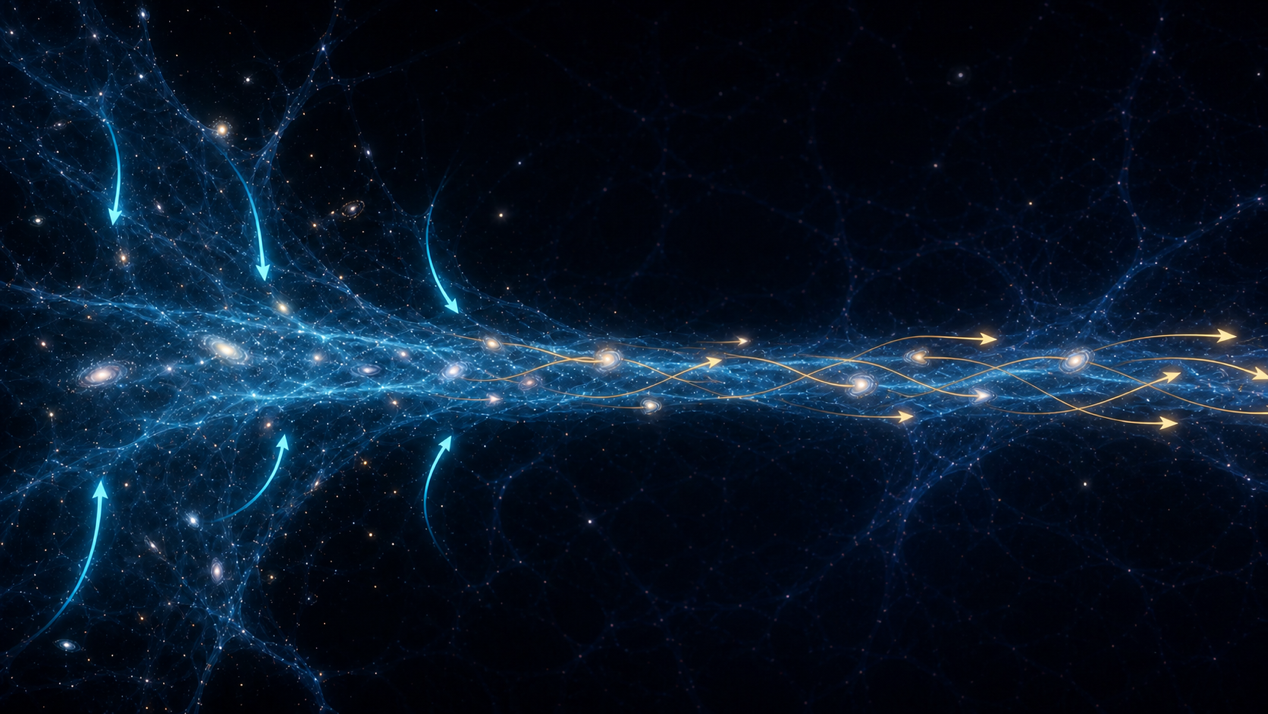
A research team from the Shanghai Astronomical Observatory (SHAO) of the Chinese Academy of Sciences (CAS) has discovered that satellite galaxies retain a measurable "kinematic memory" of matter flowing into and along cosmic filaments. Using a large spectroscopic sample from the Sloan Digital Sky Survey (SDSS) , the team found that satellite galaxies preferentially orbit within planes that contain
Space & AstronomyAstronomy#Chinese Academy of Sciences#Research News#astronomy#astrophysics
Galaxy mergers are among the most spectacular and destructive events in the universe. During these encounters, not only are billions of stars redistributed, but the supermassive black holes lurking in the galaxies' centers can also interact with one another. Yet systems where three galaxies merge simultaneously are uncommon. Now, researchers have obtained the first direct observational evidence fo
Space & AstronomyAstronomy#Chinese Academy of Sciences#Research News#astronomy#astrophysics
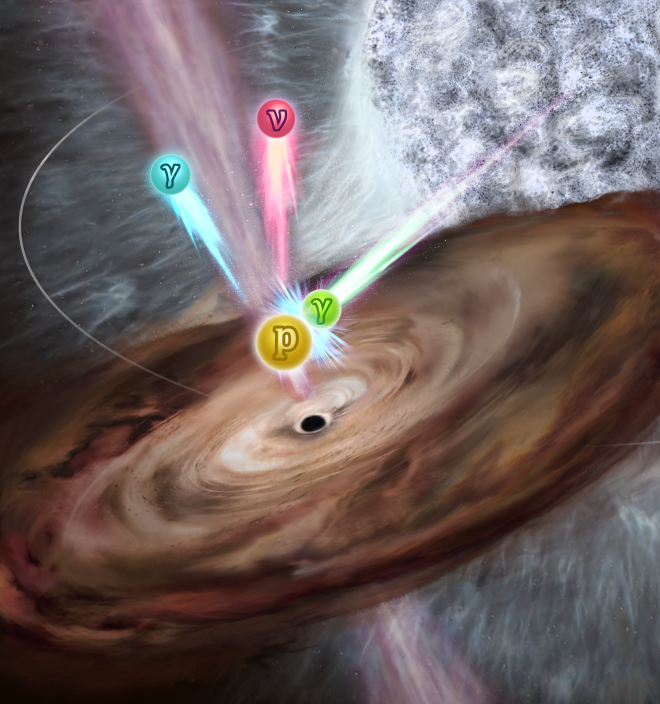
The Large High Altitude Air Shower Observatory (LHAASO) revealed that the peculiar binary system Cygnus X-3 in the constellation Cygnus is the highest energy gamma-ray source known to date. The temporal variability and spectral characteristics measured by LHAASO confirmed this object as the source of cosmic rays, with particle energies reaching at least 30 PeV (1PeV=10 15 eV), far exceeding curren
Space & AstronomyParticle PhysicsAstronomy#Chinese Academy of Sciences#Research News#astronomy#Space Exploration#astrophysics#Particle Physics#High Energy Physics
Recently, a research team from the Shanghai Astronomical Observatory (SHAO) of the Chinese Academy of Sciences (CAS), in collaboration with Anhui Normal University, used orbital similarity criteria and numerical simulations to systematically screen known near-Earth asteroids. They identified multiple groups of potential asteroid pairs that may share a common origin and estimated their possible sep
Space & AstronomyAstronomy#Chinese Academy of Sciences#Research News#astronomy#astrophysics
Thanks to significant philanthropic and foundation support over the last year, students across American University’s College of Arts and Sciences are turning what they learn into real-world impact.
Space & AstronomyEnvironment & ClimateResearch#American University#Research News#Research · August 20#research#astronomy#astrophysics#climate#decarbonization