Galaxy mergers are among the most spectacular and destructive events in the universe. During these encounters, not only are billions of stars redistributed, but the supermassive black holes lurking in the galaxies' centers can also interact with one another. Yet systems where three galaxies merge simultaneously are uncommon. Now, researchers have obtained the first direct observational evidence fo
Space & AstronomyAstronomy#Chinese Academy of Sciences#Research News#astronomy#astrophysics
The Large High Altitude Air Shower Observatory (LHAASO) revealed that the peculiar binary system Cygnus X-3 in the constellation Cygnus is the highest energy gamma-ray source known to date. The temporal variability and spectral characteristics measured by LHAASO confirmed this object as the source of cosmic rays, with particle energies reaching at least 30 PeV (1PeV=10 15 eV), far exceeding curren
Space & AstronomyParticle PhysicsAstronomy#Chinese Academy of Sciences#Research News#astronomy#Space Exploration#astrophysics#Particle Physics#High Energy Physics
Recently, a research team from the Shanghai Astronomical Observatory (SHAO) of the Chinese Academy of Sciences (CAS), in collaboration with Anhui Normal University, used orbital similarity criteria and numerical simulations to systematically screen known near-Earth asteroids. They identified multiple groups of potential asteroid pairs that may share a common origin and estimated their possible sep
Space & AstronomyAstronomy#Chinese Academy of Sciences#Research News#astronomy#astrophysics
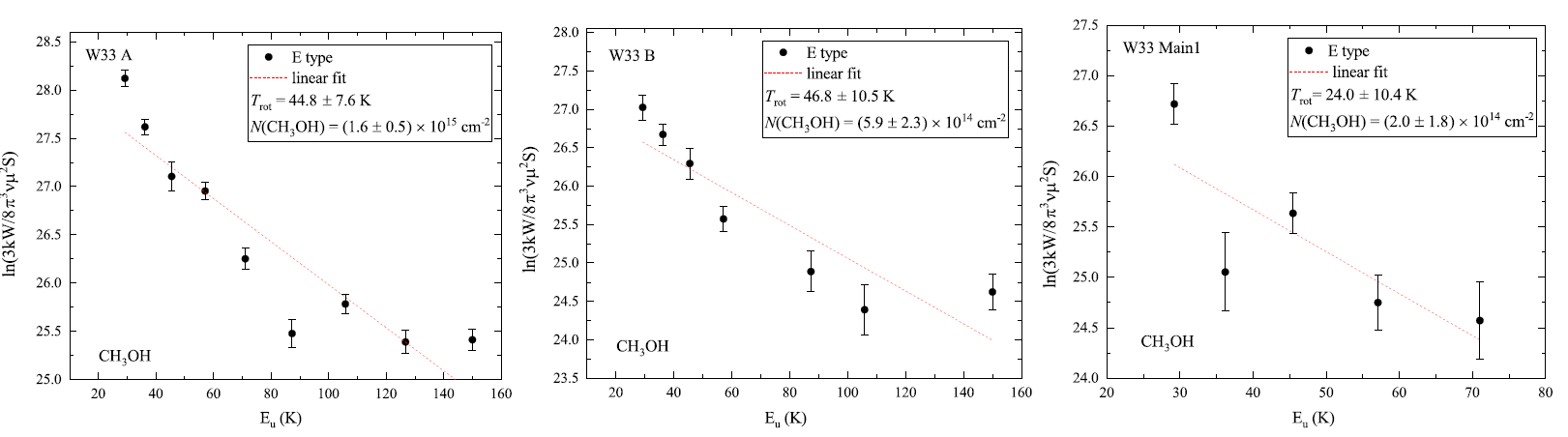
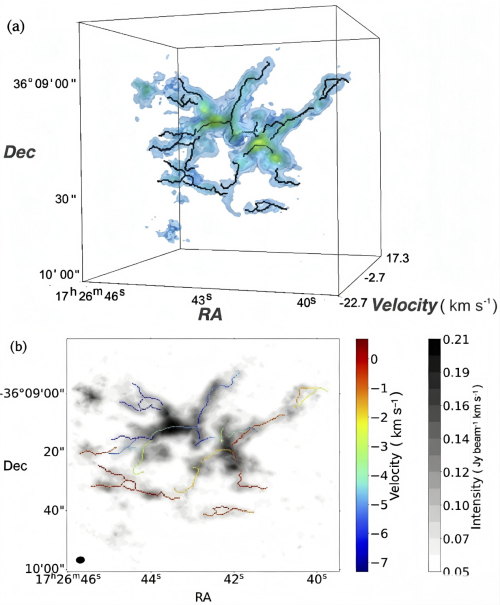
Researchers have recently carried out 18-26 GHz broadband spectral-line observations of the W33 giant molecular cloud. Using the German Effelsberg 100-meter radio telescope, they determined the physical and chemical properties of the dense clumps within it . The study, led by Associate Researcher Kadirya Tursun of the star formation and evolution group at the Xinjiang Astronomical Observatory of t
Space & AstronomyAstronomy#Chinese Academy of Sciences#Research News#astronomy#astrophysics
Thanks to significant philanthropic and foundation support over the last year, students across American University’s College of Arts and Sciences are turning what they learn into real-world impact.
Space & AstronomyEnvironment & ClimateResearch#American University#Research News#Research · August 20#research#astronomy#astrophysics#climate#decarbonization
Space & AstronomyWashington University in St. Louis
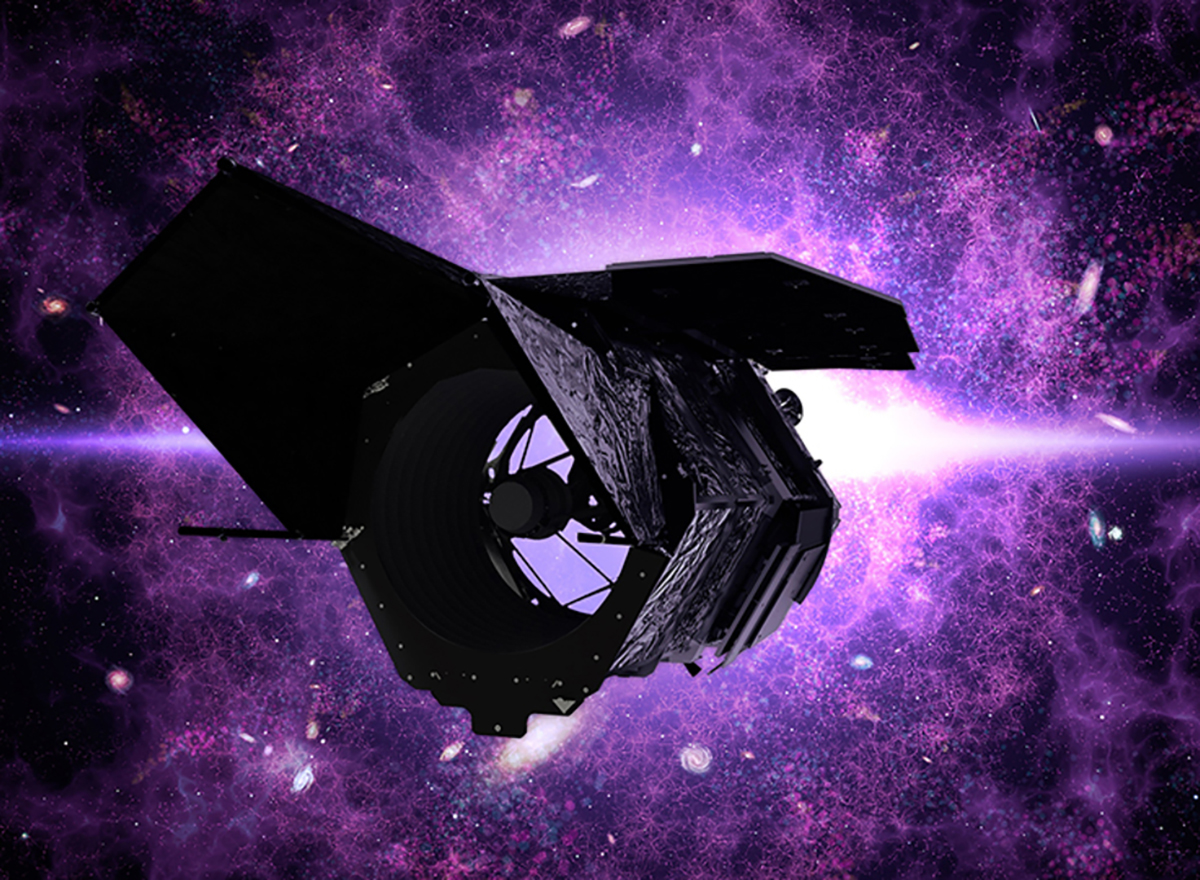
Ahead of the scheduled Aug. 30 launch of NASA’s Nancy Grace Roman Space Telescope, several Washington University in St. Louis researchers have been selected to play important roles in the mission’s inaugural science program. The Roman telescope promises to transform our understanding of the universe. NASA will use the Roman telescope to investigate dark energy, discover thousands of exoplanets and
Space & AstronomySpace#Washington University in St. Louis#Newsroom#astronomy#astrophysics
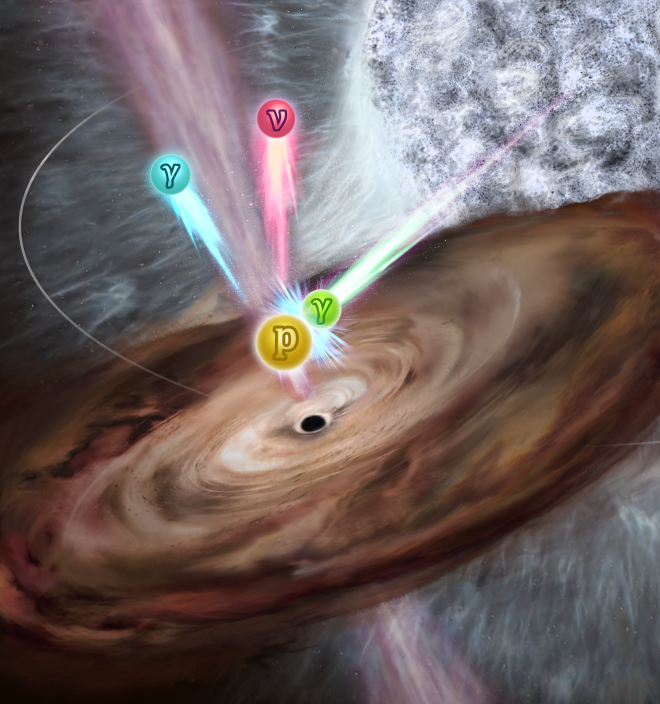
An international research team, including an astronomer from the University of Michigan, have revealed how certain black holes manage to eat and grow while simultaneously flinging their food across galaxies.
Space & Astronomy#University of Michigan#News Releases#Science & Technology#astronomy#black hole#galaxy#Michigan News#astrophysics
Space & AstronomyUniversity of Wisconsin-Milwaukee
A few years ago, scientists discovered an unusual astronomical phenomenon: Objects that sent short bursts of radio waves at distinct intervals, emanating from various parts of space.
Space & Astronomy#University of Wisconsin-Milwaukee#UWM Report#research#Science & Technology#astronomy#astrophysics
Space & AstronomyLawrence Livermore National Laboratory
The NSF-DOE Vera C. Rubin Observatory marked a major milestone with the beginning of the Legacy Survey of Space and Time (LSST), a 10-year effort to capture the universe in unprecedented detail. Lawrence Livermore National Laboratory (LLNL) engineer and former project manager for the LSST Camera, Vincent Riot reflected on the culmination of the project and the journey ahead. Development of the world's largest digital camera began before Riot arrived at the Lab in 2003. For most of his career, he worked to build first-of-its kind optical components, including lenses that would later be
Space & Astronomy#Lawrence Livermore National Laboratory#Academic Engagement#Engineering#Lasers and Optical S&T#Top Story#astronomy#astrophysics#NSF–DOE Vera C. Rubin Observatory
Space & AstronomyPacific Northwest National Laboratory
Book cover with a man standing on a yellow kite in a blue sky According to a new book by Queen Mary University of London academic Dr S M A Moin , the answer lies not in technology itself, but in the human capacity for imagination, ethical judgement and moral courage. Published today (31 July), Leadership in the Imagination Age: Navigating Unprecedented Possibilities and Moral Challenges argues tha
Space & AstronomyEnvironment & Climate#Queen Mary University of London#QMUL Latest News#Humanities And Social Sciences#astronomy#astrophysics#climate#decarbonization