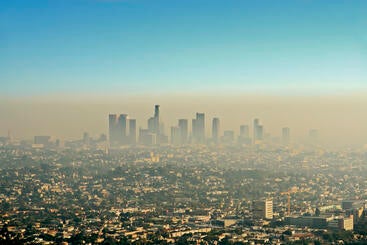
CanopyFit maps physical barriers alongside heat and equity data to maximize shade and cooling.
Environment & ClimateResearch#University of British Columbia#UBC News#Climate & Environment#Media Releases#Science & Technology#CanopyFit#City of Kelowna#Discover and Innovate for Impact
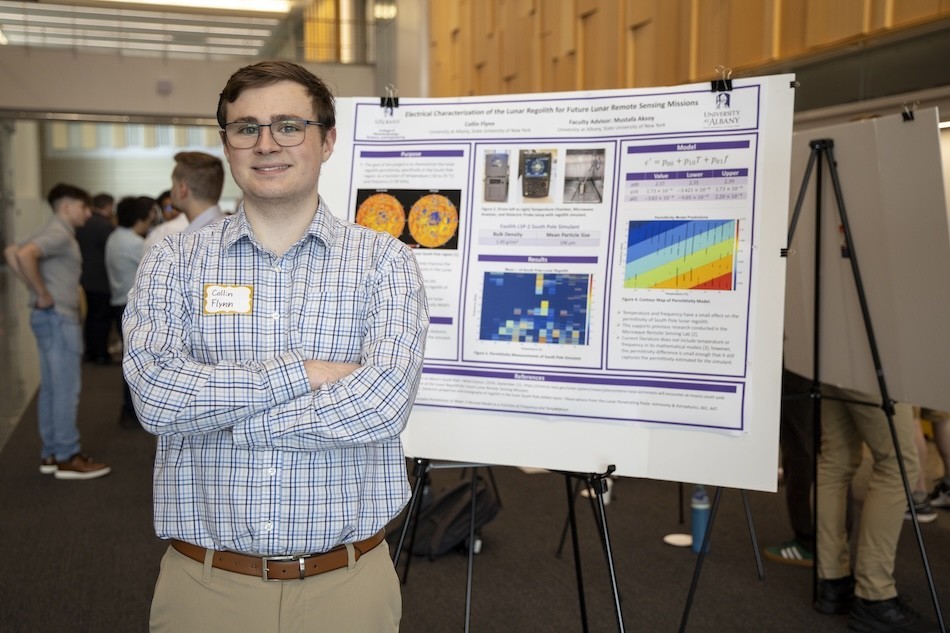
UAlbany sophomore Collin Flynn spent his summer studying the electrical properties of moon soil in support of ongoing efforts to get humans back to the moon, thanks to a 10-week research opportunity provided through the College of Nanotechnology, Science, and Engineering's Summer Undergraduate Research Program.
ResearchEnvironment & ClimateTechnology & Innovation#University at Albany#research#climate#decarbonization#advanced materials#innovation
Environment & ClimateUniversity of Maryland Robert H. Smith School of Business
The University of Maryland’s Robert H. Smith School of Business has named John Stewart as Director and Executive-in-Residence for the Smith Enterprise Risk Consortium (SERC), the school’s applied risk‑management hub connecting academic expertise with industry practice.
Environment & ClimateBusiness#University of Maryland Robert H. Smith School of Business#John Stewart#Prabhudev Konana#William Longbrake#Smith Enterprise Risk Consortium#[email protected]#climate#decarbonization
Graphene is an exceptionally useful material for creating batteries, catalysts, and electronic devices. Yet producing graphene typically requires temperatures as high as 900°C, limiting energy efficiency and making structural control difficult. To make graphene production more practical, a recent study has overcome this long-standing temperature barrier. In a study published in the Journal of the
The four projects, funded by the Leverhulme Trust and Wellcome , span all areas of the University and cover topics ranging from healthcare and artificial intelligence to waste management, pollution and sustainable technology. Funded by the Leverhulme Trust, the first of these DTPS will train the next generation of researchers to tackle the global waste crisis through interdisciplinary research and
Medical ResearchEnvironment & ClimateTechnology & Innovation#Queen Mary University of London#QMUL Latest News#Humanities And Social Sciences#medical research#clinical research#climate#decarbonization#advanced materials
Environment & ClimateWashington University in St. Louis
Machine learning doesn’t replace human intelligence, but it can outlast human endurance, which makes it a very helpful tool for chemistry and material discovery. Scientists know the machine learning models can make predictions based on the vast reams of data it is trained on, but can it take it a step further and massively scale up testing out those predictions? “We already see that AI is powerful
Environment & ClimateTechnology & InnovationData & Computer Science#Washington University in St. Louis#Newsroom#climate#decarbonization#advanced materials#innovation
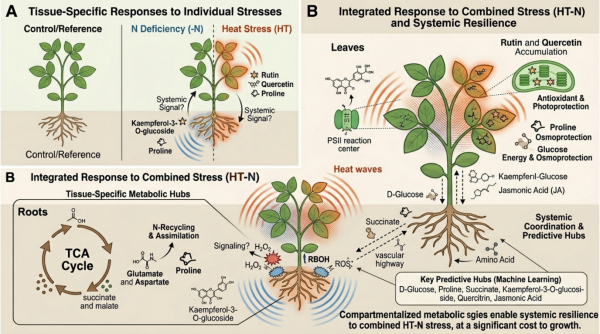
A new study has recently revealed how soybean roots and leaves employ distinct metabolic strategies under nitrogen deficiency and high-temperature stress, which may help guide the development of soybean varieties with enhanced heat tolerance and improved nitrogen-use efficiency. Led by Associate Prof . Mohsin Tanveer from the Xinjiang Institute of Ecology and Geography (XIEG) of the Chinese Academ
Environment & ClimateClimate#Chinese Academy of Sciences#Research News#climate#decarbonization
The San Diego Supercomputer Center will serve as the testing ground for a new $8.48 million project that could transform how AI data centers receive and manage electricity while helping prevent them from overwhelming California's power grid.
ResearchEnvironment & ClimateEnergy Infrastructure#University of California San Diego#UC San Diego#UCSD Today#climate#decarbonization#grid#energy security
Hydrogen gas (H₂) is widely regarded as a promising clean energy source. By weight, it stores nearly three times more energy than gasoline, and its use does not directly release carbon dioxide (CO₂). Yet most H₂ is still produced from fossil fuels through CO₂-intensive processes. Storing and transporting this energy-rich gas are also costly and technically challenging. Therefore, developing sustai
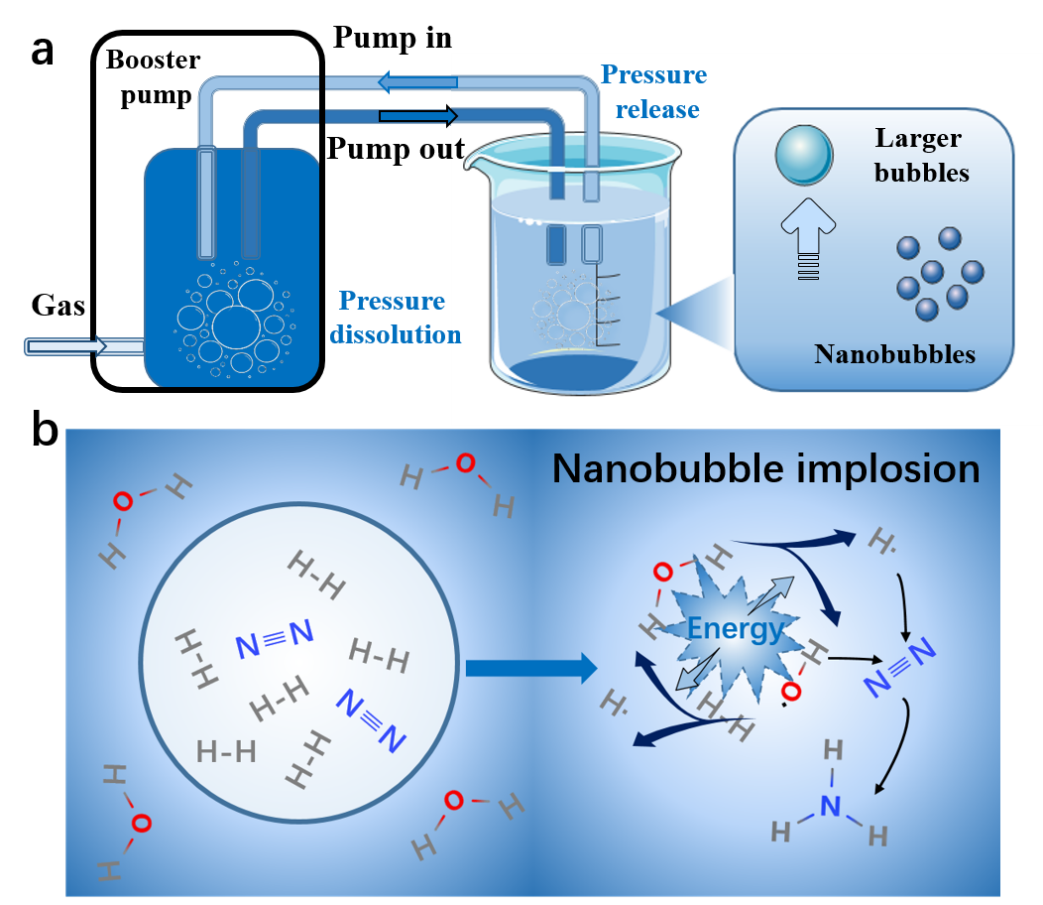
Ammonia is a cornerstone of global agriculture and a promising carrier for renewable energy storage. Yet nearly all of it is still produced via the Haber‑Bosch process, which operates above 400 °C and 200 atm, consumes about two percent of global energy, and emits large amounts of carbon dioxide. That is why finding a greener route under mild conditions has become a major challenge in chemistry an
Environment & ClimateNanotechnologyChemical Engineering#Chinese Academy of Sciences#Research News#Nanotechnology#Chemical Engineering#climate#decarbonization
UB-led research reveals that a tiny chemical difference between RNA and DNA helps explain why RNA more readily organizes into droplets when temperatures rise.
ResearchEnvironment & Climate#University at Buffalo#UBNow#research#climate#decarbonization