Understanding and wielding the quantum properties of nature is the ambitious objective of eight research institutes that will collectively receive more than $290 million from the U.S. National Science…
Life SciencesTechnology & Innovation#U.S. National Science Foundation#genomics#biology#advanced materials#innovation
The U.S. National Science Foundation is investing $50 million in research infrastructure to enable the discovery and development of materials that can withstand extreme conditions, from lightweight…
Fusion EnergyTechnology & Innovation#U.S. National Science Foundation#fusion#plasma physics#advanced materials#innovation
The U.S. National Science Foundation is pushing materials science beyond the state-of-the-art with an investment of $108 million in six advanced research centers. The centers will explore a broad…
Medical ResearchTechnology & Innovation#U.S. National Science Foundation#medical research#clinical research#advanced materials#innovation
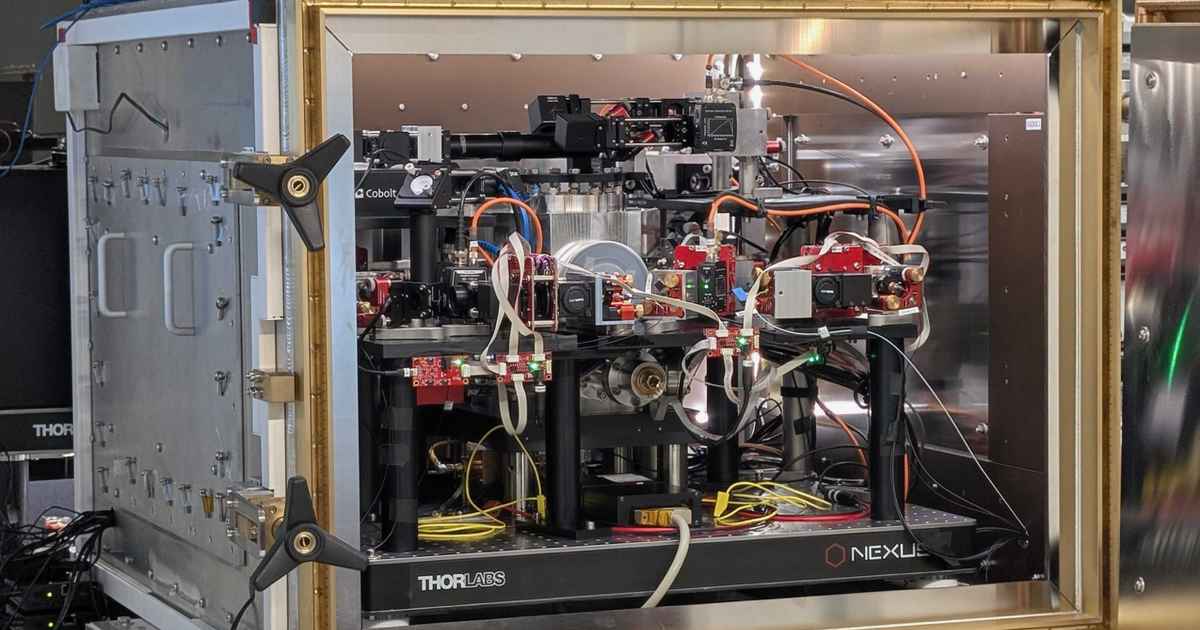
Quantum sensors can measure physical properties thousands of times more precisely than current methods, advancing fields including medicine, defense, navigation, energy and manufacturing
Space & AstronomyMedical ResearchTechnology & Innovation#U.S. National Science Foundation#Science Matters#astronomy#astrophysics#medical research#clinical research#advanced materials#innovation
Coalition of research universities dedicated to advancing quantum science
Research NewsTechnology & Innovation#Ohio State University#Campus#staff#Share on: X#More Ohio State News#View all headlines - More Ohio State News#advanced materials#innovation
The Department of Energy’s (DOE) Oak Ridge National Laboratory (ORNL) convened scientists, engineers and technology leaders for the 2026 Southeastern Quantum Conference (SQC), bringing together experts from academia, national laboratories, industry and government to advance quantum information science and strengthen collaborations that support U.S. competitiveness.
Technology & Innovation#Oak Ridge National Laboratory#advanced materials#innovation
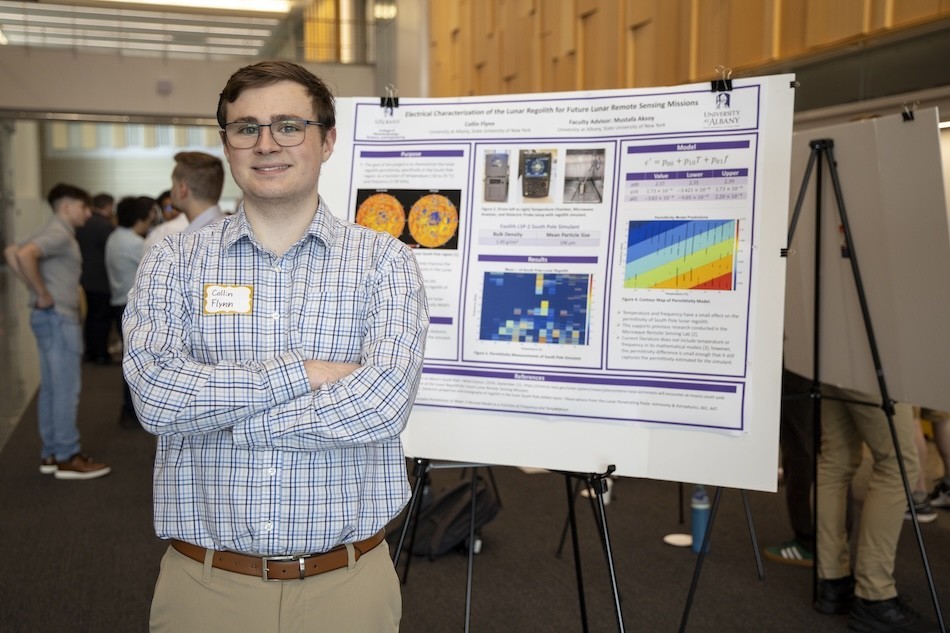
UAlbany sophomore Collin Flynn spent his summer studying the electrical properties of moon soil in support of ongoing efforts to get humans back to the moon, thanks to a 10-week research opportunity provided through the College of Nanotechnology, Science, and Engineering's Summer Undergraduate Research Program.
ResearchEnvironment & ClimateTechnology & Innovation#University at Albany#research#climate#decarbonization#advanced materials#innovation
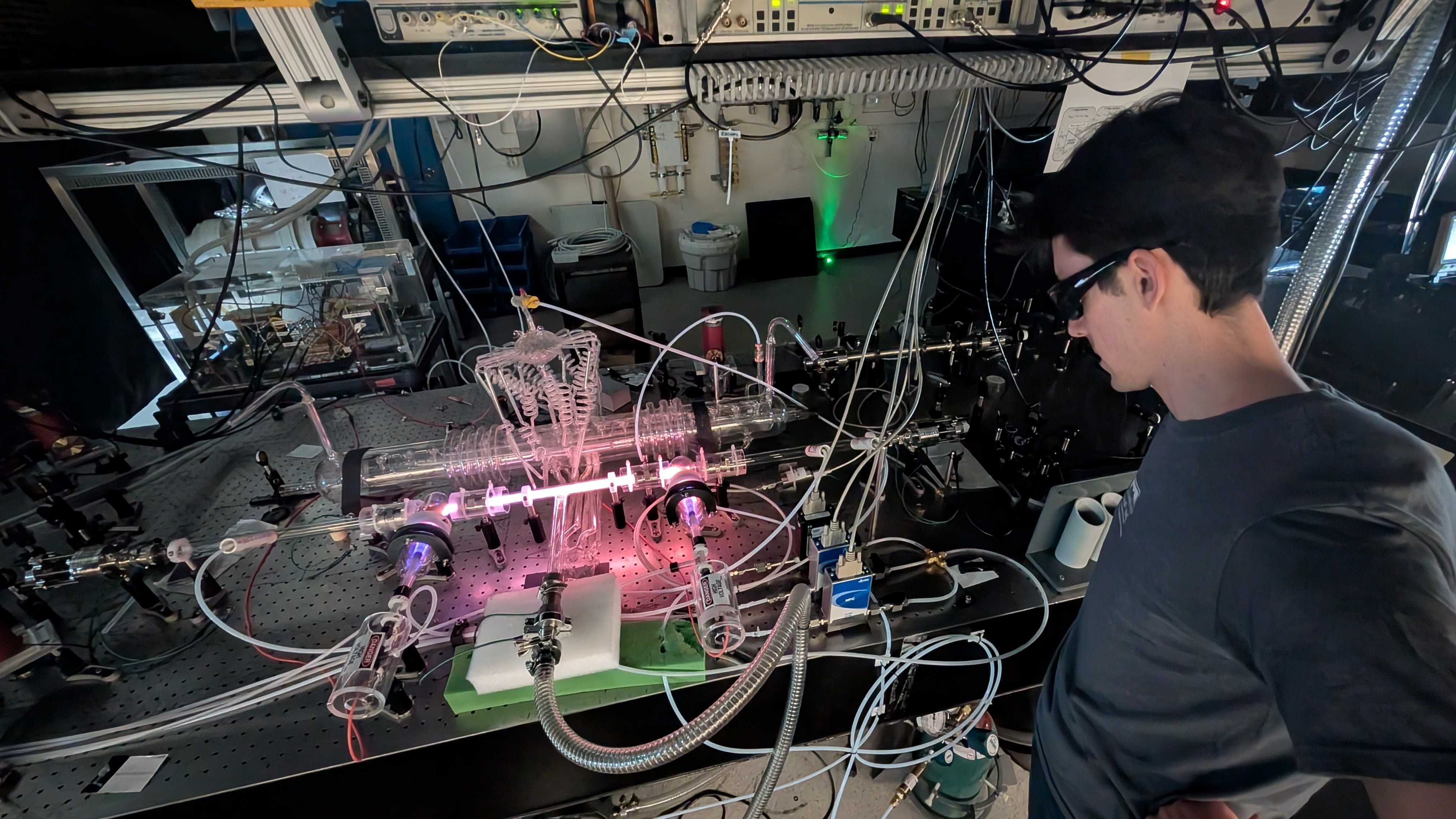
Until now there was an upper limit to the energy produced by atoms irradiated with laser light. Now UC San Diego researchers have crossed the threshold using helium atoms and intense UV lasers.
ResearchTechnology & Innovation#University of California San Diego#UC San Diego#UCSD Today#advanced materials#innovation
A multidisciplinary team of researchers including computer scientists at UC San Diego has been awarded a $37.5 million grant from the National Science Foundation for a center aimed at designing practical and self-correcting quantum computers from top to bottom,.
ResearchTechnology & Innovation#University of California San Diego#UC San Diego#UCSD Today#advanced materials#innovation
Graphene is an exceptionally useful material for creating batteries, catalysts, and electronic devices. Yet producing graphene typically requires temperatures as high as 900°C, limiting energy efficiency and making structural control difficult. To make graphene production more practical, a recent study has overcome this long-standing temperature barrier. In a study published in the Journal of the
Physicists from the University of Amsterdam have teamed up with colleagues from Zürich to experimentally verify a curious phenomenon that had already been predicted by theory: an atomic-scale effect similar to how a football curves when kicked with spin. The results were published in the journal Physical Review Letters earlier this month.
Technology & Innovation#University of Amsterdam#advanced materials#innovation
Environment & ClimateWashington University in St. Louis
Machine learning doesn’t replace human intelligence, but it can outlast human endurance, which makes it a very helpful tool for chemistry and material discovery. Scientists know the machine learning models can make predictions based on the vast reams of data it is trained on, but can it take it a step further and massively scale up testing out those predictions? “We already see that AI is powerful
Environment & ClimateTechnology & InnovationData & Computer Science#Washington University in St. Louis#Newsroom#climate#decarbonization#advanced materials#innovation
Scientists could have a new way to explore the hidden behaviour of matter, thanks to research involving Queen Mary University of London that uses a quantum computer to carry out a new form of computational spectroscopy. Spectroscopy is an important scientific technique used to understand the properties of matter. By analysing how materials and molecules respond to energy or light, researchers can
Technology & Innovation#Queen Mary University of London#QMUL Latest News#Science And Engineering#advanced materials#innovation
Funding from the National Science Foundation will expand the quantum workforce and advance research projects including more accurate atomic clocks and sensors for early detection of disease.
Medical ResearchTechnology & Innovation#University of Colorado Boulder#CU Boulder#CU Boulder Today#medical research#clinical research#advanced materials#innovation
U.S. National Science Foundation-supported researchers are behind an educational effort to introduce artificial intelligence techniques to elementary school children...
Researchers discuss the challenges of introducing artificial intelligence concepts into elementary school curriculum and how the project led to a win in the inaugural Presidential AI Challenge...
A quantum particle that crosses a ‘duality defect’ – a boundary between order and disorder – is never reflected. It always passes through, but it comes out changed: not a particle, but a spread-out, thread-like excitation that researchers compare to a wisp of fog.
Technology & Innovation#University of Cambridge#Sarah Collins#Quantum#magnetism#Quantum physics#advanced materials#innovation
Kidney disease is silent in its early stages, progressing without symptoms until the disease is advanced. Researchers in the McKelvey School of Engineering at Washington University in St. Louis, in collaboration with researchers at WashU Medicine and at Texas A&M University, have been developing a minimally invasive method to improve diagnosis in earlier stages. New research from the lab of Srikan
Medical ResearchEnvironment & ClimateTechnology & Innovation#Washington University in St. Louis#Newsroom#medical research#clinical research#climate#decarbonization#advanced materials#innovation
Developing safer solid-state batteries requires replacing flammable organic liquid electrolytes with solid-state electrolytes (SSEs) that can conduct ions well, remain stable, and have suitable mechanical properties. As interest in SSEs has grown, so has the volume of research in the field. However, the reported data remain scattered across the literature and vary widely in format and completeness
In partnership with A.J. Tuck Company, scientists at the U.S. Department of Energy’s (DOE) Oak Ridge National Laboratory (ORNL) have developed a new manufacturing approach that could simplify production of critical components for advanced nuclear reactors and other energy and defense applications. The method combines 3D printing and electroforming to produce complex, leak-free hot isostatic pressi
Energy InfrastructureTechnology & InnovationEnergy Policy#Oak Ridge National Laboratory#grid#energy security#advanced materials#innovation#energy policy
University of California San Diego researchers will lead one of the Department of Energy’s new Genesis Mission projects focused on accelerating fundamental physics and quantum computing by deploying intelligent AI agents.
ResearchTechnology & Innovation#University of California San Diego#UC San Diego#UCSD Today#advanced materials#innovation







.png)