Astronomers studying a rare stellar explosion first spotted as a brief burst of X-rays used radio observations to help show that the dying star did not produce the powerful jet often associated with gamma-ray bursts. The post NSF NRAO radio observations help rule out a relativistic jet in rare stellar explosion appeared first on National Radio Astronomy Observatory .
Space & Astronomy#National Radio Astronomy Observatory#astronomy#astrophysics#SLAC National Accelerator Laboratory#NSF–DOE Vera C. Rubin Observatory
NASA’s Ames Research Center in California’s Silicon Valley invites media to learn more about NASA’s Nancy Grace Roman Space Telescope, scheduled to launch Sunday, Aug. 30, 2026, from NASA’s Kennedy Space Center in Florida. The Roman telescope will provide a wide, detailed view of the universe, helping scientists study dark energy, exoplanets, and cosmic structures. […]
Press ReleasesSpace & Astronomy#NASA#Ames Research Center#ARC#Nancy Grace Roman Space Telescope#jcneal1#News Release#astronomy#astrophysics
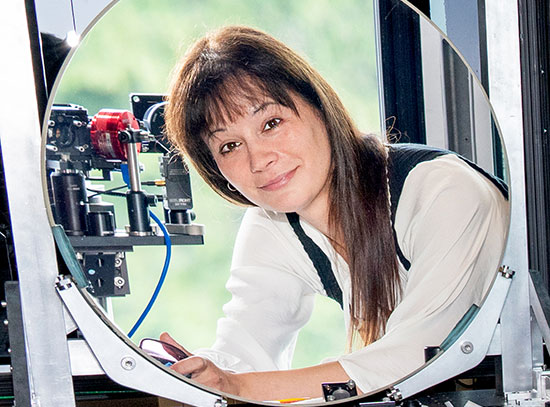
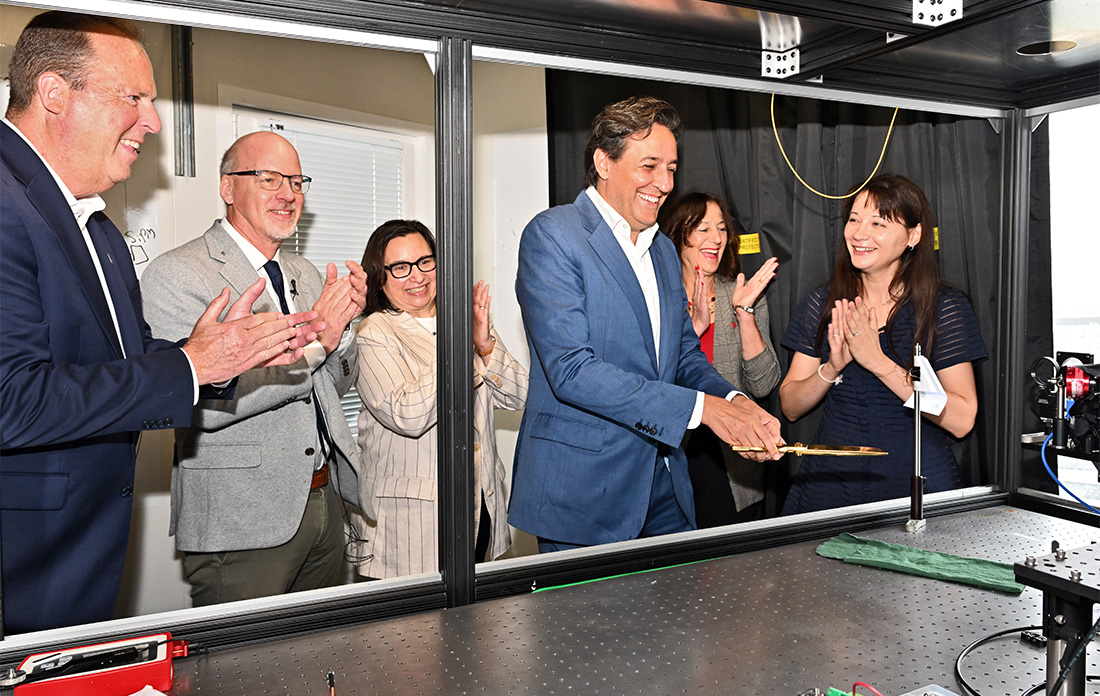
Perched atop a seven-story building at the U.S. Department of Energy’s Brookhaven National Laboratory, the “Quantum Lighthouse” is a key pillar of the free-space optical (FSO) link spanning Brookhaven Lab, the State University of New York at Stony Brook and Yale University.
Space & AstronomyTechnology & Innovation#Brookhaven National Laboratory#astronomy#astrophysics#advanced materials#innovation#NSF–DOE Vera C. Rubin Observatory
Researchers have successfully transmitted light particles containing quantum information through open air between Brookhaven Lab and Stony Brook University.
Space & AstronomyEnergy InfrastructureTechnology & Innovation#Brookhaven National Laboratory#astronomy#astrophysics#grid#energy security#advanced materials#innovation
Space & AstronomyLawrence Livermore National Laboratory
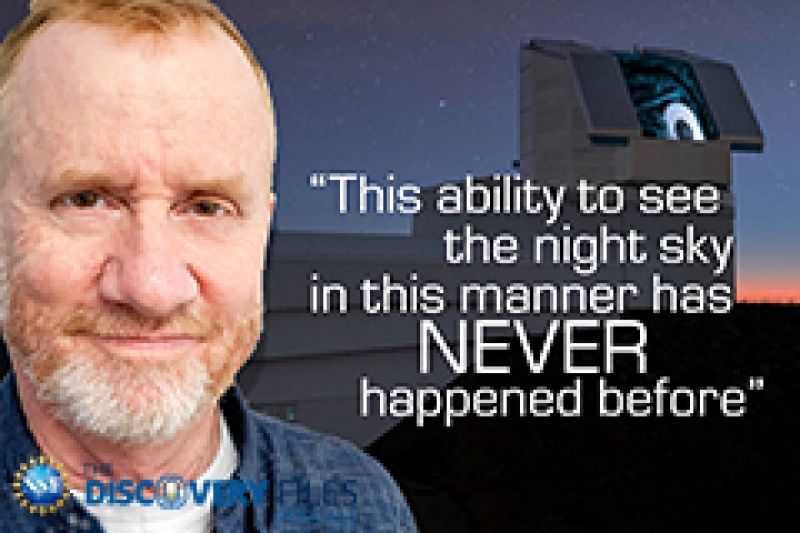
The NSF-DOE Vera C. Rubin Observatory marked a major milestone with the beginning of the Legacy Survey of Space and Time (LSST), a 10-year effort to capture the universe in unprecedented detail. Lawrence Livermore National Laboratory (LLNL) engineer and former project manager for the LSST Camera, Vincent Riot reflected on the culmination of the project and the journey ahead. Development of the world's largest digital camera began before Riot arrived at the Lab in 2003. For most of his career, he worked to build first-of-its kind optical components, including lenses that would later be
Space & Astronomy#Lawrence Livermore National Laboratory#Academic Engagement#Engineering#Lasers and Optical S&T#Top Story#astronomy#astrophysics#NSF–DOE Vera C. Rubin Observatory
Press ReleasesNational Radio Astronomy Observatory
Astronomers using the Atacama Large Millimeter/submillimeter Array (ALMA), of which the U.S. National Science Foundation National Radio Astronomy Observatory (NSF NRAO) is a partner, have captured the first direct, high-resolution images of a magnetic field wrapped tightly around the outflow of gas streaming away from a forming star — evidence that solves a decades-old puzzle about how young stars sculpt the powerful jets that form them. The post Twisted Physics: Astronomers Solve 30-Year-Old Stellar Mystery appeared first on National Radio Astronomy Observatory .
Space & AstronomyMedical ResearchEnvironment & Climate#National Radio Astronomy Observatory#astronomy#astrophysics#medical research#clinical research#climate#decarbonization
NSF Noirlab's Robert Blum discusses NSF-DOE Vera C. Rubin Observatory's signature mission, the Legacy Survey of Space and Time, and how it will transform the way we study the universe...
Space & Astronomy#U.S. National Science Foundation#Podcast#astronomy#astrophysics#NSF–DOE Vera C. Rubin Observatory
As the 10-year Legacy Survey of Space and Time officially starts, Edward Ajhar discusses the NSF-DOE Vera C. Rubin Observatory and how it will transform the way people study the universe...
Space & Astronomy#U.S. National Science Foundation#Podcast#astronomy#astrophysics#NSF–DOE Vera C. Rubin Observatory
Press ReleasesNational Radio Astronomy Observatory
A team of astronomers using the Atacama Large Millimeter/submillimeter Array (ALMA), of which the U.S. National Science Foundation National Radio Astronomy Observatory is a partner, has captured a massive stream of gas—one trillion miles, or .2 light years long—feeding the young triple-star system GW Orionis. These new observations provide the clearest evidence yet for how such “streamers” can tilt and twist the disks where planets are born. The post A Trillion Mile Cosmic Stream of Gas Feeds GW Orionis appeared first on National Radio Astronomy Observatory .
Space & Astronomy#National Radio Astronomy Observatory#astronomy#astrophysics
Press ReleasesNational Radio Astronomy Observatory
The U.S. National Science Foundation (NSF), the NSF National Radio Astronomy Observatory (NSF NRAO), and the U.S. Naval Observatory (USNO) are advancing a new collaboration to support the future of high-resolution radio astronomy and astrometry, with the development of a pathfinder instrument for the proposed Next Generation Very Large Array (ngVLA). The post U.S. National Science Foundation, NSF National Radio Astronomy Observatory, and U.S. Naval Observatory Partner on Pathfinder for Next Generation Very Large Array appeared first on National Radio Astronomy Observatory .
Space & Astronomy#National Radio Astronomy Observatory#astronomy#astrophysics