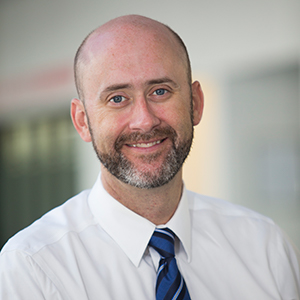
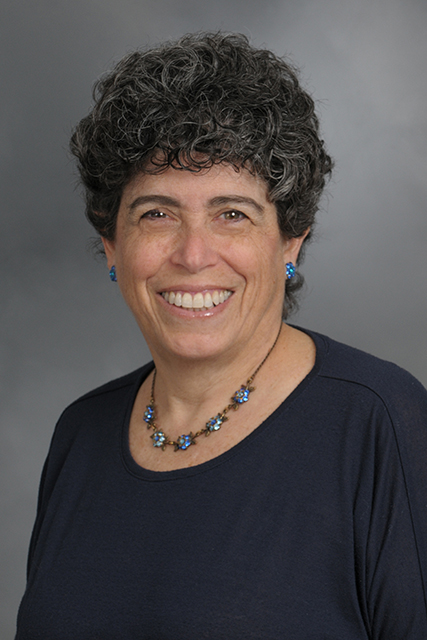
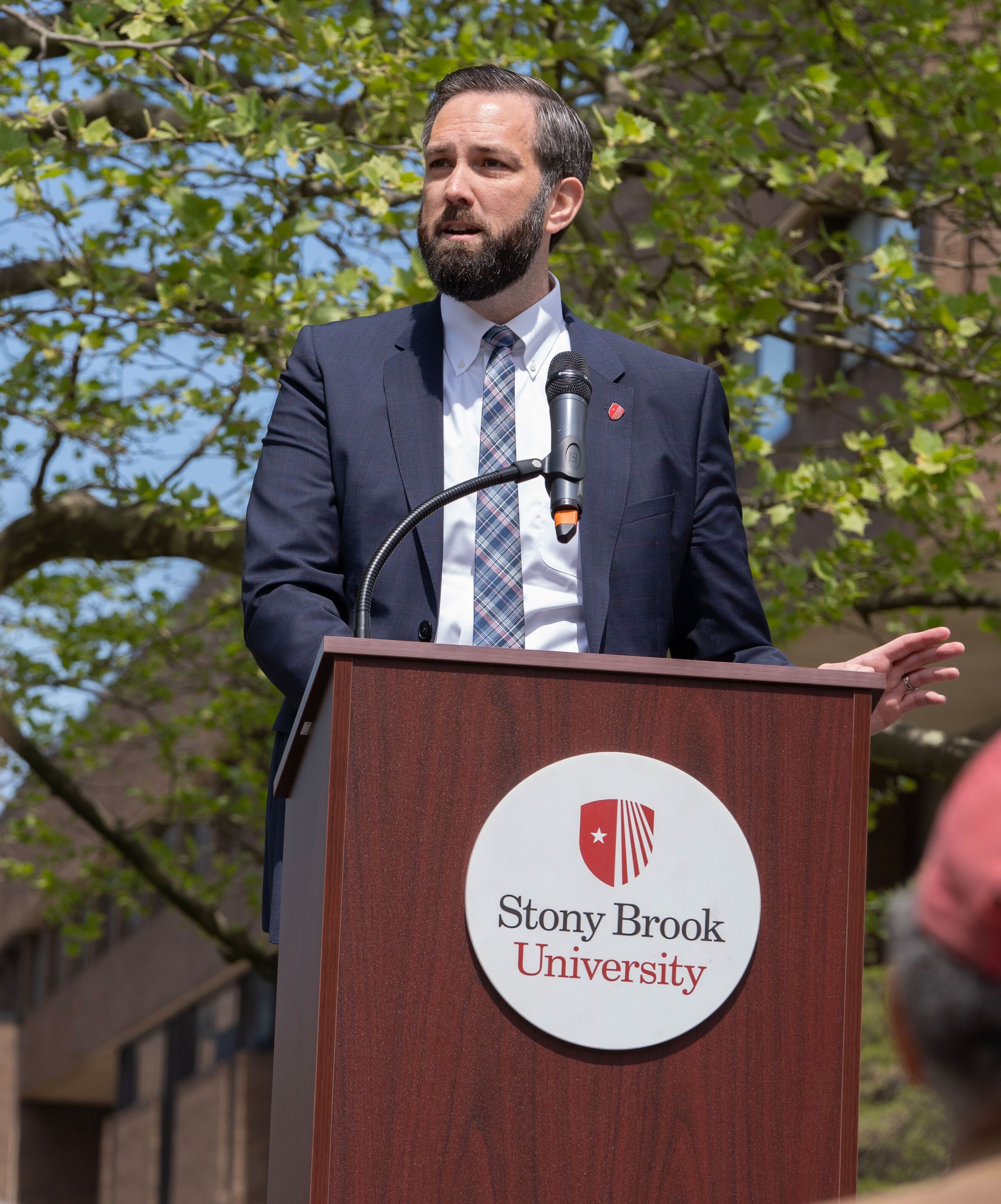
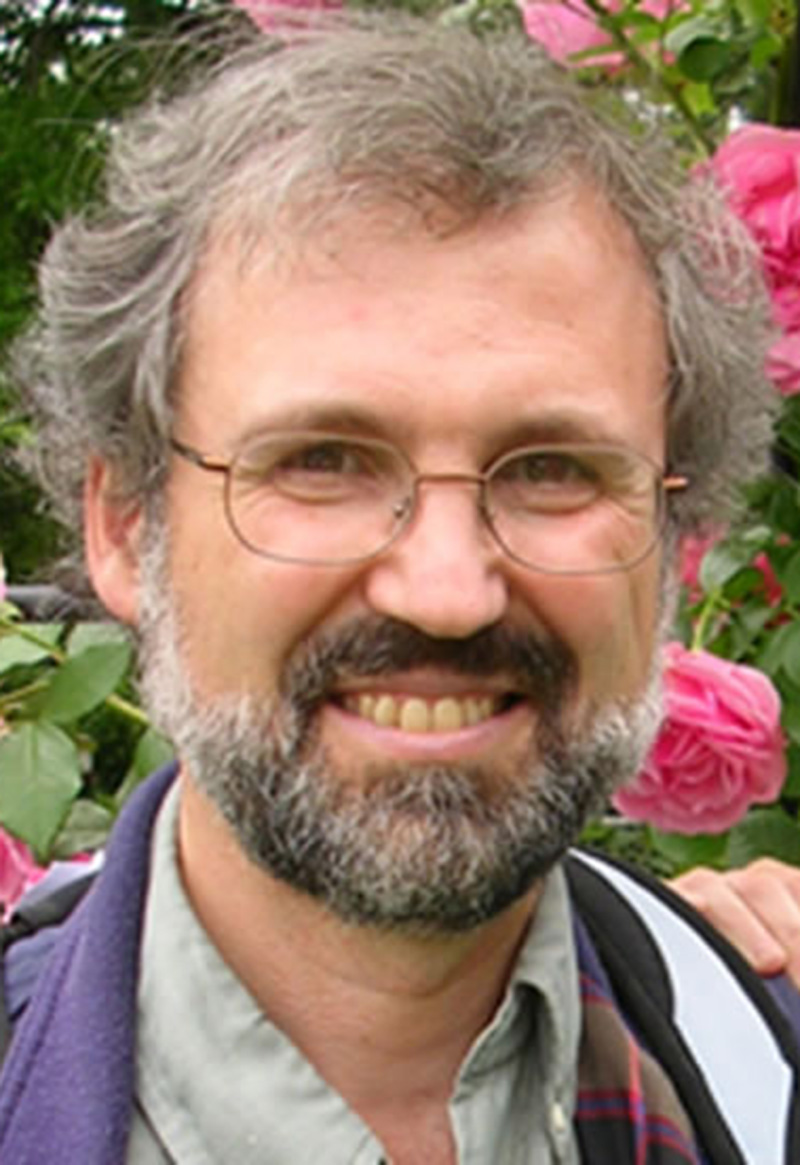

Five faculty members from the College of Arts and Sciences, the College of Engineering and Applied Sciences and the Renaissance School of Medicine will receive the Stony Brook University Trustees Faculty Awards this year to support their research.
The awards, worth up to $20,000, are given annually to support early-career faculty in developing their research to help them prepare for external funding opportunities. The awards are intended for full-time second-term, tenure-track assistant professors who have completed a review after at least three years at Stony Brook, recognizing those who have established a strong foundation of research and academic excellence in their early years.
The five faculty are:
- Samita Heslin, Department of Emergency Medicine, Renaissance School of Medicine
- Dominik Kempa, Department of Computer Science, College of Engineering and Applied Sciences (CEAS)
- Jeffrey Lipshultz, Department of Chemistry, College of Arts and Sciences (CAS)
- Jesús Pérez-Ríos, Department of Physics and Astronomy, CAS
- Yifan Zhou, Department of Electrical and Computer Engineering, CEAS
“This award is designed to help advance some of our faculty’s most promising and innovative research, and we are thrilled to support the work of these five faculty members,” said Eric Lamberg, vice provost for faculty development. “Their projects represent the creativity, ambition and scholarly excellence that drive discovery at Stony Brook. By advancing knowledge in areas such as quantum science, artificial intelligence, data and computing technologies and synthetic chemistry this work has the potential to expand human understanding and open new areas for future innovation.”

Samita Heslin
Project: “AI-MedInsight: Real-World Deployment of an AI Medication Safety Platform in the Emergency Department”
Heslin, in collaboration with colleagues in computer science, has developed AI-MedInsight, an artificial intelligence-powered medication safety platform designed to support medication management in the emergency department. The Trustees Faculty Award will support the platform’s clinical deployment and evaluation, advancing the transition of this technology into clinical practice.

Dominik Kempa
Project: “Adaptive Indexing of Compressed Datasets”
Kempa’s project aims to make enormous datasets smaller without making them harder to search. Today’s compressed indexes — data structures that allow searches without first decompressing the data — typically exploit only one of two forms of redundancy: statistical patterns, such as some symbols appearing more often than others, or repeated sequences, such as the near-identical regions shared by thousands of human genomes. Real-world datasets contain both.
Kempa will develop adaptive indexes that automatically exploit whichever forms of redundancy the data contains, avoiding the need to analyze the dataset in advance and enabling more space-efficient searching of genomic databases, software repositories and versioned collections such as Wikipedia.

Jeffrey Lipshultz
Project: “Development of Titanium Photochemical Radical Redox Catalysis in Flow”
Lipshultz will develop photochemical reactions driven by titanium-based catalysts, a process in which scientists use light to power chemical reactions to rearrange molecules into different structures. Titanium is non-toxic and much less expensive than the elements that historically have been used to fuel photochemistry and, potentially, more effective than elements currently in use.
He will use the award to develop a photo-flow reaction platform in support of two projects: in the first, he will explore how titanium can be used for skeletal editing of drug-like molecules; in the second, he will use titanium photocatalysis to break “unbreakable” chemical bonds.

Jesús Pérez-Ríos
Project: “Ultracold chemistry in charged-neutral systems”
Pérez-Ríos aims to uncover how atoms and molecules come together and form new structures at ultracold temperatures, just above absolute zero. In this extreme regime, their behavior is governed by quantum mechanics, allowing effects such as quantum interference to be used to control chemical reactions with remarkable precision. Understanding these processes could reveal new ways to control how matter behaves and reacts, while also contributing to emerging quantum technologies, including quantum computing.

Yifan Zhou
Project: “Intelligent Quantum Algorithm Design for Large-Scale Electric Grids”
Modern electric grids require increasingly complex calculations for planning, simulation and reliable operation. Quantum computing may eventually accelerate some of these calculations, but practical quantum algorithms remain difficult to scale and design.
Zhou will use her grant to explore how artificial intelligence can help automate and improve this design process. The research aims to reduce the effort and computational cost involved in building quantum algorithms, helping move quantum computing closer to practical use in large-scale power system analysis.