The start of the fall semester was marked by new places and faces.
Space & AstronomyMedical ResearchResearch#University of Wisconsin-Madison#Campus news#College of Letters & Science#learning#recent sightings#Student life#astronomy#astrophysics
Nearly two-thirds of Australian children surveyed in a recent study have received at least one form of grooming-related communication from a stranger online in the past year, while almost one-third reported receiving direct requests for sexual information or interactions.
STEM majors are expected to know how to critically read scientific research, even if no one ever taught them how. UC San Diego alumni Genevive Bjorn and Adam Burgasser wrote “How to Critically Read the Scientific Research Literature: Introducing the CERIC Method” to help young researchers learn how
ResearchSpace & Astronomy#University of California San Diego#UC San Diego#UCSD Today#astronomy#astrophysics
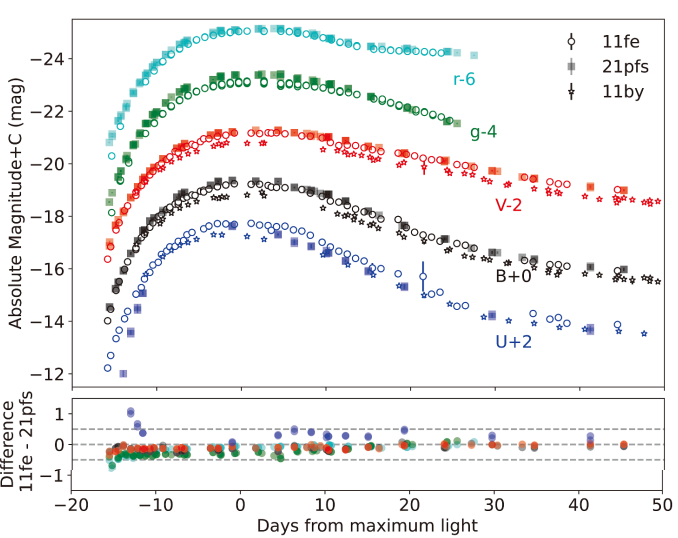
In the vast cosmos, supernova explosions are widely regarded as the most brilliant fireworks in the universe. Among them, Type Ia supernovae (SNe Ia) are hailed as "standard candles" due to their highly consistent peak luminosity, making them a key tool for measuring cosmic distances. However, a recent study has found that even SNe Ia that appear nearly identical may hide small "genetic" differenc
Space & AstronomyAstronomy#Chinese Academy of Sciences#Research News#astronomy#astrophysics
Are the large-scale magnetic fields of magnetars dominated by a dipolar structure, or is a significant magnetic-field twist required to explain the observations? A recent study by researchers from the Xinjiang Astronomical Observatory (XAO) of the Chinese Academy of Sciences (CAS) has found that the observed X-ray polarization of two magnetars can be explained by dipole-dominated magnetic fields,
Space & AstronomyAstronomy#Chinese Academy of Sciences#Research News#astronomy#astrophysics
With a twist between layers of graphene, scientists supported by the DOE’s Office of Science created the foundation for twistronics.
FeaturesSpace & AstronomyTechnology & Innovation#DOE#Office of Science#astronomy#astrophysics#advanced materials#innovation#Oak Ridge National Laboratory#Lawrence Berkeley National Laboratory
The BESIII Collaboration, led by the Institute of High Energy Physics of the Chinese Academy of Sciences, has achieved the world's most precise measurement of the electric dipole moment (EDM) of the Lambda (Λ) hyperon using quantum-entangled Λ–anti-Λ pairs produced in J/ψ decays. The result improves the experimental sensitivity by about three orders of magnitude compared with the previous measurem
Space & AstronomyTechnology & InnovationParticle Physics#Chinese Academy of Sciences#Research News#Particle Physics#astronomy#astrophysics#advanced materials#innovation#Fermilab
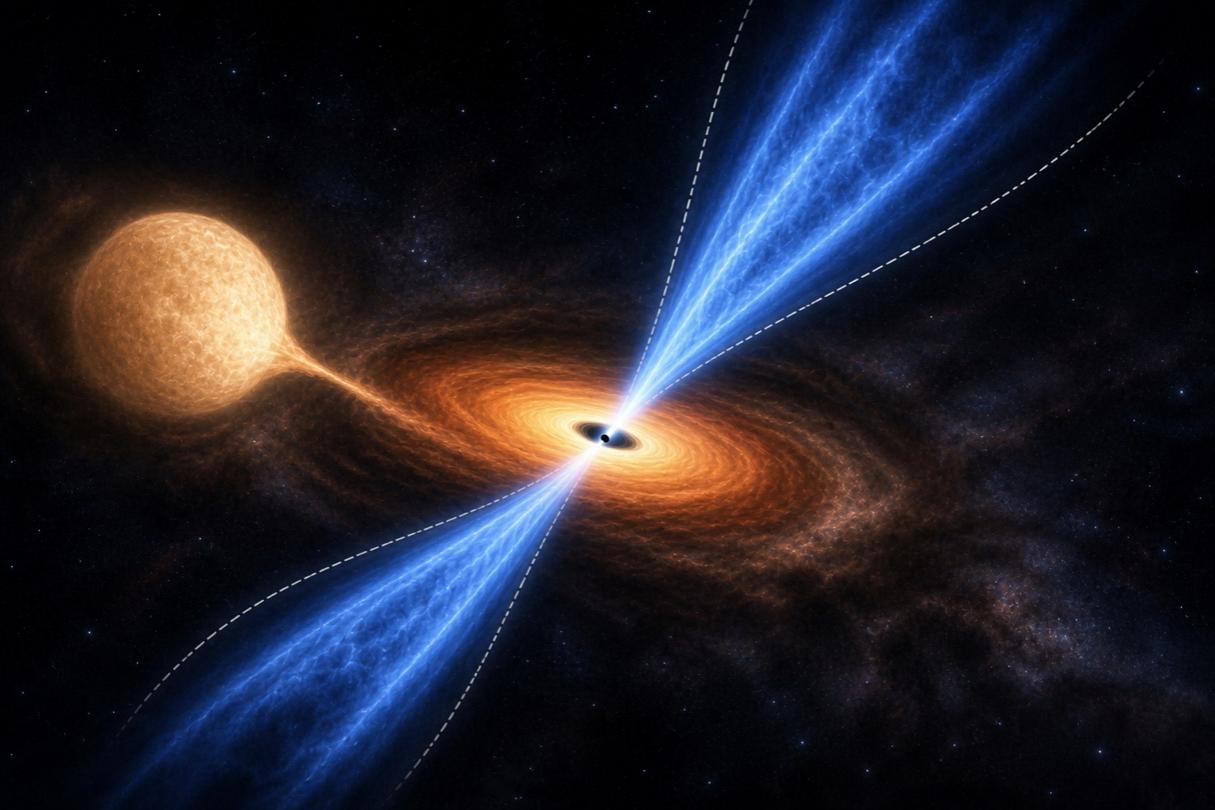
Active galactic nuclei (AGN), powered by accreting supermassive black holes, and X-ray binaries (XRBs), powered by accreting neutron stars or stellar-mass black holes, are two representative classes of compact accreting systems. Relativistic collimated jets are among the most spectacular phenomena in these systems. Understanding how these powerful outflows are launched, accelerated, and collimated
Space & AstronomyAstronomy#Chinese Academy of Sciences#Research News#astronomy#astrophysics
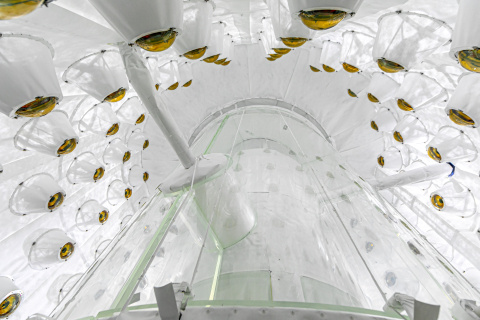
The LUX-ZEPLIN experiment observed an unusual particle interaction, but researchers will need more data to confirm.
FeaturesSpace & AstronomyParticle Physics#DOE#Office of Science#astronomy#astrophysics#Particle Physics#High Energy Physics#Lawrence Berkeley National Laboratory
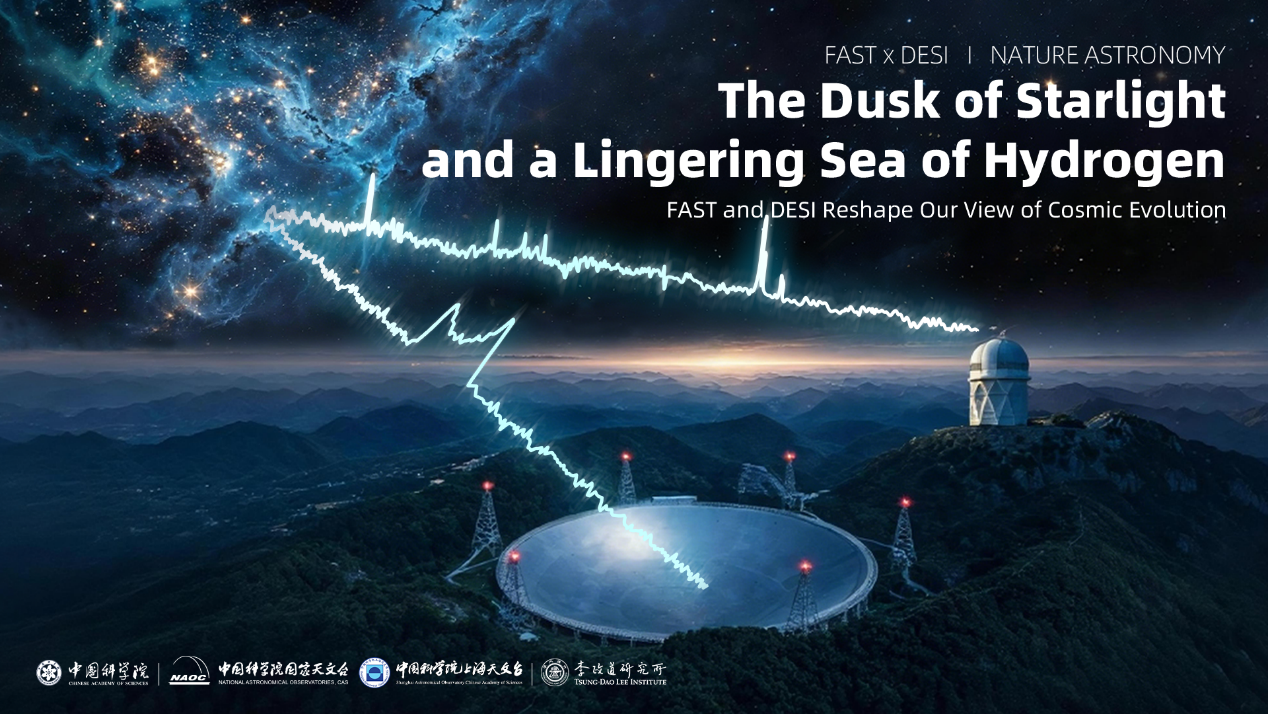
The universe has been having fewer and fewer stellar "babies". Over the past 4.5 billion years, the rate of star birth has crashed to less than half of what it once was. But here's the twist: the most essential "fuel" for making stars has barely decreased. This finding comes from an international team led by researchers from the Chinese Academy of Sciences (CAS), in collaboration with the Dark Ene
Space & AstronomyTelescopesSatellites#Chinese Academy of Sciences#Research News#Telescopes#Satellites#astronomy#astrophysics