Developing safer solid-state batteries requires replacing flammable organic liquid electrolytes with solid-state electrolytes (SSEs) that can conduct ions well, remain stable, and have suitable mechanical properties. As interest in SSEs has grown, so has the volume of research in the field. However, the reported data remain scattered across the literature and vary widely in format and completeness
Developing the materials needed for cleaner energy technologies has traditionally been a slow and expensive process, often relying on years of trial and error. Now, researchers have outlined a new artificial intelligence (AI)-powered framework that could dramatically accelerate the discovery of advanced energy materials while reducing development costs. Details were published in Digital Discovery
Graphene is an exceptionally useful material for creating batteries, catalysts, and electronic devices. Yet producing graphene typically requires temperatures as high as 900°C, limiting energy efficiency and making structural control difficult. To make graphene production more practical, a recent study has overcome this long-standing temperature barrier. In a study published in the Journal of the
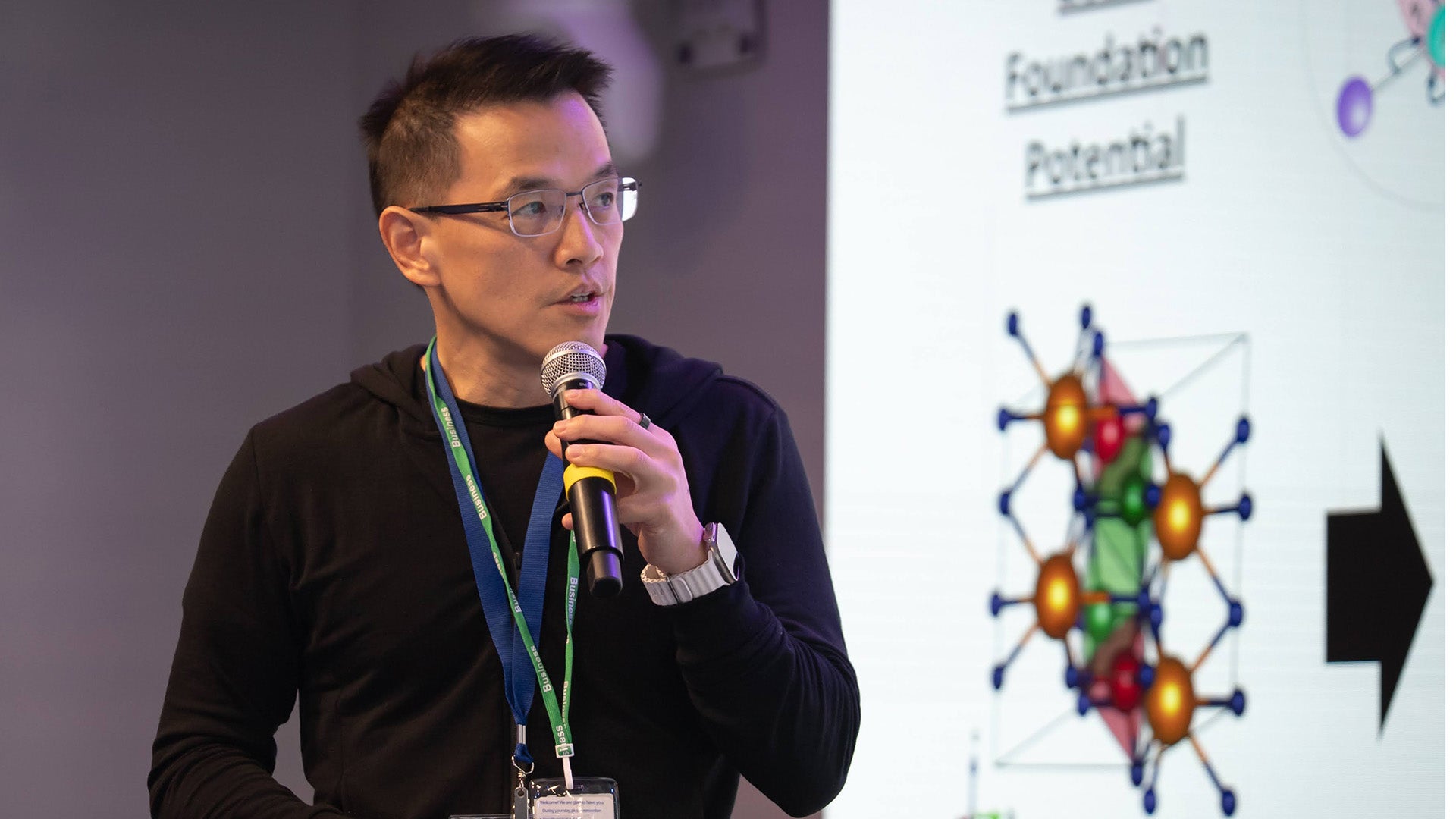
Prof Ong hopes the AI Foundry can compress discovery cycles for new materials from months or years to weeks. Professor Shyue Ping Ong wants AI to do more than predict whether a material might work. His vision is a discovery system that can propose new materials for a specific purpose, identify the most useful experiments to run, learn from every result and help scientists understand why a material
Fusion EnergyTechnology & Innovation#National University of Singapore#CDE Research News#Cde News#Research Impact#fusion#plasma physics#advanced materials#innovation
Technology & InnovationQueen Mary University of London
Scientists could have a new way to explore the hidden behaviour of matter, thanks to research involving Queen Mary University of London that uses a quantum computer to carry out a new form of computational spectroscopy. Spectroscopy is an important scientific technique used to understand the properties of matter. By analysing how materials and molecules respond to energy or light, researchers can
Technology & Innovation#Queen Mary University of London#QMUL Latest News#Science And Engineering#advanced materials#innovation
Technology & InnovationChinese Academy of Sciences
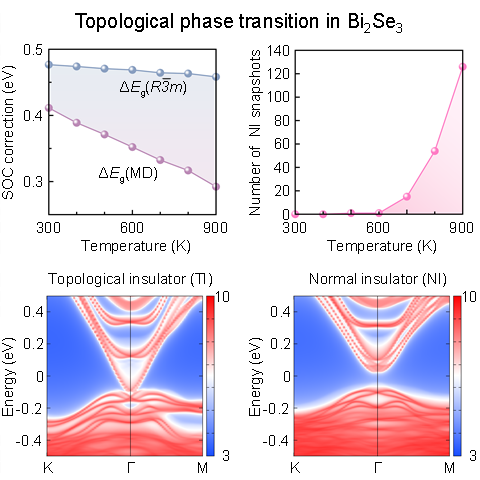
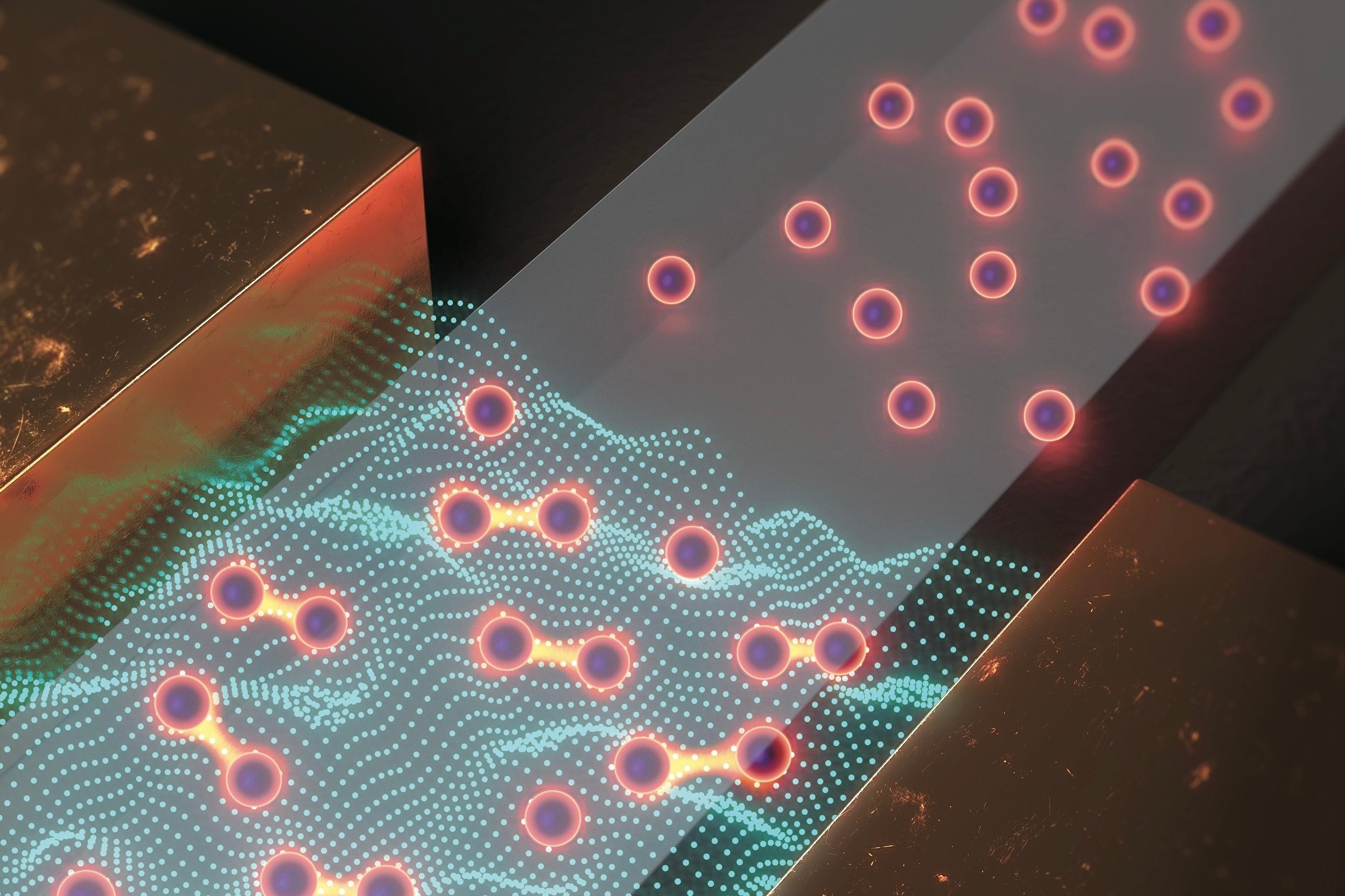
Spin-orbit coupling (SOC), an interaction between an electron ' s spin and its motion, plays a key role in creating topological insulators—unusual materials that are insulating in their interior but can conduct electricity along their surfaces. Now, a new study published in Newton finds that increas ing temperature weakens SOC in the topological insulator Bi 2 Se 3 , driving a transition to a norm
Technology & InnovationQuantum#Chinese Academy of Sciences#Research News#Quantum#advanced materials#innovation
Technology & InnovationChinese Academy of Sciences
In a study published in Nature on August 19, a team led by Profs. ZENG Changgan and CHENG Guanghui from the University of Science and Technology of China of the Chinese Academy of Sciences, along with Prof. JIANG Qingdong from Shanghai Jiao Tong University, Prof. Frank Wilczek from Massachusetts Institute of Technology, and other collaborators, for the first time, have achieved the enhancement of
Technology & InnovationQuantum#Chinese Academy of Sciences#Research News#Quantum#advanced materials#innovation
Technology & InnovationNational Research Council of Science & Technology
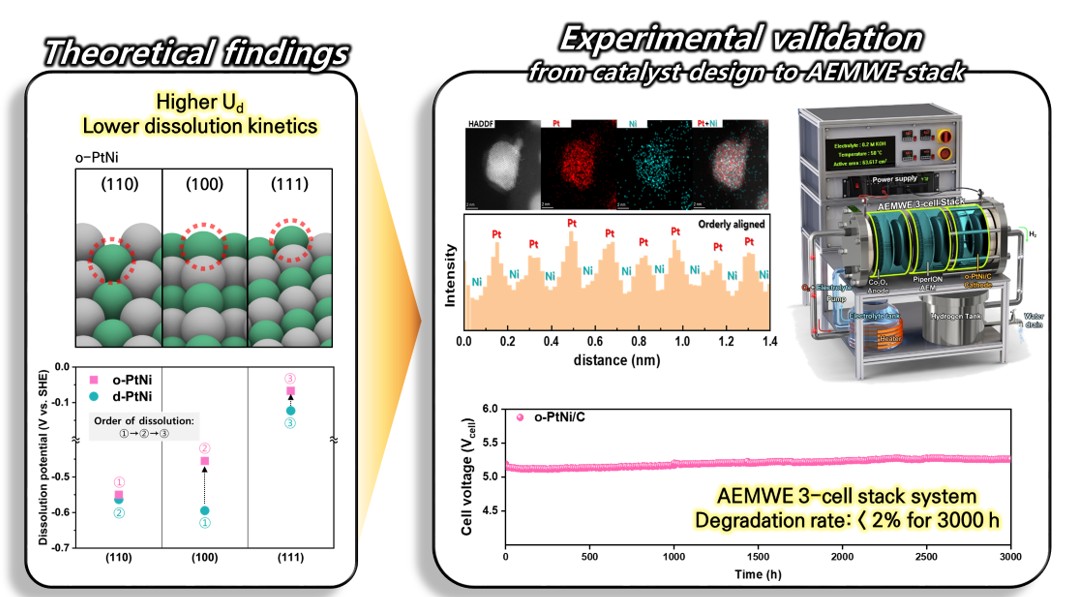
- KIMS Develops Highly Durable Platinum–Nickel Catalyst for Water Electrolysis # Atomic-Structure Control Suppresses Nickel Dissolution, Enabling a Highly Durable Water Electrolysis Catalyst to Operate for 3,000 Hours # Extended Catalyst Lifetime Expected to Reduce Green Hydrogen Production Costs and Support the Commercialization of Water Electrolysis Systems CHANGWON, South Korea — Korea Institut
Technology & Innovation#National Research Council of Science & Technology#GRIs News#Korea Institute of Materials Science (KIMS)#KIMS#advanced materials#innovation#Korea Institute of Materials Science
Technology & InnovationLawrence Livermore National Laboratory
At the bottom of the ocean, optical fibers transmit telecommunications and internet data across the world. Waveguides make that feat possible by channeling and amplifying the light — and therefore the data within — over enormous distances. And the technology goes beyond undersea cables. Waveguiding optics are among the most important advances in photonics since the invention of the laser. They are fundamental to the structure of glass fiber lasers, which are used for high-power national security applications like counter-drone laser systems and missile defense. Now, researchers at
Technology & Innovation#Lawrence Livermore National Laboratory#Advanced Materials and Manufacturing#Defense#Engineering#Lasers and Optical S&T#Top Story#advanced materials#innovation
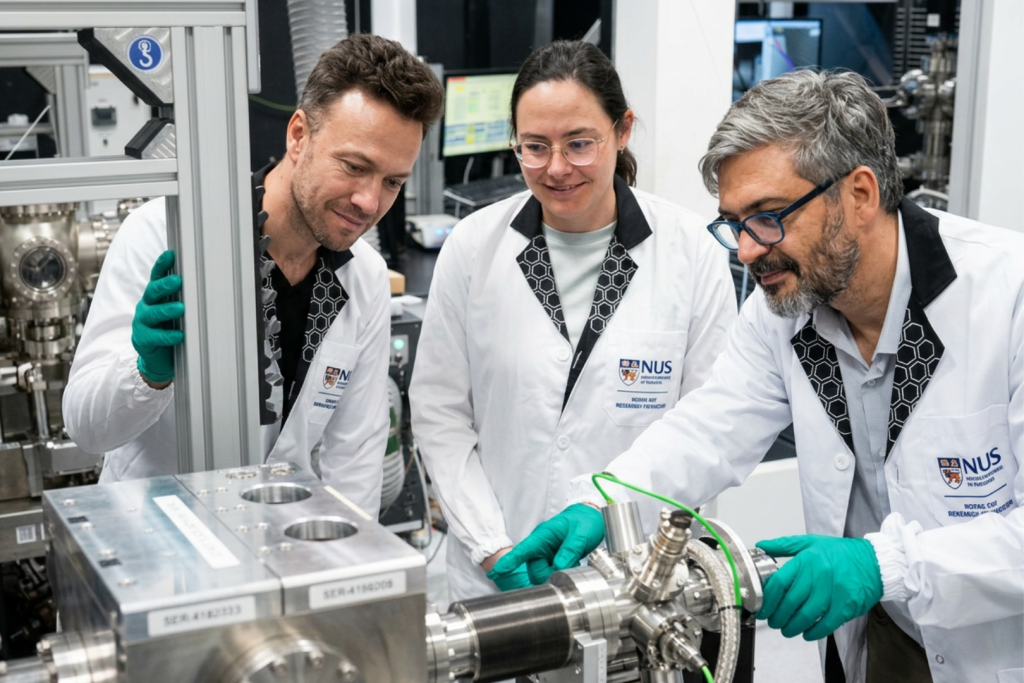
From left to right: Dr Artem Grebenko, Dr Alena Alekseeva, and Prof Barbaros Oezyilmaz, checking the positioning of the wafer within the UV laser-assisted CVD set-up used for the growth of ultra-low-k amorphous carbon. As transistors inside microchips continue to shrink, the metal wiring that connects them is becoming a growing obstacle to faster, more energy-efficient chips. Narrower wires have g
Technology & Innovation#National University of Singapore#CDE Research News#Cde News#Research Impact#advanced materials#innovation
EduGrade AI, an educator-controlled assessment and feedback platform, has been selected for the Innovate UK ICURe Exploit Business and Spinout Readiness programme, following its successful completion of the ICURe Explore programme. The project is now progressing towards spinout formation through Queen Mary Innovation, marking an important step in taking the project beyond the university and toward
Technology & Innovation#Queen Mary University of London#QMUL Latest News#Science And Engineering#advanced materials#innovation
Technology & InnovationUniversity of California, Riverside
Adobe freestock image Published in Nature Photonics , the international study introduces Clavina – a modular, programmable photonic quantum computing architecture capable of combining both linear and nonlinear quantum operations within a single system. The advance provides a practical blueprint for more powerful and adaptable quantum computers that could one day tackle problems beyond the reach of
Technology & Innovation#Queen Mary University of London#QMUL Latest News#Science And Engineering#advanced materials#innovation
Technology & InnovationChinese Academy of Sciences
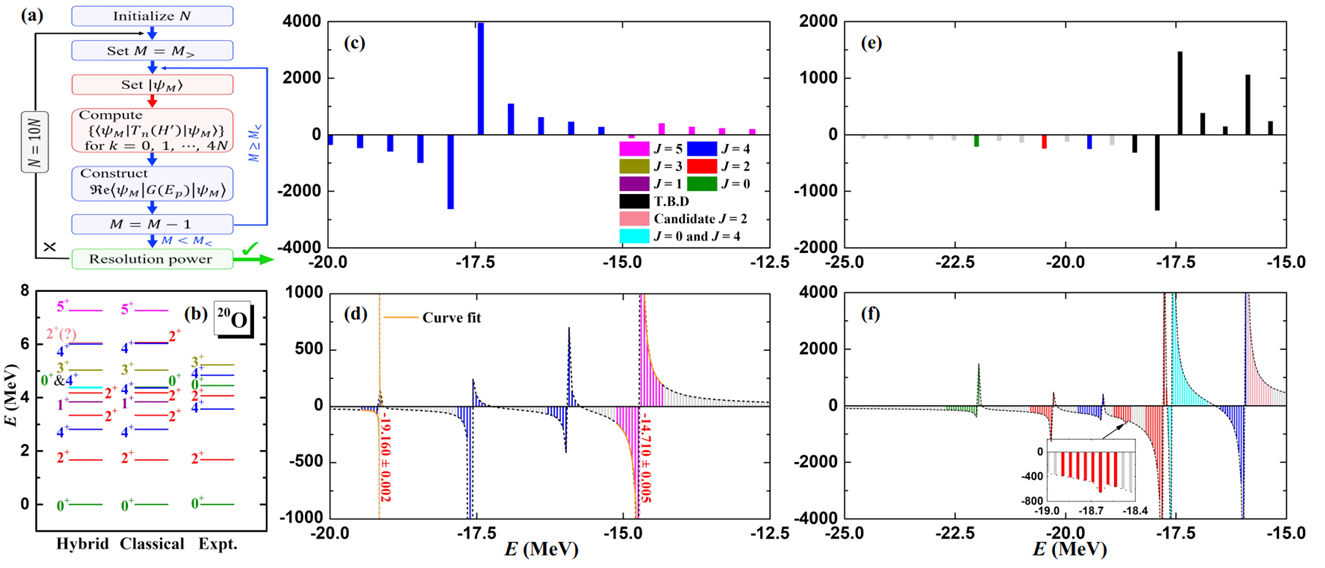
An international research team has developed a new quantum-classical framework for computing quantum many-body structure and dynamics. The findings were published in Physical Review C . Ab initio many-body calculations serve as a fundamental tool for understanding strongly correlated quantum systems, with broad applications in quantum chemistry and nuclear physics. However, the Hilbert space of su
Technology & InnovationQuantum#Chinese Academy of Sciences#Research News#Quantum#advanced materials#innovation#Lawrence Berkeley National Laboratory
Technology & InnovationChinese Academy of Sciences
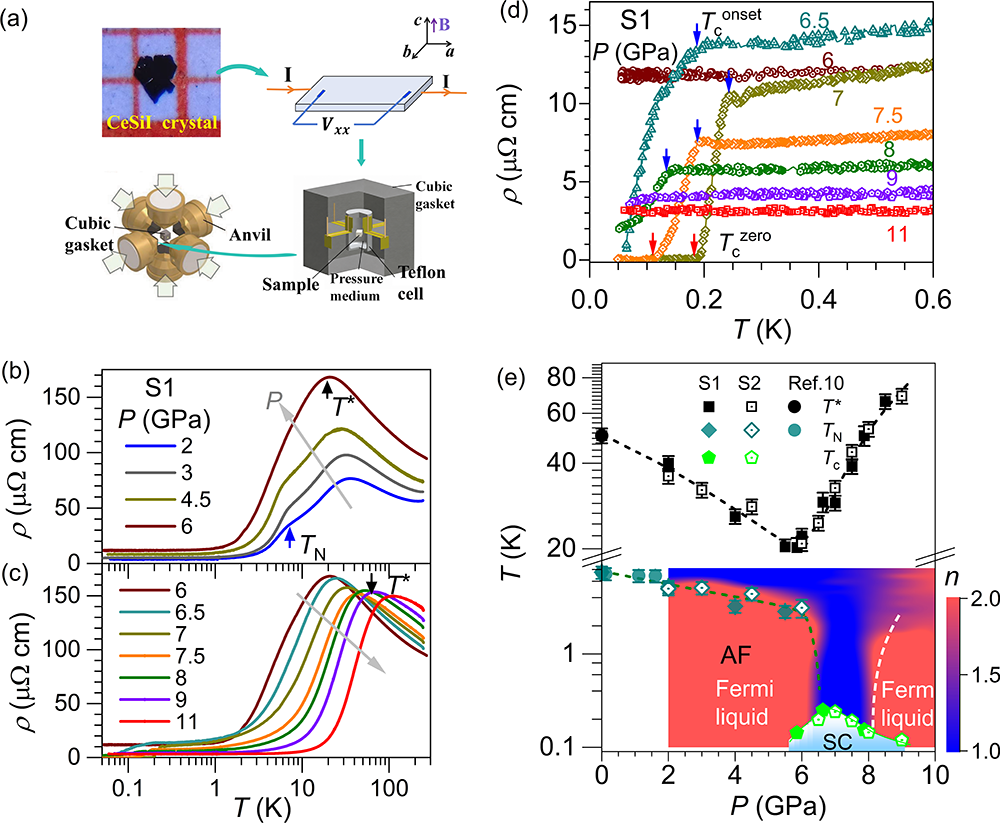
Heavy-fermion superconductors have long served as a key playground for exploring unconventional superconductivity and quantum criticality—phenomena that emerge from the delicate competition between Kondo screening and RKKY magnetic ordering. In recent years, the discovery of two-dimensional van der Waals (vdW) heavy-fermion materials has opened fresh avenues for investigating how reduced dimension
Technology & Innovation#Chinese Academy of Sciences#Research News#advanced materials#innovation
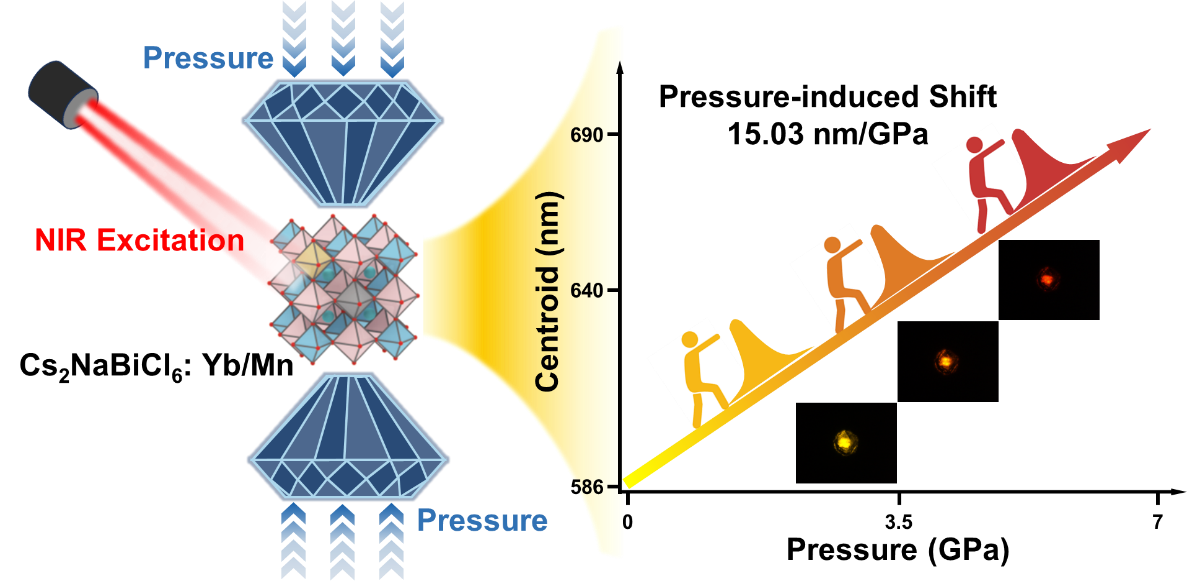
Accurate pressure measurement under extreme conditions is essential for probing structural evolution and pressure-induced phenomena in condensed-matter physics and materials science. However, conventional optical manometers often require ultraviolet excitation and face challenges such as low pressure sensitivity, high UV laser costs, and spectral interference from background fluorescence. Now, a r
Technology & Innovation#Chinese Academy of Sciences#Research News#advanced materials#innovation
A University of Michigan-led research team has been selected by the U.S. Department of Energy to advance a project that will use artificial intelligence to dramatically improve scientists' ability to observe how materials behave under stress and in extreme environments.
Technology & Innovation#University of Michigan#Announcements#News Releases#Science & Technology#Energy#Michigan News#advanced materials#innovation
The BESIII Collaboration, led by the Institute of High Energy Physics of the Chinese Academy of Sciences, has achieved the world's most precise measurement of the electric dipole moment (EDM) of the Lambda (Λ) hyperon using quantum-entangled Λ–anti-Λ pairs produced in J/ψ decays. The result improves the experimental sensitivity by about three orders of magnitude compared with the previous measurem
Space & AstronomyTechnology & InnovationParticle Physics#Chinese Academy of Sciences#Research News#Particle Physics#astronomy#astrophysics#advanced materials#innovation#Fermilab
The selected projects will cover a broad spectrum of research fields from life sciences and engineering to social sciences and humanities. The funding, worth €705 million in total, will support 421 early-career researchers.
Technology & Innovation#University of Cambridge#research#Funding#advanced materials#innovation



.png)