Developing the materials needed for cleaner energy technologies has traditionally been a slow and expensive process, often relying on years of trial and error. Now, researchers have outlined a new artificial intelligence (AI)-powered framework that could dramatically accelerate the discovery of advanced energy materials while reducing development costs. Details were published in Digital Discovery
Graphene has long been regarded as one of the most promising materials for future electronics, but its relatively weak electron interactions have limited its potential for applications such as high-temperature superconductors. Now, researchers from Tohoku University have overcome a major obstacle by creating a stable version of the long-sought "boron graphene" on the surface of a three-dimensional
In a study published in Nature on August 19, a team led by Profs. ZENG Changgan and CHENG Guanghui from the University of Science and Technology of China of the Chinese Academy of Sciences, along with Prof. JIANG Qingdong from Shanghai Jiao Tong University, Prof. Frank Wilczek from Massachusetts Institute of Technology, and other collaborators, for the first time, have achieved the enhancement of
Technology & InnovationQuantum#Chinese Academy of Sciences#Research News#Quantum#advanced materials#innovation
Technology & InnovationNational Research Council of Science & Technology
- KIMS Develops Highly Durable Platinum–Nickel Catalyst for Water Electrolysis # Atomic-Structure Control Suppresses Nickel Dissolution, Enabling a Highly Durable Water Electrolysis Catalyst to Operate for 3,000 Hours # Extended Catalyst Lifetime Expected to Reduce Green Hydrogen Production Costs and Support the Commercialization of Water Electrolysis Systems CHANGWON, South Korea — Korea Institut
Technology & Innovation#National Research Council of Science & Technology#GRIs News#Korea Institute of Materials Science (KIMS)#KIMS#advanced materials#innovation#Korea Institute of Materials Science
Technology & InnovationLawrence Livermore National Laboratory
At the bottom of the ocean, optical fibers transmit telecommunications and internet data across the world. Waveguides make that feat possible by channeling and amplifying the light — and therefore the data within — over enormous distances. And the technology goes beyond undersea cables. Waveguiding optics are among the most important advances in photonics since the invention of the laser. They are fundamental to the structure of glass fiber lasers, which are used for high-power national security applications like counter-drone laser systems and missile defense. Now, researchers at
Technology & Innovation#Lawrence Livermore National Laboratory#Advanced Materials and Manufacturing#Defense#Engineering#Lasers and Optical S&T#Top Story#advanced materials#innovation
EduGrade AI, an educator-controlled assessment and feedback platform, has been selected for the Innovate UK ICURe Exploit Business and Spinout Readiness programme, following its successful completion of the ICURe Explore programme. The project is now progressing towards spinout formation through Queen Mary Innovation, marking an important step in taking the project beyond the university and toward
Technology & Innovation#Queen Mary University of London#QMUL Latest News#Science And Engineering#advanced materials#innovation
Technology & InnovationUniversity of California, Riverside
Adobe freestock image Published in Nature Photonics , the international study introduces Clavina – a modular, programmable photonic quantum computing architecture capable of combining both linear and nonlinear quantum operations within a single system. The advance provides a practical blueprint for more powerful and adaptable quantum computers that could one day tackle problems beyond the reach of
Technology & Innovation#Queen Mary University of London#QMUL Latest News#Science And Engineering#advanced materials#innovation
Technology & InnovationChinese Academy of Sciences
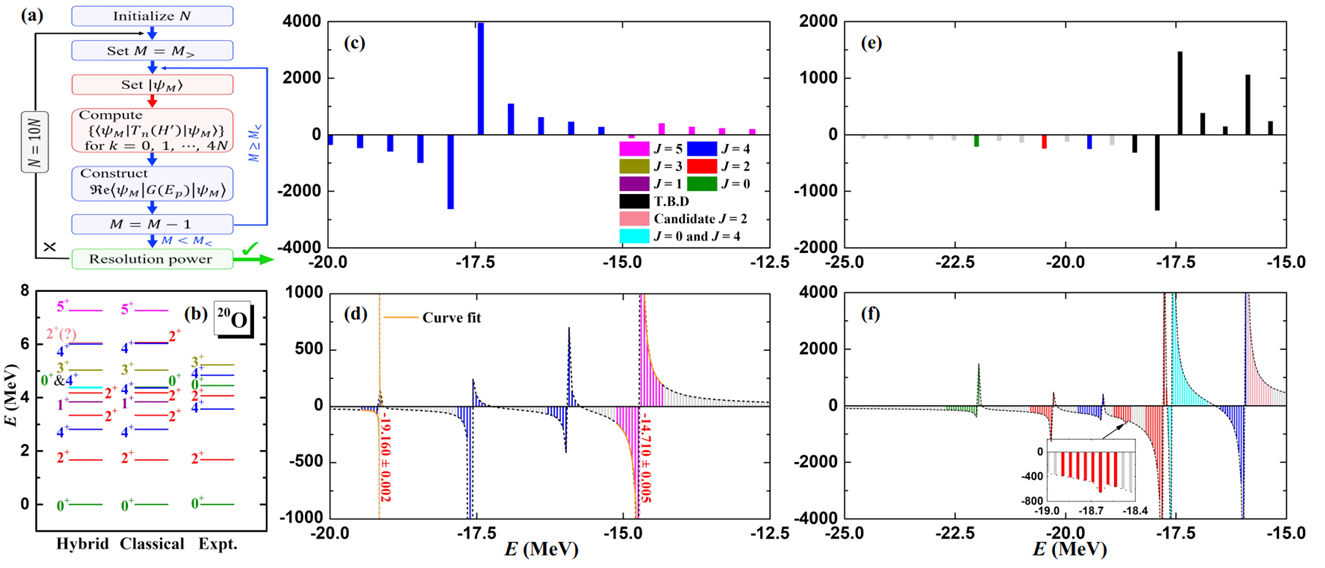
An international research team has developed a new quantum-classical framework for computing quantum many-body structure and dynamics. The findings were published in Physical Review C . Ab initio many-body calculations serve as a fundamental tool for understanding strongly correlated quantum systems, with broad applications in quantum chemistry and nuclear physics. However, the Hilbert space of su
Technology & InnovationQuantum#Chinese Academy of Sciences#Research News#Quantum#advanced materials#innovation#Lawrence Berkeley National Laboratory
Technology & InnovationChinese Academy of Sciences
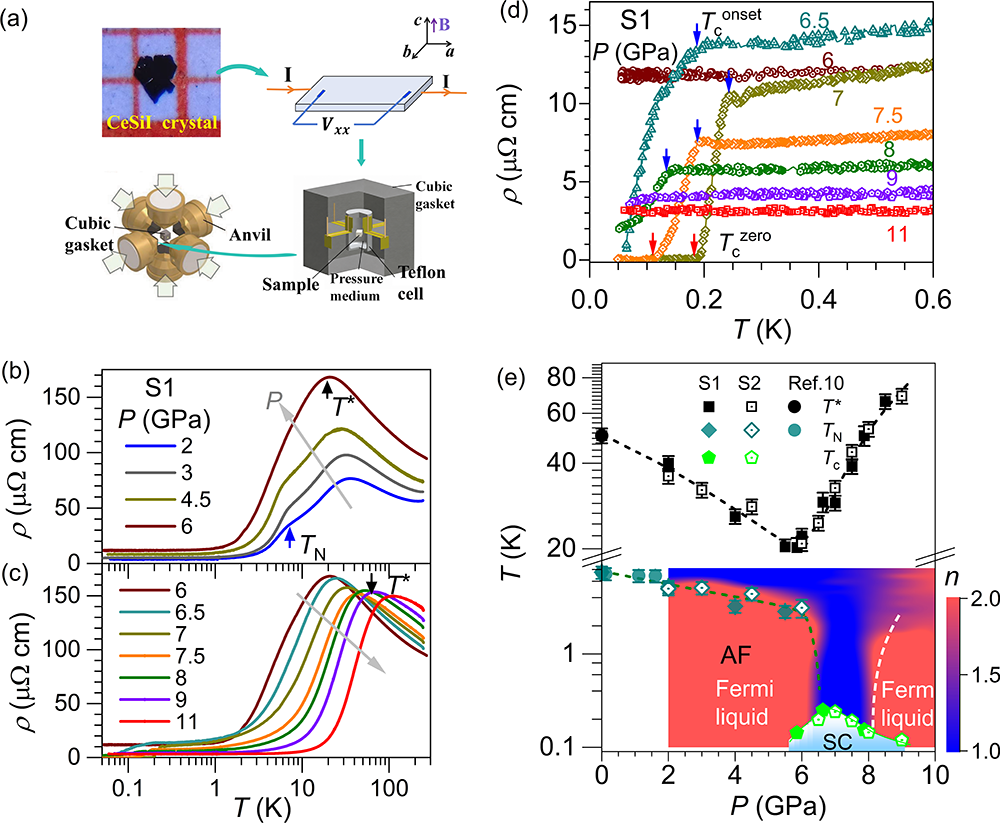
Heavy-fermion superconductors have long served as a key playground for exploring unconventional superconductivity and quantum criticality—phenomena that emerge from the delicate competition between Kondo screening and RKKY magnetic ordering. In recent years, the discovery of two-dimensional van der Waals (vdW) heavy-fermion materials has opened fresh avenues for investigating how reduced dimension
Technology & Innovation#Chinese Academy of Sciences#Research News#advanced materials#innovation
Kazuki Yamamoto, Lecturer, Graduate School of Science, Osaka Public University; Hamasaki, RIKEN Hakubi Research Team Leader, RIKEN Pioneering Research Institute (Senior Researcher, RIKEN Center for Creative Math)
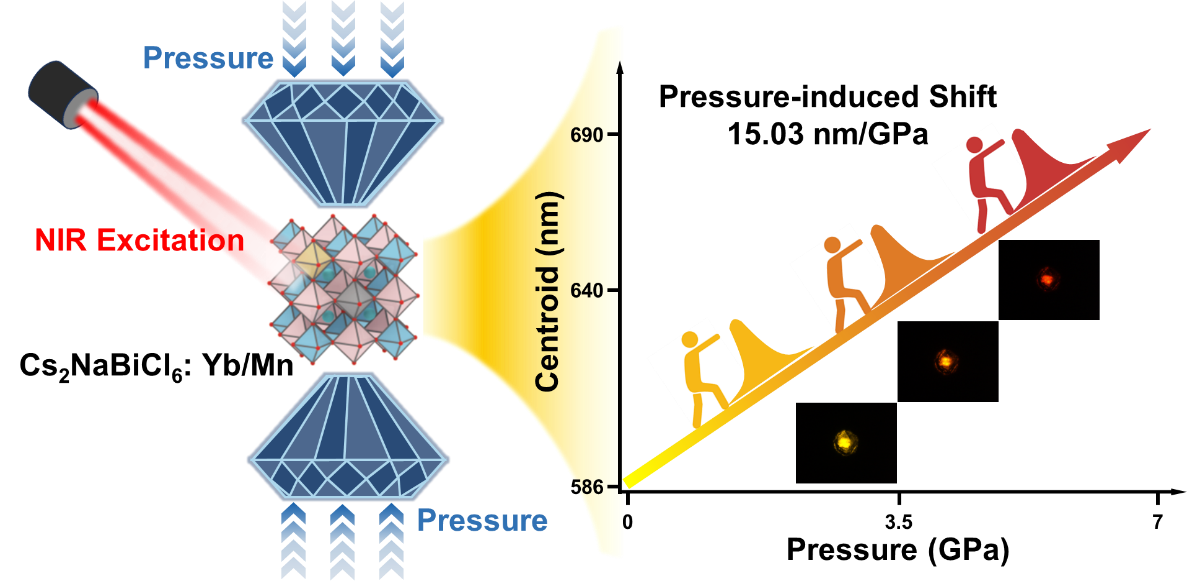
Accurate pressure measurement under extreme conditions is essential for probing structural evolution and pressure-induced phenomena in condensed-matter physics and materials science. However, conventional optical manometers often require ultraviolet excitation and face challenges such as low pressure sensitivity, high UV laser costs, and spectral interference from background fluorescence. Now, a r
Technology & Innovation#Chinese Academy of Sciences#Research News#advanced materials#innovation
A University of Michigan-led research team has been selected by the U.S. Department of Energy to advance a project that will use artificial intelligence to dramatically improve scientists' ability to observe how materials behave under stress and in extreme environments.
Technology & Innovation#University of Michigan#Announcements#News Releases#Science & Technology#Energy#Michigan News#advanced materials#innovation
Researchers at the University of Michigan have created a device that enables them to control the flow of electrons through a semiconductor using only laser light—no electrical power source required.
Technology & Innovation#University of Michigan#News Releases#Science & Technology#electron#Physics#Michigan News#advanced materials#innovation
Technology & InnovationChinese Academy of Sciences
Ultra-high-definition organic light-emitting diode (OLED) displays demand emitters with extremely high color purity to satisfy the BT.2020 color gamut standard. Among the three primary colors, the development of narrowband pure-red emitters remains a challenge. Organic emitters simultaneously featuring an emission full width at half maximum (FWHM) below 0.1 eV and a CIE-x value above 0.67 (NTSC re
Technology & Innovation#Chinese Academy of Sciences#Research News#advanced materials#innovation
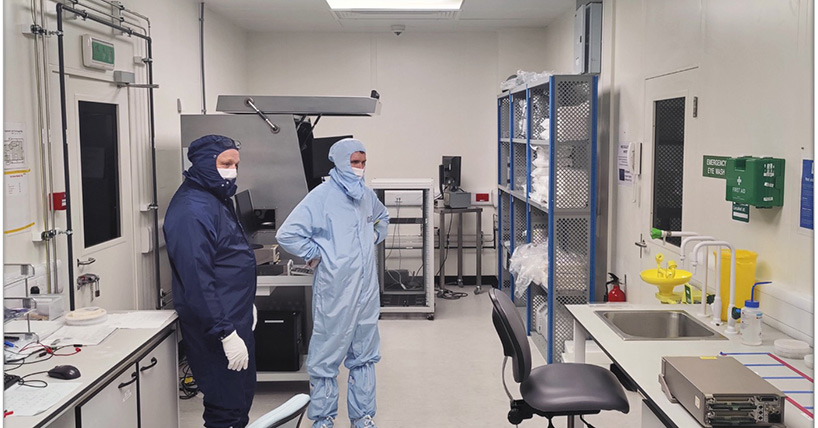
A new regional facility to support advanced microfabrication activities across the region’s universities and high-tech industries is being established by Newcastle University.
In a new study published in CCS Chemistry , researchers have uncovered how a small number of water molecules can trigger structural transformation in neutral hydrated metal hydroxide clusters, providing new insights into hydration-driven changes in catalytic metal-oxygen frameworks. The hydration of multinuclear metal hydroxides is ubiquitous in processes ranging from catalytic conversion and meta
Technology & Innovation#Chinese Academy of Sciences#Research News#advanced materials#innovation
Technology & InnovationNational University of Singapore
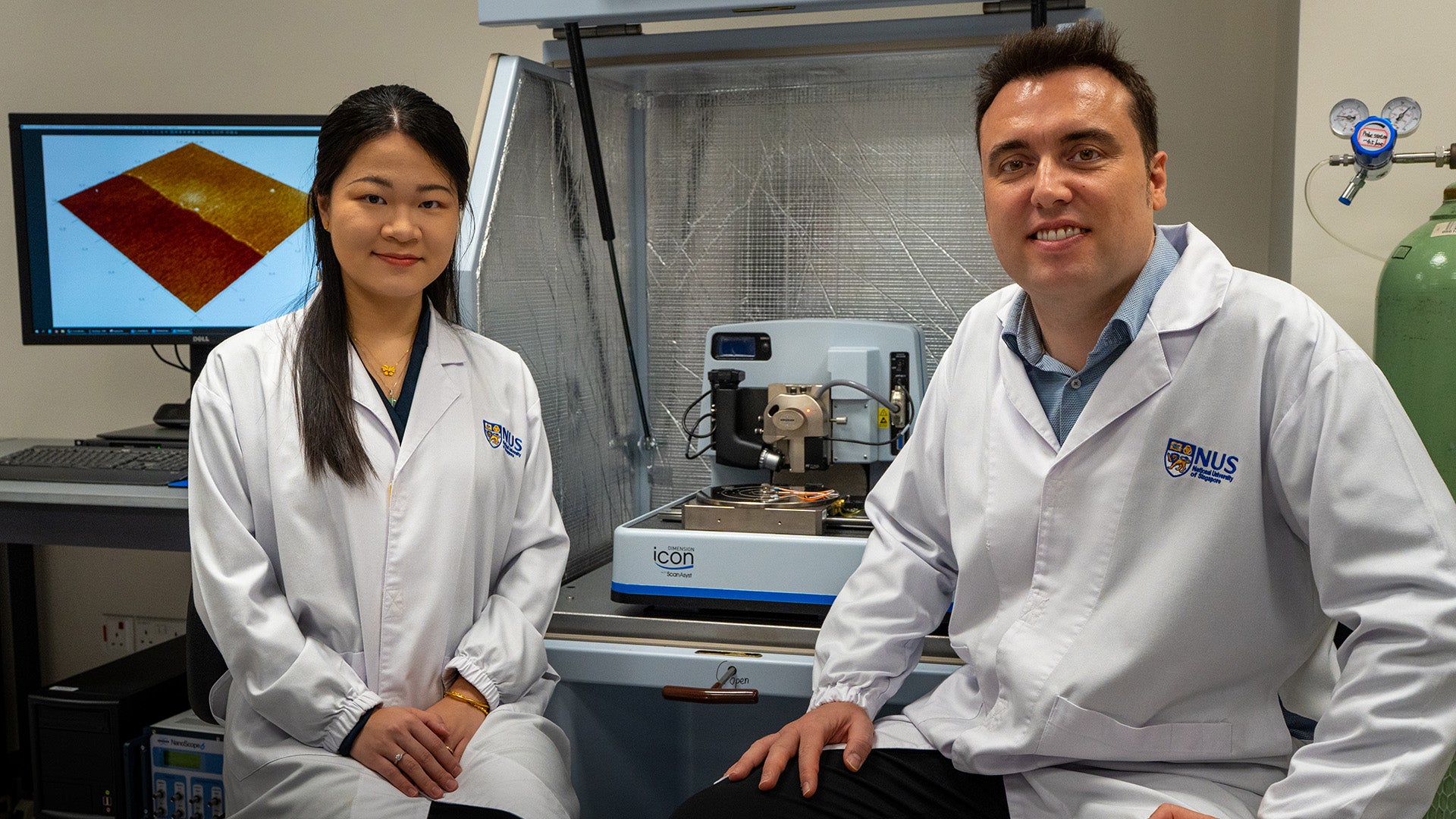
Assoc Prof Mario Lanza (right) with first author of the research, Dr Yue Yuan (left). The researchers’ findings could help guide the development of future electronic components that are smaller, thinner and more energy-efficient. Researchers at CDE have identified a key design principle for building reliable electronics from materials only one atomic layer thick, giving engineers a clearer way to
Technology & Innovation#National University of Singapore#CDE Research News#Cde News#Research Impact#advanced materials#innovation
Technology & InnovationLawrence Livermore National Laboratory
While quantum computing could be the future, it is currently plagued by finicky hardware. To make the technology practical, researchers must demonstrate that it consistently and continuously works and performs at scale. In a new study, published in Physical Review Letters, researchers at Lawrence Livermore National Laboratory (LLNL) and the Ion Storage Group at the National Institute of Standards and Technology in Boulder, Colorado, created a robust process for entangling trapped-ion qubits. The result means better building blocks for ion-based quantum computers. The approach creates a
Technology & Innovation#Lawrence Livermore National Laboratory#Advanced Materials and Manufacturing#computing#HPC#Simulation#and Data Science#Top Story#advanced materials
Environment & ClimateWashington University in St. Louis
Machine learning doesn’t replace human intelligence, but it can outlast human endurance, which makes it a very helpful tool for chemistry and material discovery. Scientists know the machine learning models can make predictions based on the vast reams of data it is trained on, but can it take it a step further and massively scale up testing out those predictions? “We already see that AI is powerful
Environment & ClimateTechnology & InnovationData & Computer Science#Washington University in St. Louis#Newsroom#climate#decarbonization#advanced materials#innovation