Key points of this research result
- Fertilized avian eggs are attached to a huge yolk, so current technology does not allow for cryopreservation of fertilized eggs while they are still alive.
- In this research (Associate Professor Junaki Nakamura, Graduate School of Integrative Life Sciences, Hiroshima University), we developed an inexpensive and highly practical cryopreservation solution that can preserve ``primordial germ cells'' (*1), which will become sperm and eggs in the future, for long periods of time while maintaining high survival rates and functionality, using chickens as an avian model animal.
- This technology is expected to help preserve valuable chicken breeds, protect against the risk of losing commercial breeds due to avian influenza, and contribute to stable egg and chicken production into the future.
overview
● We discovered that ovalbumin (*2), a major protein in egg white, and sericin (*3), a major protein in silk, have a cryoprotective effect equal to or greater than that of serum, which has traditionally been used as a cryoprotectant, in the cryopreservation of chicken primordial germ cells.
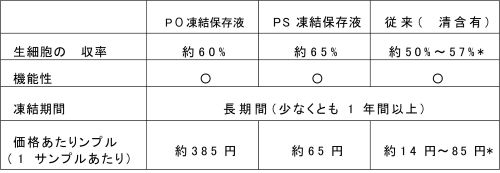
● We developed two types of cryopreservation solutions containing propylene glycol, a type of dihydric alcohol (a component that protects the inside of cells when they are frozen) (*4), and ovalub (a protein found in large quantities in egg whites, a component that protects cells when they are frozen) or sericin, and demonstrated that more than 60% of cryopreserved primordial germ cells could be recovered alive after thawing.
● It was revealed that primordial germ cells immediately after thawing remain damaged due to cryopreservation, but by culturing them for 4 days (*5), they can be restored to their pre-frozen state.
● The results of a demonstration test using Hinai chickens, which are designated as a national natural monument, showed that Hinai chicken sperm and eggs can be produced by transplanting Hinai chicken primordial germ cells that have been frozen and preserved for over a year into commercial chickens (hosts). Furthermore, by breeding these host (*6) chickens with each other, we succeeded in restoring pure Hinai chickens.
This research was published in the international academic journal "Journal of Reproduction and Development" on July 10, 2020 (Japan time).
Published paper
Magazine name: Journal of Reproduction and Development
Paper publication date: July 10th (Friday)
Title: Development of serum-free cryomedia for slow-freezing of chicken primordial germ cells
Author name: Asma Khatun, Saori Harada, Satoru Ohira, Haruto Takeuchi, Haruto Shirahase, Natsumi Takahashi, Wataru Fujii, Sota Takamiya, Kazuhiro Rikimaru, Masaki Kato, Yoshiaki Nakamura
DOI: https://doi.org/10.1262/jrd.2026-087
Research support
This research was supported by the Japan Society for the Promotion of Science Grant-in-Aid for Scientific Research (25K02157), Revive & Restore (2022-038), and the Ministry of Education, Culture, Sports, Science and Technology's National BioResource Project (NBRP) Core Center Development Project (JPNBRP202205).
background
Chickens are raised all over the world as an important food resource for producing high-quality protein, eggs and meat. However, due to the spread of avian influenza that has been rampant in recent years and the effects of abnormal weather, sustainable production of eggs and meat may become difficult in the near future. In fact, egg prices continue to soar in Japan due to the avian influenza epidemic and soaring feed prices. To sustainably produce eggs and meat, it is important to store chickens safely without being affected by infectious diseases or extreme weather. One such method is cryopreservation of cells. For example, in animals such as cows and pigs, cryopreservation of fertilized eggs, which serve as the starting point for ontogeny, is practiced at an industrial level. However, fertilized chicken eggs are attached to a huge yolk, so fertilized eggs cannot be cryopreserved. Instead, for chickens, a cryopreservation method for the most undifferentiated germ cells called primordial germ cells, and a transplantation method to produce sperm and eggs derived from the cryopreserved primordial germ cells have been developed. However, since chicken primordial germ cells are few in number, only a few dozen to a hundred per fertilized egg, the composition of the cryopreservation solution and freezing conditions have not been sufficiently investigated.
For cell cryopreservation, cryoprotectants are used to protect cells from damage caused by cryopreservation. Cryoprotectants are divided into two types: cell membrane permeable and non-permeable. Cell-transmembrane cryoprotectants (such as glycerin, dimethyl sulfoxide, and propylene glycol) are small, nonionic molecules that penetrate the cell membrane and penetrate into cells. As a result, cryoprotectant and intracellular water are replaced, suppressing intracellular ice crystal formation and reducing damage caused by cryopreservation. On the other hand, cell membrane-impermeable cryoprotectants are molecules that cannot pass through cell membranes, and include low-molecular sugars (such as trehalose and sucrose) and high-molecular compounds (such as proteins and polyvinylpyrrolidone). Cryoprotectants that do not penetrate cell membranes have the effect of suppressing the formation of ice crystals inside and outside cells by protecting cell membranes and promoting dehydration from cells. As described above, cell membrane-penetrating and non-cell membrane-penetrating cryoprotectants have different mechanisms of action, and the effectiveness of cryoprotection can be enhanced by combining the two. For cryopreservation of chicken primordial germ cells, serum, a cryoprotectant that does not penetrate the cell membrane, has been used in combination with dimethyl sulfoxide or propylene glycol, which are cryoprotectants that penetrate the cell membrane. However, the composition of serum varies greatly from lot to lot, which may have a significant impact on the recovery rate and survival rate of primordial germ cells after freezing and thawing.
Therefore, in this study, we focused on ovalbumin and sericin, which are inexpensive and easily available macromolecular compounds, and investigated whether they can enhance the cryoprotective effect on chicken primordial germ cells as cryoprotectants that do not pass through the cell membrane, and whether they can replace conventionally used serum.
*Commercial product
Contents of research results
①Evaluation of cryoprotective effects of ovalbumin and sericin
The cryoprotective effects of ovalbumin and sericin were evaluated using a stably proliferating cell line established by culturing chicken primordial germ cells. As a result of evaluating the cryoprotective effect using the recovery rate and survival rate of chicken primordial germ cells after thawing as indicators, the cryopreservation solution containing 7.5% propylene glycol and 5% ovalbumin (PO cryopreservation solution) had the highest survival rate and recovery rate, and ovalbumin was found to have the same cryoprotective effect as serum. Similarly, the cryopreservation solution containing 7.5% propylene glycol and 2% sericin (PS cryopreservation solution) had the highest survival and recovery rates, and sericin was found to have a significantly higher cryoprotective effect than serum. By using PO and PS cryopreservation solutions, it is now possible to recover more than 60% of cryopreserved primordial germ cells in a living state after thawing.
②Evaluation of the function of primordial germ cells cryopreserved in PO and PS cryopreservation solutions
Using a stable cell line of primordial germ cells established from a transgenic chicken that constitutively expresses the green fluorescent protein GFP, we evaluated the function of primordial germ cells cryopreserved in PO and PS cryopreservation solutions. In this cell line, GFP expression disappears in dead cells, allowing real-time analysis of the viability of primordial germ cells in culture. It is also possible to track the cell fate of transplanted primordial germ cells. Analysis of survival rate and cell proliferation during culture revealed that the survival rate and cell number of frozen and thawed primordial germ cells temporarily decreased on the second day of culture. Thereafter, it was shown that the survival rate recovered to the same level as non-frozen cells on the 6th day of culture, and cell proliferation on the 4th day of culture (Figure 1 left). Next, we analyzed the ability to migrate to the gonads by transplantation, and found that the ability to migrate to the gonads was halved in primordial germ cells immediately after thawing. On the other hand, it was shown that the migration ability of primordial germ cells cultured for 4 days after freezing and thawing recovered to the same level as non-frozen cells (Figure 1, right). It was shown that primordial germ cells cryopreserved in PO and PS cryopreservation solutions maintain normal function and can recover from damage caused by freezing by culturing for at least 4 days after thawing.
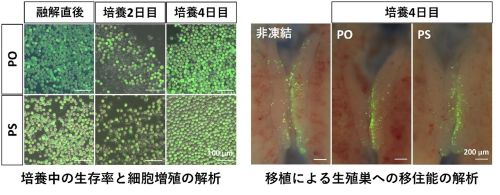
Figure 1. Functional evaluation of cryopreserved primordial germ cells
③Demonstration test of PO and PS cryopreservation solution
In order to evaluate the practicality of PO and PS cryopreservation solutions in gene bank (*7) projects, we conducted a demonstration test using Hinai chicken, a rare native breed designated as a national natural monument (Figure 2). A stable cell line of primordial germ cells established from Hinai chickens was cryopreserved in PO and PS cryopreservation solutions for over 1 year, thawed, cultured for 4 days, and then transplanted into commercial chicken embryos (hosts). Progeny assay results revealed that sperm or eggs derived from the primordial germ cells of Hinai chickens are produced in the gonads of mature host chickens. Therefore, by crossing male and female host chickens, Hinai chicken progeny were obtained. It has been demonstrated that individuals can be restored through transplantation from primordial germ cells cryopreserved in PO and PS cryopreservation solutions.
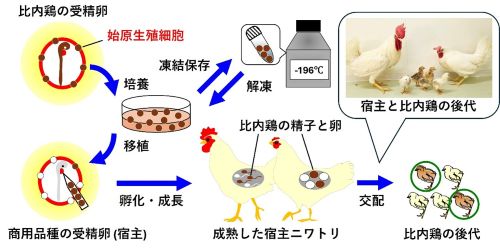
Figure 2. Example of individual restoration by cryopreservation and transplantation of primordial germ cells
Future developments
● PO and PS cryopreservation solutions have extremely simple compositions, and sericin in particular is available at low cost, so they are expected to be used as highly reproducible cryopreservation solutions for cryopreservation of chicken primordial germ cells.
● Chicken genetic resources can be cryopreserved in liquid nitrogen for a long period of time in a space-saving manner without having to be subcultured as a living organism.
● It can contribute to reducing the risk of reduced genetic diversity in native varieties and loss of commercial varieties due to infectious diseases and abnormal weather.
Glossary
*1 Primordial germ cells: The most immature germ cells that will become sperm or eggs in the future. It plays the role of passing on the chicken's genetic information to the next generation.
*2 Ovalbumin: The protein most abundantly contained in egg whites. In this study, the effect of protecting cells during freezing was confirmed.
*3 Sericin: A protein contained in silkworm cocoons. In this study, the effect of protecting cells during freezing was confirmed.
*4 Propylene glycol: A component that protects cells by suppressing the formation of ice crystals within cells when they are frozen.
*5 Cultivation: Growing cells in a nutritious environment. In this study, the thawed cells were cultured for several days, and their function was restored.
*6 Host: A chicken that receives transplanted cells. Commercial chickens were used as hosts in this study.
*7 Gene bank: A system for preserving and managing the genetic resources of animals and plants into the future. It is also useful for restoring varieties when they are lost due to disease or disaster.
- Press release materials (464.79 KB)
- Journal of Reproduction and Development
- Hiroshima University Researcher Guidebook (Associate Professor Junaki Nakamura)
Graduate School of Integrated Life Sciences Associate Professor Junaki Nakamura
Tel: 082-424-7943 FAX: 082-424-7943
E-mail: ynsu*hiroshima-u.ac.jp
(Please convert * to half-width @)