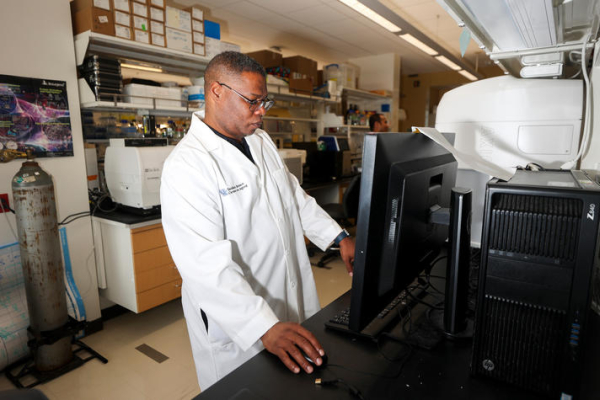
Daniel Lee has been awarded a $750,000 Tauopathy Challenge Workshop grant supported by the Rainwater Charitable Foundation, the Alzheimer’s Association, the Aging Mind Foundation and CurePSP.
Medical ResearchLife Sciences#University of Kentucky#medical research#clinical research#genomics#biology
by Marc Chalufour August 27, 2026 Illustrations by Adrià Fruitós Infectious Disease , Cancer , Public Health , School of Medicine Share When Karl Munger was a postdoctoral researcher at the National Institutes of Health in the late 1980s, he landed in the lab of pioneering virologist Peter Howley and began studying human papillomavirus. Scientists had noticed that HPV was often present in cervical cancer. But was it merely present, or did it drive the growth of cancer? Munger was able to show th
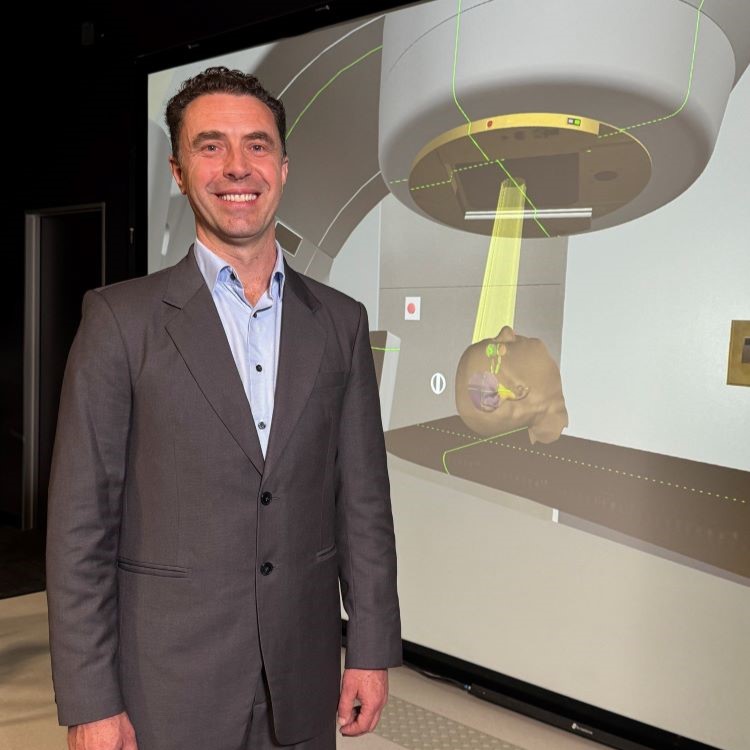
Adelaide researchers are challenging decades-old assumptions about brain cancer treatment in a bid to make radiation therapy more effective against tumours, while reducing damage to healthy tissue.
The U.S. National Science Foundation is investing $90 million over five years to support three new NSF Science and Technology Centers (NSF STC). These centers will advance American leadership in…
Fusion EnergyMedical ResearchLife Sciences#U.S. National Science Foundation#fusion#plasma physics#medical research#clinical research#genomics#biology
Precise manipulation of large genomic fragments is a critical need in crop breeding and synthetic biology. In crop genomes, superior traits are often associated with structural variations. However, existing large-fragment editing tools such as CRISPR-Cas systems and site-specific recombinases have limitations. In 2024, the development of the bridge RNA-guided IS110-family recombinase system provid
Medical ResearchLife Sciences#Chinese Academy of Sciences#Research News#medical research#clinical research#genomics#biology
DNA double-strand breaks (DSBs) are posing serious threats to genome stability. During mitosis, cells mainly rely on polymerase theta (Polθ) -mediated repair to fix these breaks. However, how the CIP2A-TOPBP1 complex regulates this process remains unclear. In a study published in PNAS , a team led by Prof. ZHAO Guoping from the Hefei Institutes of Physical Science of the Chinese Academy of Science
Medical ResearchLife SciencesProteins#Chinese Academy of Sciences#Research News#Proteins#medical research#clinical research#genomics#biology