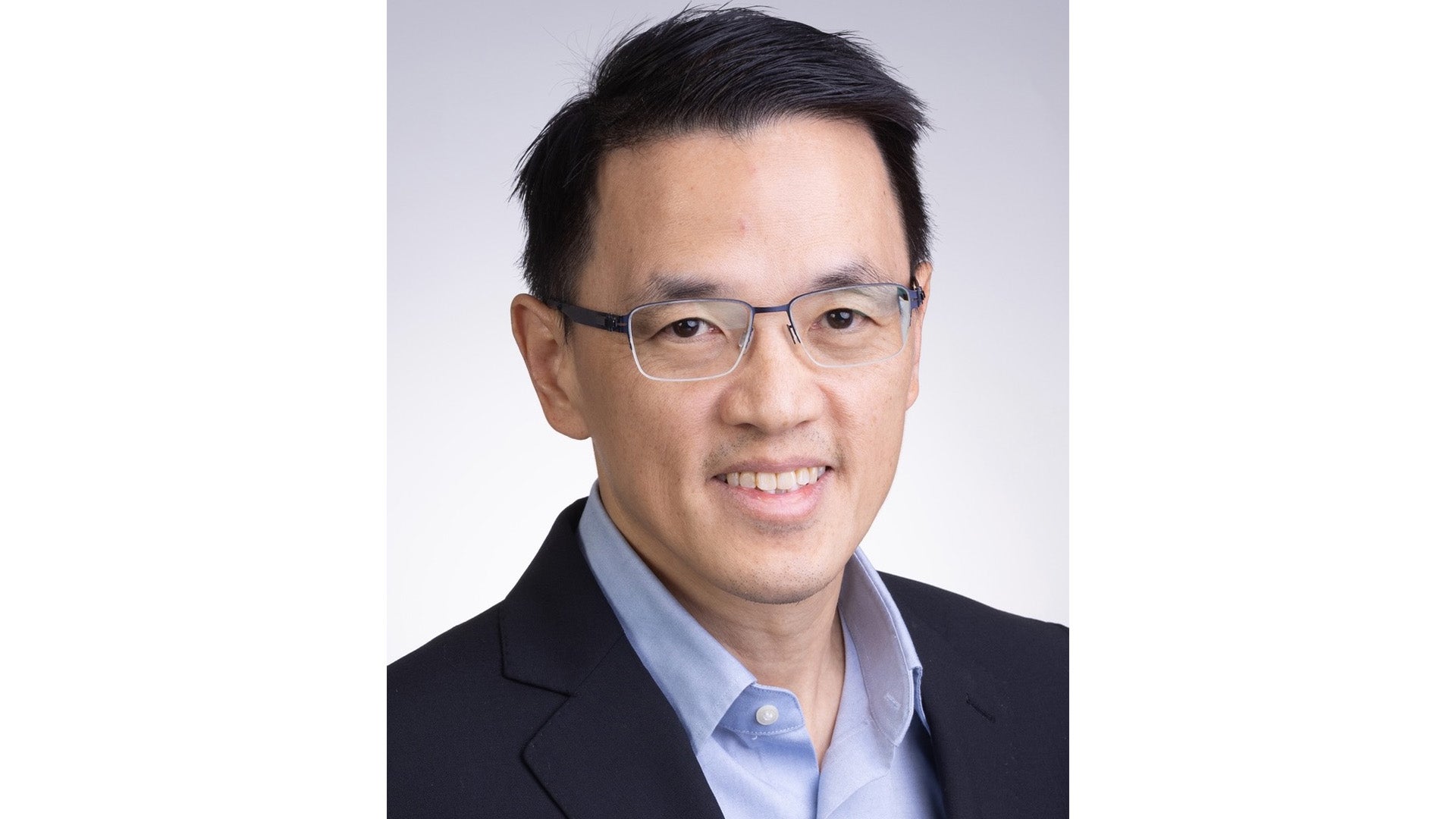
Professor Shyue Ping Ong wants AI to do more than predict whether a material might work. His vision is a discovery system that can propose new materials for a specific purpose, identify the most useful experiments to run, learn from every result and help scientists understand why a material behaves as it does.
This is the idea behind the AI Foundry he is establishing at NUS.
The timing, he believes, is right. AI models can now explore millions of possible materials, while advances in automation allow promising candidates to be synthesised and tested more quickly. Connecting these capabilities could turn materials discovery from a slow, fragmented process into a continuous cycle of prediction, experimentation and learning.
After nearly two decades in the United States, Prof Ong has returned to Singapore under the National Research Foundation’s Returning Singaporean Scientists Scheme to build this capability.
At NUS, he leads the Materialyze.AI Lab, conducting research at the intersection of materials science and information science. Singapore’s strengths in AI, advanced computing and materials characterisation, together with close links between research and industry, provide a base for the wider capability he hopes to build.
“Almost every technology we care about, from cleaner energy to faster chips to lighter aircraft, is made possible by the development of new and better materials,” says Prof Ong, Provost’s Chair Professor in the Department of Materials Science and Engineering. “Yet it still takes more than 15 years, on average, to take a new material from discovery to deployment.”
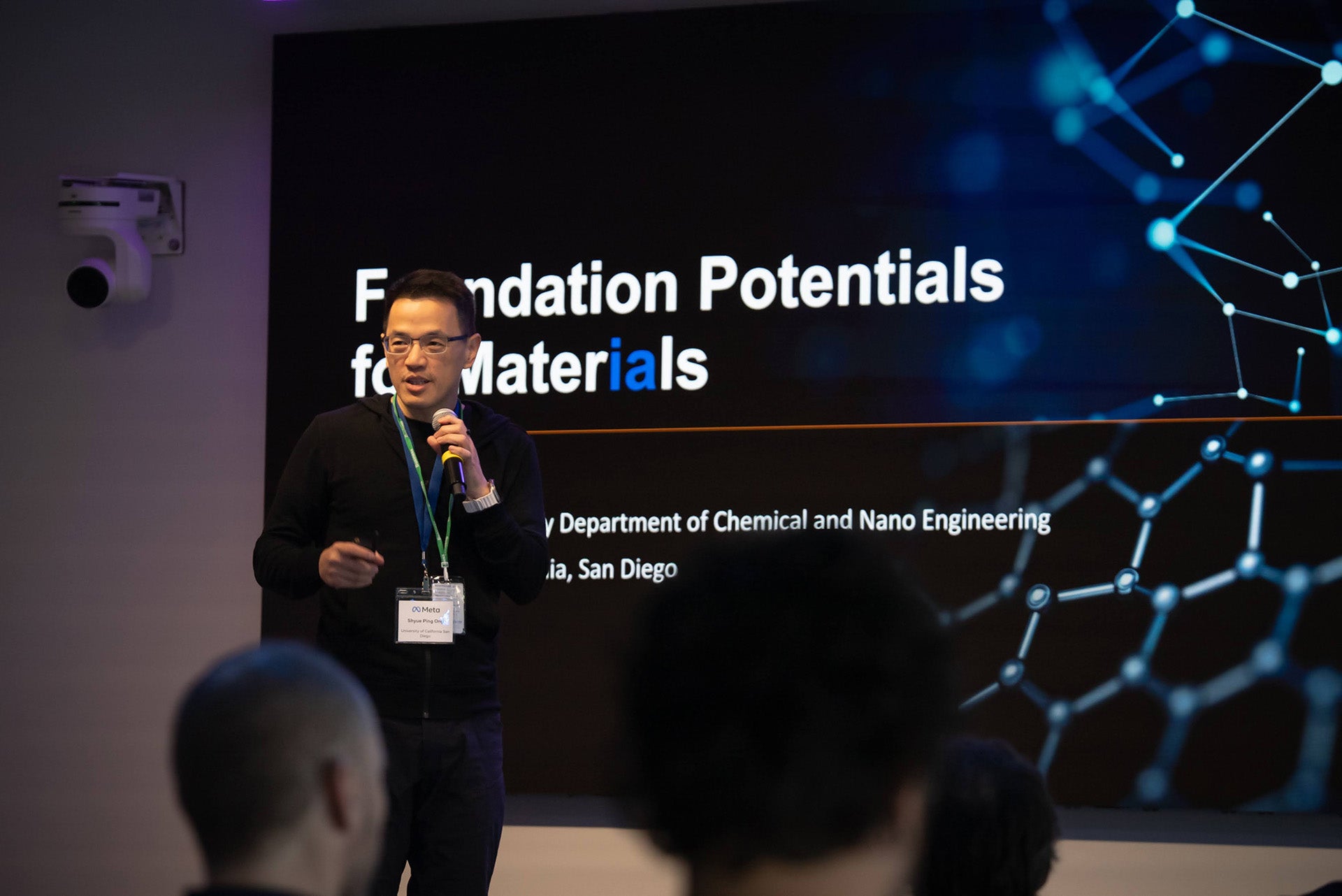
Prof Ong’s return brings him back to the country where his career began.
After graduating from the University of Cambridge with BA and MEng degrees in Electrical and Information Science, Prof Ong spent five years in Singapore’s public service. At 29, he left government to pursue a PhD in Materials Science and Engineering at MIT.
He later spent 12 years at the University of California, San Diego, where he became a full professor and led the Materials Virtual Lab.
There, he developed computational methods and open-source tools around a question that continues to drive his research: how can scientists navigate the enormous number of possible materials more quickly, while still understanding the science that makes them work?
Exploring millions of possibilities
Even a small number of elements can be combined into an enormous number of possible compositions and atomic structures, making the search for materials with the right properties a huge design challenge.
AI allows researchers to explore that space at a scale that would otherwise be impractical.
In a seminal 2022 study, an AI model known as a foundation potential, developed by Prof Ong and his collaborators, enabled the screening of millions of hypothetical crystal structures for the first time, a scale far beyond the reach of conventional quantum mechanical methods.
Prof Ong is also a founding developer of the Materials Project and the creator of pymatgen, while his UC San Diego lab developed the Materials Graph Library, or MatGL. These open-science tools enable researchers worldwide to analyse materials data, train AI models and simulate how materials might behave.
"Prediction without understanding is brittle and does not advance science. Understanding is what turns a single lucky hit into design principles that you can use to come up with better materials."
Professor Shyue Ping Ong
But for Prof Ong, identifying promising candidates is only part of the task. AI should extend scientific reasoning, helping researchers ask better questions and extract insight from data at a scale no individual could process alone.
“Prediction without understanding is brittle and does not advance science,” he says. “Understanding is what turns a single lucky hit into design principles that you can use to come up with better materials.”
Closing the discovery loop
Today, materials discovery is often a linear process, with prediction, synthesis, testing and analysis potentially taking place in different systems or laboratories. The AI Foundry is designed to close that loop: AI proposes promising materials, automated systems make and test selected candidates, and the resulting data feeds back into the models to guide what should be tested next.
By incorporating the laws of physics and chemistry into its models, the AI Foundry aims to make more reliable predictions even when exploring genuinely novel materials. It will seek not only to determine what works, but also to explain why.
Prof Ong hopes the AI Foundry can compress discovery cycles from months or years to weeks. Qualification and deployment will still take longer, but faster iteration could eliminate poor candidates earlier and reach promising materials sooner.
Building capability in Singapore
The AI Foundry’s first programmes will focus on high-entropy alloys and ceramics for fusion energy and aerospace, where materials must withstand extreme temperatures, radiation and mechanical stress. Its modular design could later support semiconductors, clean energy and other RIE2030 priorities.
The ambition extends beyond producing individual discoveries. Prof Ong wants to build the infrastructure, talent and scientific knowledge that will enable Singapore to generate many more discoveries over time.
Data, models and software developed through the Foundry will be released openly, allowing other researchers to build on its work and creating shared infrastructure for AI-driven materials science. A commercial pathway is taking shape through Elemynt, a Singapore-based deep-tech company Prof Ong co-founded with his former student Dr Mahdi Amachraa to translate AI-driven materials design into industrial practice.
Together, these efforts connect scientific discovery, shared infrastructure, talent development and commercial application.
For Prof Ong, this is the larger purpose of returning: to build a capability that can advance materials science globally while establishing Singapore as a place where important new materials are conceived, understood and translated into use.
“My hope is that in 10 years, when people ask where the world’s best materials are designed, Singapore is part of the answer.”
Recent News
Source: https://cde.nus.edu.sg/news/building-an-ai-foundry-to-transform-materials-discovery