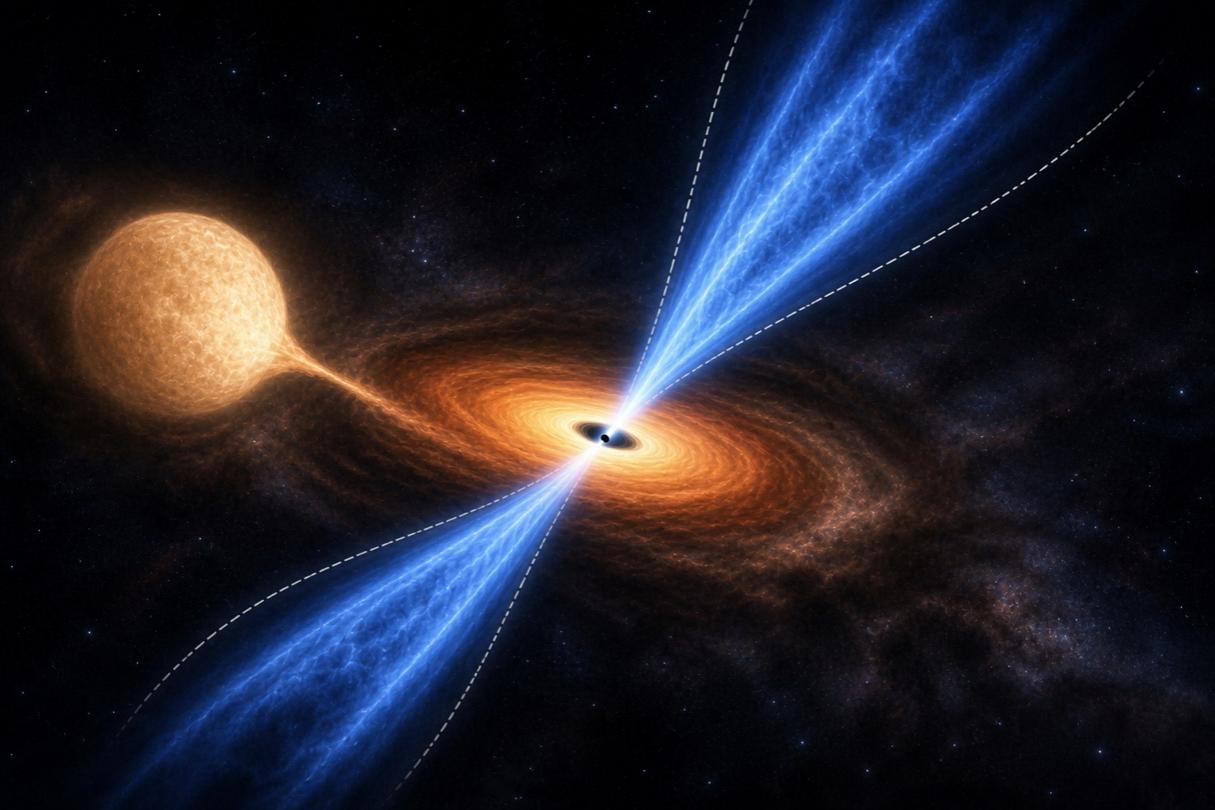
Active galactic nuclei (AGN), powered by accreting supermassive black holes, and X-ray binaries (XRBs), powered by accreting neutron stars or stellar-mass black holes, are two representative classes of compact accreting systems. Relativistic collimated jets are among the most spectacular phenomena in these systems. Understanding how these powerful outflows are launched, accelerated, and collimated
Space & AstronomyAstronomy#Chinese Academy of Sciences#Research News#astronomy#astrophysics
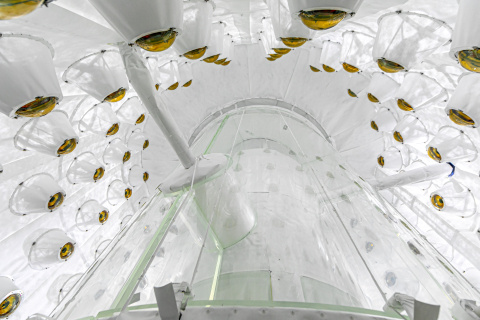
The LUX-ZEPLIN experiment observed an unusual particle interaction, but researchers will need more data to confirm.
FeaturesSpace & AstronomyParticle Physics#DOE#Office of Science#astronomy#astrophysics#Particle Physics#High Energy Physics#Lawrence Berkeley National Laboratory
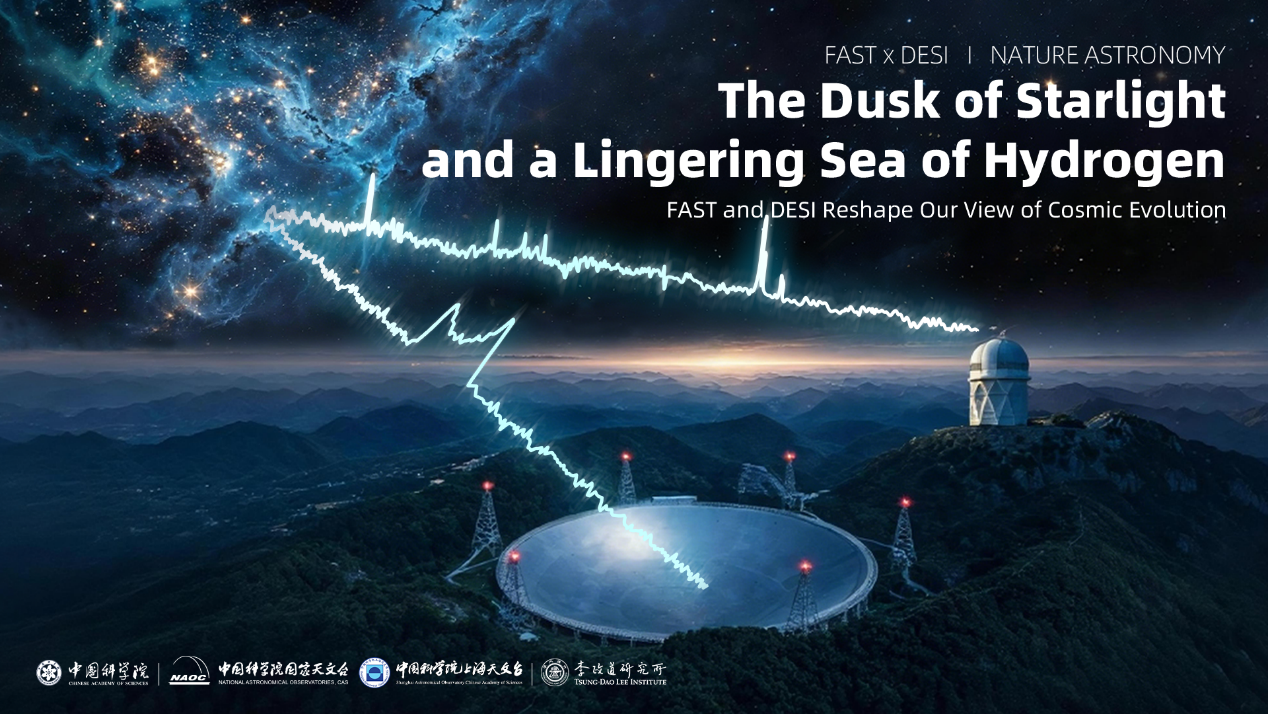
The universe has been having fewer and fewer stellar "babies". Over the past 4.5 billion years, the rate of star birth has crashed to less than half of what it once was. But here's the twist: the most essential "fuel" for making stars has barely decreased. This finding comes from an international team led by researchers from the Chinese Academy of Sciences (CAS), in collaboration with the Dark Ene
Space & AstronomyTelescopesSatellites#Chinese Academy of Sciences#Research News#Telescopes#Satellites#astronomy#astrophysics
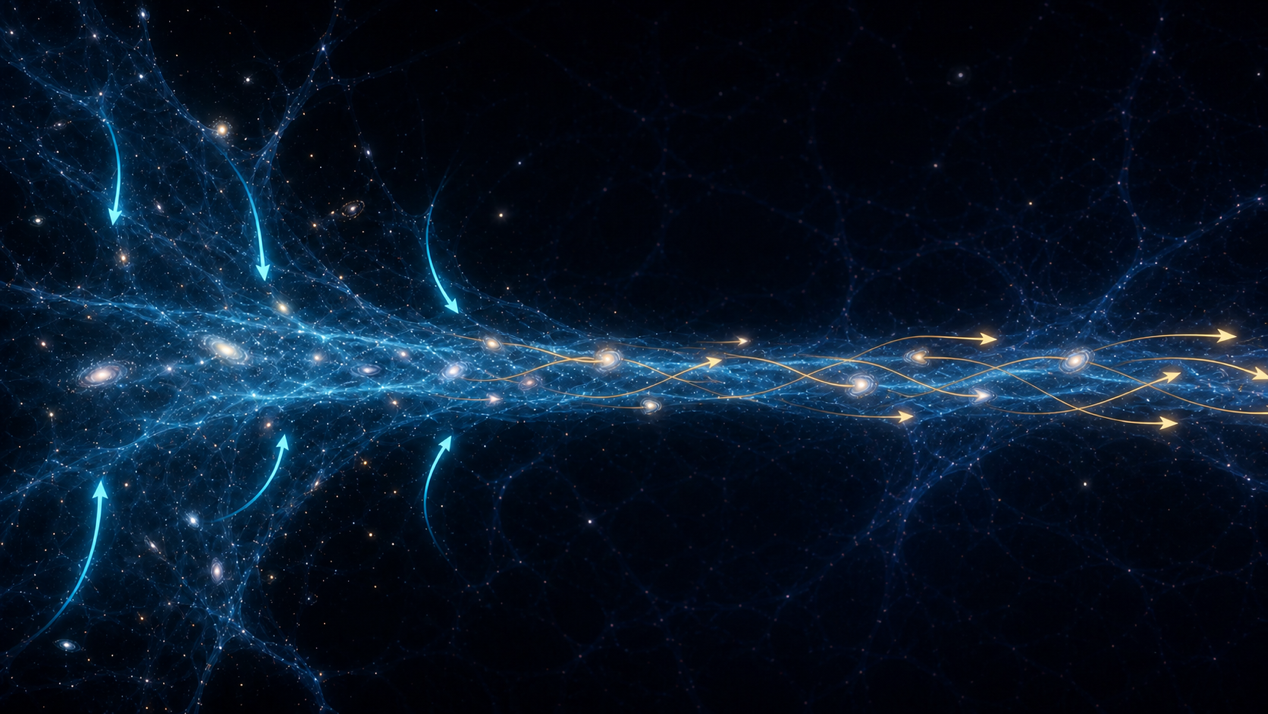
A research team from the Shanghai Astronomical Observatory (SHAO) of the Chinese Academy of Sciences (CAS) has discovered that satellite galaxies retain a measurable "kinematic memory" of matter flowing into and along cosmic filaments. Using a large spectroscopic sample from the Sloan Digital Sky Survey (SDSS) , the team found that satellite galaxies preferentially orbit within planes that contain
Space & AstronomyAstronomy#Chinese Academy of Sciences#Research News#astronomy#astrophysics
Perched atop a seven-story building at the U.S. Department of Energy’s Brookhaven National Laboratory, the “Quantum Lighthouse” is a key pillar of the free-space optical (FSO) link spanning Brookhaven Lab, the State University of New York at Stony Brook and Yale University.
Space & AstronomyTechnology & Innovation#Brookhaven National Laboratory#astronomy#astrophysics#advanced materials#innovation#NSF–DOE Vera C. Rubin Observatory
Researchers have successfully transmitted light particles containing quantum information through open air between Brookhaven Lab and Stony Brook University.
Space & AstronomyEnergy InfrastructureTechnology & Innovation#Brookhaven National Laboratory#astronomy#astrophysics#grid#energy security#advanced materials#innovation
Galaxy mergers are among the most spectacular and destructive events in the universe. During these encounters, not only are billions of stars redistributed, but the supermassive black holes lurking in the galaxies' centers can also interact with one another. Yet systems where three galaxies merge simultaneously are uncommon. Now, researchers have obtained the first direct observational evidence fo
Space & AstronomyAstronomy#Chinese Academy of Sciences#Research News#astronomy#astrophysics