Topological quantum materials combine unusual electronic states with properties such as magnetism or superconductivity, offering possibilities for future electronics and quantum technologies. Researchers at Tohoku University have now shown that changing the number of layers in a crystal can provide a systematic way to design topological magnets. The strategy builds on homologous series, families o
Medical ResearchTechnology & Innovation#Kennesaw State University#research#News Releases#medical research#clinical research#advanced materials#innovation
Technology & InnovationUniversity of Maryland Robert H. Smith School of Business
Seldon Warner, a combat veteran and deep‑tech strategist from Miles City, Montana, has been selected as one of Poets & Quants’ “ 2026 MBAs to Watch ,” representing the University of Maryland’s Robert H. Smith School of Business.
Technology & InnovationBusiness#University of Maryland Robert H. Smith School of Business#Poets & Quants#Full-Time MBA#Military and Veteran Affairs#[email protected]#advanced materials#innovation
The selected projects will cover a broad spectrum of research fields from life sciences and engineering to social sciences and humanities. The funding, worth €705 million in total, will support 421 early-career researchers.
Technology & Innovation#University of Cambridge#research#Funding#advanced materials#innovation
In the realm of materials science, there is a plethora of datasets and tools at our disposal - the issue is how to effectively make use of these resources in harmony. Researchers at the Advanced Institute for Materials Research (WPI-AIMR), Tohoku University, have identified major bottlenecks holding back artificial-intelligence-driven polymer innovation and created a system that integrates multipl
Imagine swimming in open water and feeling slime brush against your leg. Most people might shake it off without a second thought. But what if the surface of a boat could do the same? Researchers from Washington University in St. Louis’ McKelvey School of Engineering are about to find out, thanks to a $750,000 grant from the U.S. Department of Defense to develop materials that incorporate soft robo
Environment & ClimateTechnology & InnovationEngineering#Washington University in St. Louis#Newsroom#climate#decarbonization#advanced materials#innovation
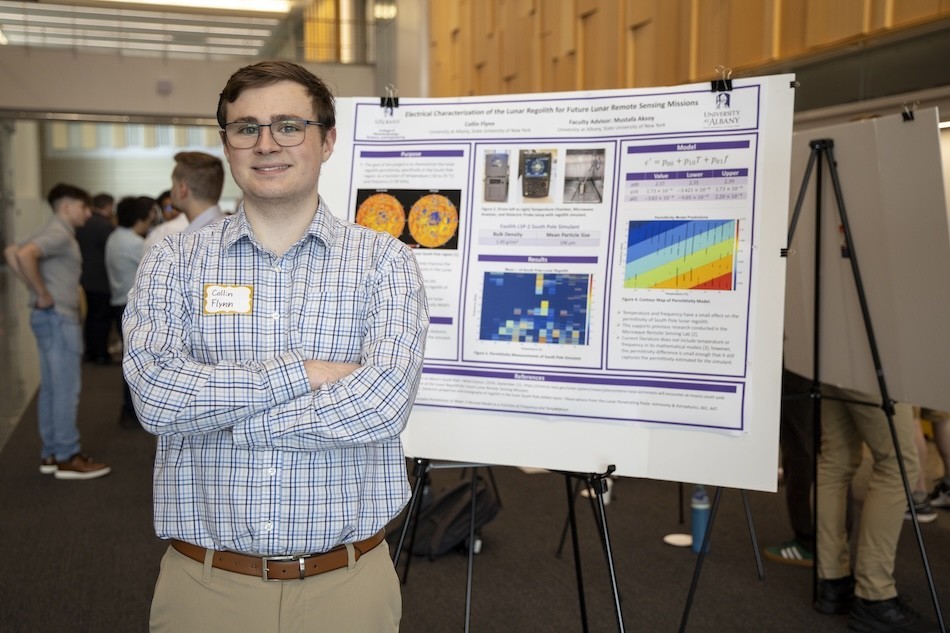
UAlbany sophomore Collin Flynn spent his summer studying the electrical properties of moon soil in support of ongoing efforts to get humans back to the moon, thanks to a 10-week research opportunity provided through the College of Nanotechnology, Science, and Engineering's Summer Undergraduate Research Program.
ResearchEnvironment & ClimateTechnology & Innovation#University at Albany#research#climate#decarbonization#advanced materials#innovation
Technology & InnovationNational University of Singapore
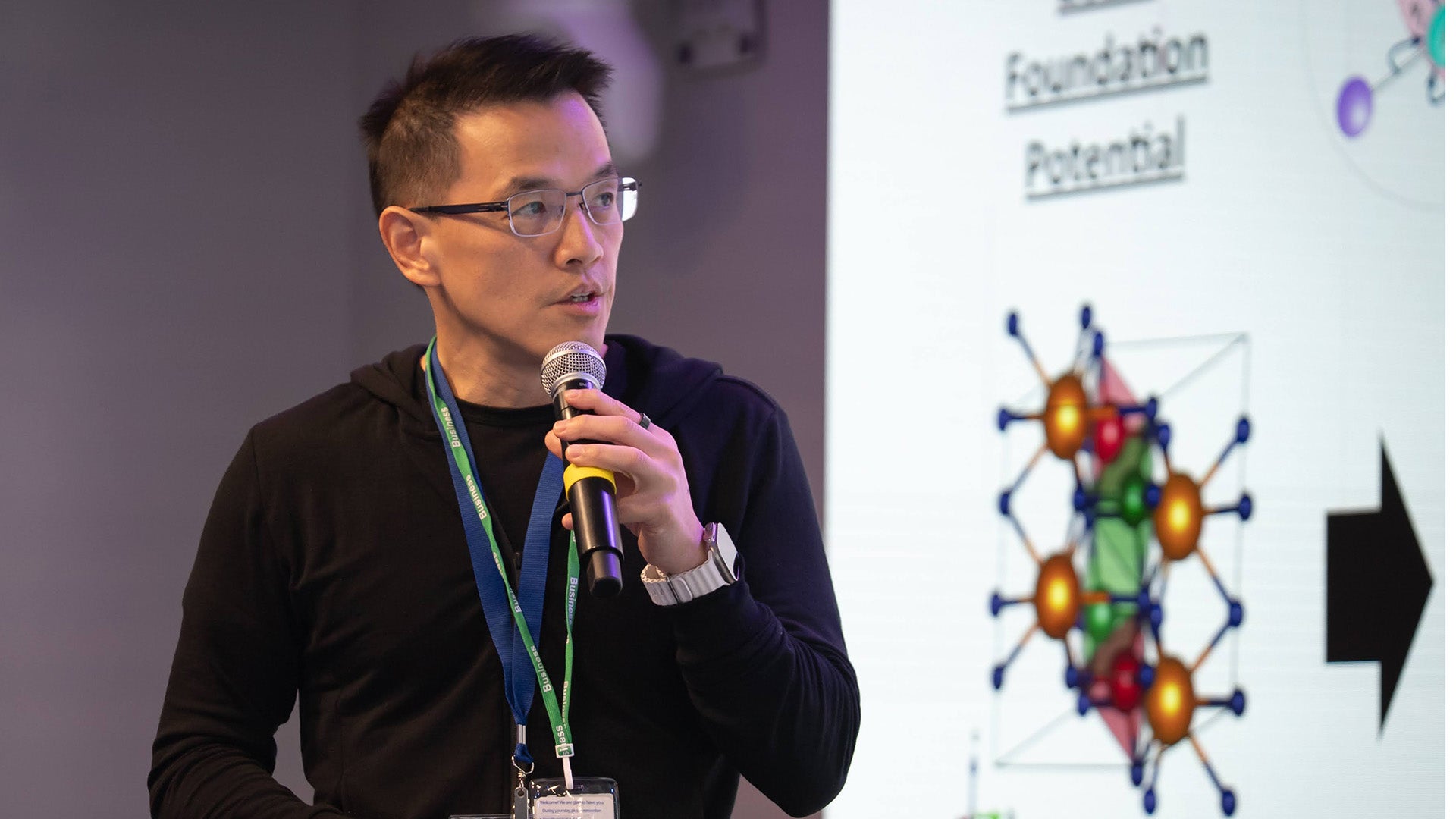
Prof Ong hopes the AI Foundry can compress discovery cycles for new materials from months or years to weeks. Professor Shyue Ping Ong wants AI to do more than predict whether a material might work. His vision is a discovery system that can propose new materials for a specific purpose, identify the most useful experiments to run, learn from every result and help scientists understand why a material
Fusion EnergyTechnology & Innovation#National University of Singapore#CDE Research News#Cde News#Research Impact#fusion#plasma physics#advanced materials#innovation
Technology & InnovationQueen Mary University of London
Scientists could have a new way to explore the hidden behaviour of matter, thanks to research involving Queen Mary University of London that uses a quantum computer to carry out a new form of computational spectroscopy. Spectroscopy is an important scientific technique used to understand the properties of matter. By analysing how materials and molecules respond to energy or light, researchers can
Technology & Innovation#Queen Mary University of London#QMUL Latest News#Science And Engineering#advanced materials#innovation
Technology & InnovationChinese Academy of Sciences
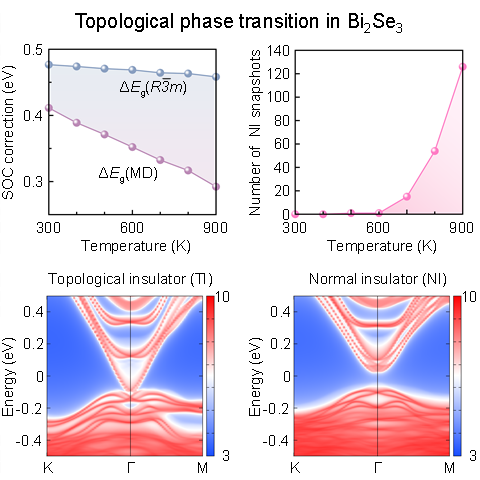
Spin-orbit coupling (SOC), an interaction between an electron ' s spin and its motion, plays a key role in creating topological insulators—unusual materials that are insulating in their interior but can conduct electricity along their surfaces. Now, a new study published in Newton finds that increas ing temperature weakens SOC in the topological insulator Bi 2 Se 3 , driving a transition to a norm
Technology & InnovationQuantum#Chinese Academy of Sciences#Research News#Quantum#advanced materials#innovation
Developing safer solid-state batteries requires replacing flammable organic liquid electrolytes with solid-state electrolytes (SSEs) that can conduct ions well, remain stable, and have suitable mechanical properties. As interest in SSEs has grown, so has the volume of research in the field. However, the reported data remain scattered across the literature and vary widely in format and completeness
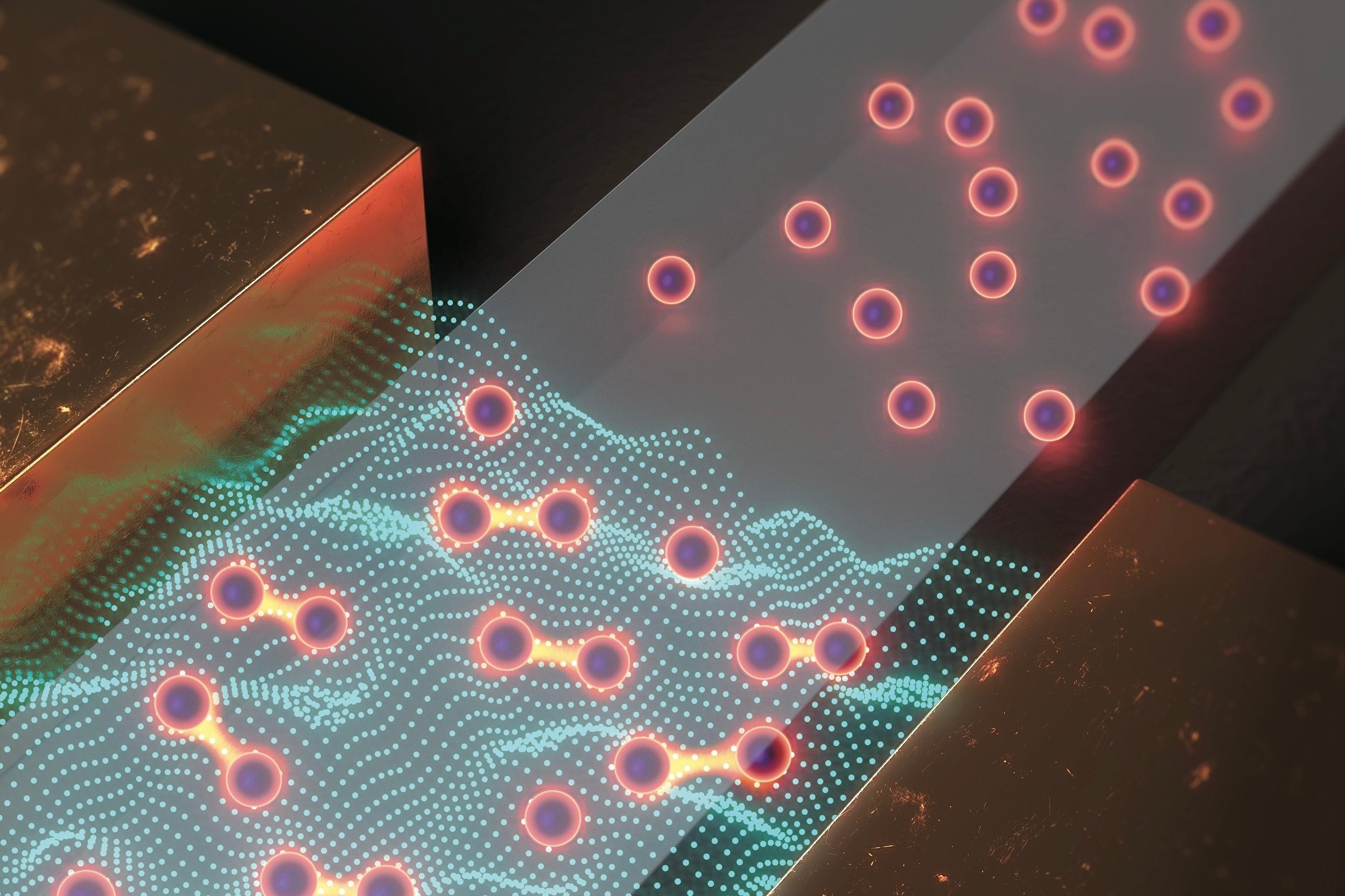
In a study published in Nature on August 19, a team led by Profs. ZENG Changgan and CHENG Guanghui from the University of Science and Technology of China of the Chinese Academy of Sciences, along with Prof. JIANG Qingdong from Shanghai Jiao Tong University, Prof. Frank Wilczek from Massachusetts Institute of Technology, and other collaborators, for the first time, have achieved the enhancement of
Technology & InnovationQuantum#Chinese Academy of Sciences#Research News#Quantum#advanced materials#innovation
Technology & InnovationNational Research Council of Science & Technology
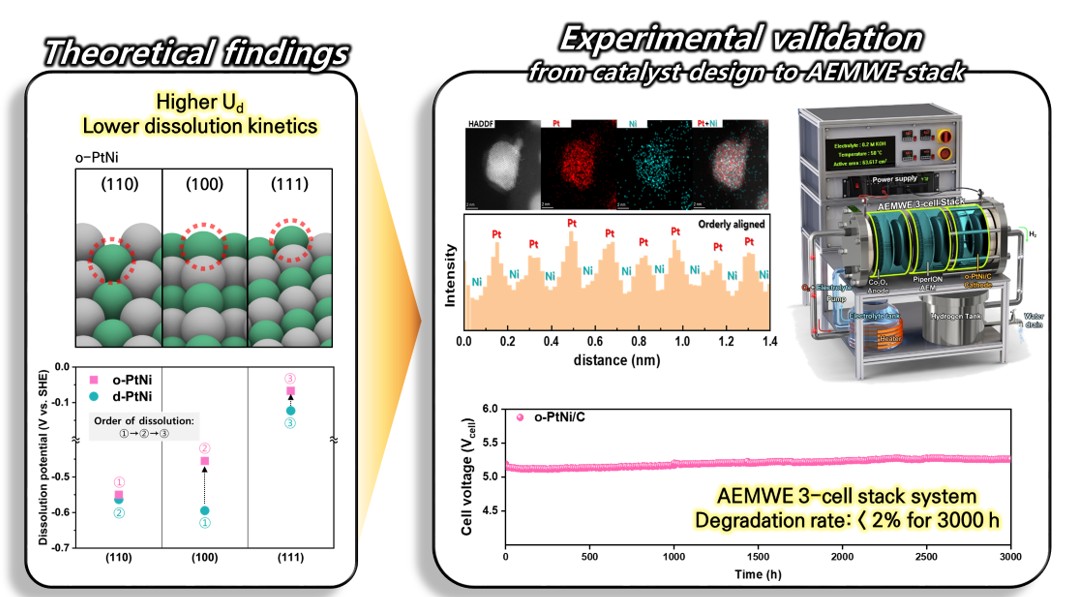
- KIMS Develops Highly Durable Platinum–Nickel Catalyst for Water Electrolysis # Atomic-Structure Control Suppresses Nickel Dissolution, Enabling a Highly Durable Water Electrolysis Catalyst to Operate for 3,000 Hours # Extended Catalyst Lifetime Expected to Reduce Green Hydrogen Production Costs and Support the Commercialization of Water Electrolysis Systems CHANGWON, South Korea — Korea Institut
Technology & Innovation#National Research Council of Science & Technology#GRIs News#Korea Institute of Materials Science (KIMS)#KIMS#advanced materials#innovation#Korea Institute of Materials Science
Technology & InnovationLawrence Livermore National Laboratory
At the bottom of the ocean, optical fibers transmit telecommunications and internet data across the world. Waveguides make that feat possible by channeling and amplifying the light — and therefore the data within — over enormous distances. And the technology goes beyond undersea cables. Waveguiding optics are among the most important advances in photonics since the invention of the laser. They are fundamental to the structure of glass fiber lasers, which are used for high-power national security applications like counter-drone laser systems and missile defense. Now, researchers at
Technology & Innovation#Lawrence Livermore National Laboratory#Advanced Materials and Manufacturing#Defense#Engineering#Lasers and Optical S&T#Top Story#advanced materials#innovation







.png)