A research group consisting of Kagoshima University Assistant Professor Masashi Kodama, Faculty of Fisheries Fisheries student Yasuto Watabe, and Hiroshima University Associate Professor Kazumitsu Nakaguchi and Associate Professor Kaori Wakabayashi has discovered a new species of giant shrimp with large white eyes that cover most of its head from the deep sea off the coast of Tanegashima at a depth of approximately 1,200 meters. This species was given the scientific name Harcledo toyoshioae, and the Japanese name ``Omeda Mayoko Shrimp'' was proposed.
The results of this research were published in the British academic journal Systematics and Biodiversity on June 5, 2026.
Research content
The abyssal zone, which is approximately 1,000 m or deeper, is an environment where sunlight rarely reaches, and is thought to be home to a variety of organisms that have adapted to this unique environment. However, the actual situation has not yet been fully elucidated.
A research group consisting of Kagoshima University's Assistant Professor Masashi Kodama, Faculty of Fisheries Fisheries student Yasuto Watanabe, and Hiroshima University's Associate Professor Kazumitsu Nakaguchi and Associate Professor Kaori Wakabayashi has discovered a small crustacean with enormously developed eyes in the submerged ocean at a depth of approximately 1,200 meters off the coast of Tanegashima (Figure 1).
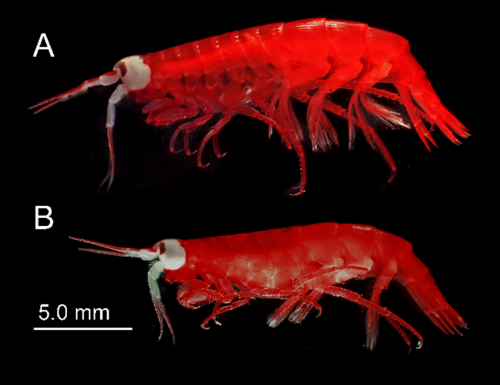
Figure 1. Body color of the described Omeda Mayoko shrimp when it was alive.
A. Holotype (specimen that serves as the standard for the species)
B. Paratype Reprinted from the article with permission of the publisher
What was discovered this time is a type of amphipoda. This species was collected using a plankton net (ORI Net) installed on the training ship Toyoshio Maru attached to the Faculty of Bioproduction, Hiroshima University. Its body length is approximately 2 cm, and its main characteristics are its deep red body color and huge white eyes that cover most of its head.
A detailed taxonomic study of this species showed that it belongs to the family Eusiridae. On the other hand, it was revealed that it has characteristics that do not match any known species, and it was determined that it is an undescribed species. In particular, the eyes of this species are so large that the left and right sides meet on the dorsal side of the head when viewed from the back (Figure 2), making it easy to distinguish it from closely related species. Therefore, in this study, we considered this species as a new species.Harcledo toyoshioaeKodama, Watabe, Nakaguchi & Wakabayashi, 2026. Species name “toyoshioae” was dedicated to Toyoshiomaru, who contributed to the collection of this species.In addition, the Japanese name ``Omeda Mayoko Shrimp'' was proposed in honor of its huge eyes.
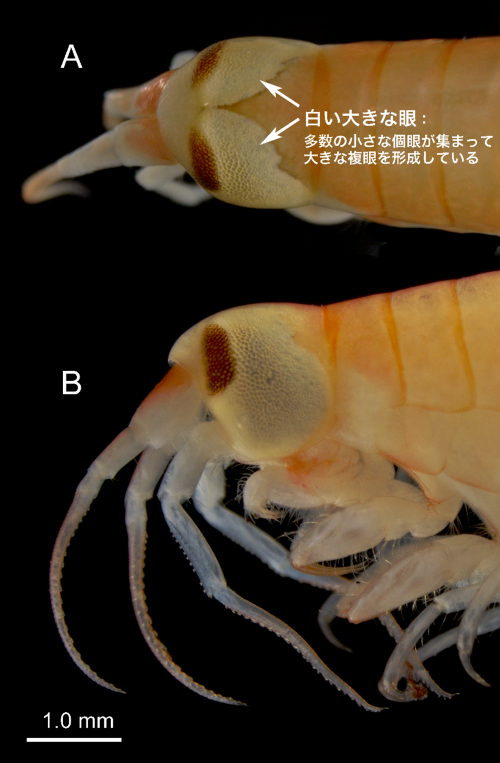
Figure 2. Head of Omeda Mayoko shrimp (fixed specimen)
A. Back: Huge left and right eyes meet at the back.
B. Side: The eyes cover most of the head Reprinted from this article with permission of the publisher.
In this study, in addition to describing the new species, we also determined the nucleotide sequences of the COI region and 16S rRNA region of mitochondrial DNA, which are used for molecular phylogenetic analysis and DNA barcoding. Because sunlight is significantly attenuated with increasing depth, deep-sea organisms often exhibit evolutionary adaptations to the light environment, such as enlarging or degenerating eyes. The discovery of this species may provide important knowledge when considering the adaptive evolution of eyes in deep-sea crustaceans.
These results were published in the British academic journal Systematics and Biodiversity on June 5, 2026.
Background and significance of the research
Taxonomic research on green shrimp in the waters around Japan is still insufficient, and new species have been discovered and described one after another in recent years. In addition, most of the research on green shrimp to date has focused on the ocean floor, and surveys in the water column using plankton nets have not been conducted very often. In particular, the deep-sea gradual depth layer where the Omeda prawn was discovered is an environment that is difficult to investigate, and the cooperation of training vessels and research vessels is essential for investigation, so it is one of the environments that has not been particularly investigated until now. This time, with the cooperation of Toyoshio Maru, we were able to carry out a survey in such an environment, which led to the discovery of a new species. By continuing to conduct research in similar environments, we may discover even more unknown species.
Research system
This research was carried out by the following research team.
・Masashi Kodama (Assistant Professor, Faculty of Fisheries, Kagoshima University)
・Yasuto Watanabe (4th year, Faculty of Fisheries, Kagoshima University)
・Wako Nakaguchi (Associate Professor, Faculty of Bioproduction, Hiroshima University; Captain of the attached training ship Toyoshiomaru)
・Kaori Wakabayashi (Associate Professor, Graduate School of Integrated Life Sciences, Hiroshima University)
Nakaguchi and Wakabayashi were in charge of the onboard survey. Kodama and Watanabe were in charge of morphological observation, genetic analysis, and taxonomic considerations. Kodama was primarily in charge of writing the paper manuscript, and three others revised and improved the content of the manuscript. In carrying out this research, we used the facilities of the Hiroshima University training ship Toyoshio Maru. This research was also supported by JSPS KAKENHI Grant Number 23K26985.
Paper information
Title: A new species of giant-eyed bathypelagic eusirid amphipod (Crustacea: Amphipoda: Eusiridae) from the western North Pacific
Author: Masafumi Kodama1, Hiroto Watabe1, Kazumitsu Nakaguchi2,
Kaori Wakabayashi3
1Faculty of Fisheries, Kagoshima University
2School of Applied Biological Science, Hiroshima University
3Graduate School of Integrated Sciences for Life, Hiroshima University
Bibliographic information: Systematics and Biodiversity, 24(1), 2659885.
(DOI: 10.1080/14772000.2026.2659885)
Publication date: June 5, 2026
- Press release materials (519.91 KB)
- Publication journal (Systematics and Biodiversity)
- Hiroshima University Researcher Guidebook (Associate Professor Wako Nakaguchi)
- Hiroshima University Researcher Guidebook (Associate Professor Kaori Wakabayashi)
*Please replace [at] in the email address with @.
(regarding research)
Assistant Professor, Department of Aquatic Science, Faculty of Fisheries, Kagoshima University
Masafumi Kodama (Masafumi Kodama)
4-50-20 Shimoarata, Kagoshima City, Kagoshima Prefecture 890-0056
TEL: 099-286-4143
E-mail: mkodama[at]fish.kagoshima-u.ac.jp
*Since I am often away due to academic affairs, etc., I would appreciate it if you could contact me by email first.
Associate Professor, Faculty of Biological Production, Hiroshima University; Captain of the attached training ship Toyoshiomaru
Nakaguchi Wako (Nakaguchi Kazumitsu)
7-4 Takaracho, Kure City, Hiroshima Prefecture 737-0029
E-mail: nakaguchi-kazu3[at]hiroshima-u.ac.jp
Associate Professor, Graduate School of Integrated Life Sciences, Hiroshima University
Kaori Wakabayashi (Kaori Wakabayashi)
Faculty of Bioproduction, Hiroshima University, 1-4-4 Kagamiyama, Higashihiroshima City, Hiroshima Prefecture 739-8528
E-mail: kaoriw[at]hiroshima-u.ac.jp
(Regarding public relations)
Kagoshima University Public Relations Center
1-21-24 Korimoto, Kagoshima 890-8580
TEL: 099-285-7035
E-mail: sbunsho[at]kuas.kagoshima-u.ac.jp
Hiroshima University Public Relations Group
1-3-2 Kagamiyama, Higashihiroshima 739-8511
TEL: 082-424-3701
E-mail: koho[at]office.hiroshima-u.ac.jp