As electricity demand rises across the United States, restarting retired nuclear power plants is emerging as one of the quickest paths to increase power generation. However, restarting a nuclear power plant in the United States has never been done and requires thorough reviews, including an environmental review, as required by the National Environmental Policy Act (NEPA) of 1969.
In a first for the nation, a nuclear plant transitioned from the decommissioning process and is slated to resume operations later this year. The Palisades Nuclear Plant in Michigan closed in 2022 but has now cleared multiple regulatory hurdles, including completion of an environmental assessment in less than 12 months, aligning with a change in federal policy that requires environmental assessments to conclude within a year.
To help accelerate the environmental review, the Department of Energy’s Pacific Northwest National Laboratory (PNNL) supported the U.S. Nuclear Regulatory Commission (NRC) to evaluate potential environmental impacts from the plant restart.
PNNL experts worked with the NRC to determine how to evaluate the decommissioning reactor for restart while simultaneously addressing complex issues ranging from groundwater quality and aquatic ecosystems to radiological exposure, cultural resources, and public health concerns.
As part of the assessment, PNNL and NRC experts analyzed Lake Michigan water withdrawals and reviewed historical groundwater monitoring data dating back to the 1970s, while examining public concerns related to cancer risks and nuclear waste management. In the end, regulators concluded that the restart would not result in significant environmental impacts.
Now, owners of other decommissioning nuclear power plants are taking note of the Palisades project’s success.
“Our work with PNNL on Palisades established a baseline for our environmental reviews on other proposed restart projects,” said Daniel Barnhurst, NRC senior environmental scientist.
From shutdown to startup
Planning for decommissioning a nuclear power plant begins before a plant fully ceases operations. The full process includes shutting down systems, removing nuclear fuel from the reactor, and transitioning the facility into a state where it can no longer generate power.
Restarting a reactor presents a unique set of operational and regulatory challenges. A plant like Palisades exists in a transitional state: It’s no longer operating, but it is not fully decommissioned, requiring regulators to evaluate both current conditions and future operations.
“For this effort, we had to look at it as two different stages: the impacts from preparations for the resumption of power operations and impacts from operations for the remainder of the license term,” said Leah Hare, a PNNL Earth scientist and deputy lead for the Palisades environmental review.
The project required coordination across multiple regulatory frameworks, including NEPA, the National Historic Preservation Act, and the Endangered Species Act. Environmental reviews focus on potential impacts to ecosystems and communities, while separate NRC safety reviews evaluate plant design, engineering, and operational requirements.
The PNNL team also works closely to support the NRC’s coordination and consultation with federal, state, Tribal, and local agencies to address site-specific requirements. At Palisades, this included stakeholder engagement with Michigan agencies regarding activities affecting Lake Michigan.
Assessing potential impacts
Water resources and aquatic ecosystems were also key components of the review. The Palisades environmental assessment evaluated potential impacts to Lake Michigan water resources, including cooling-water intake operations and related effects on fish populations.
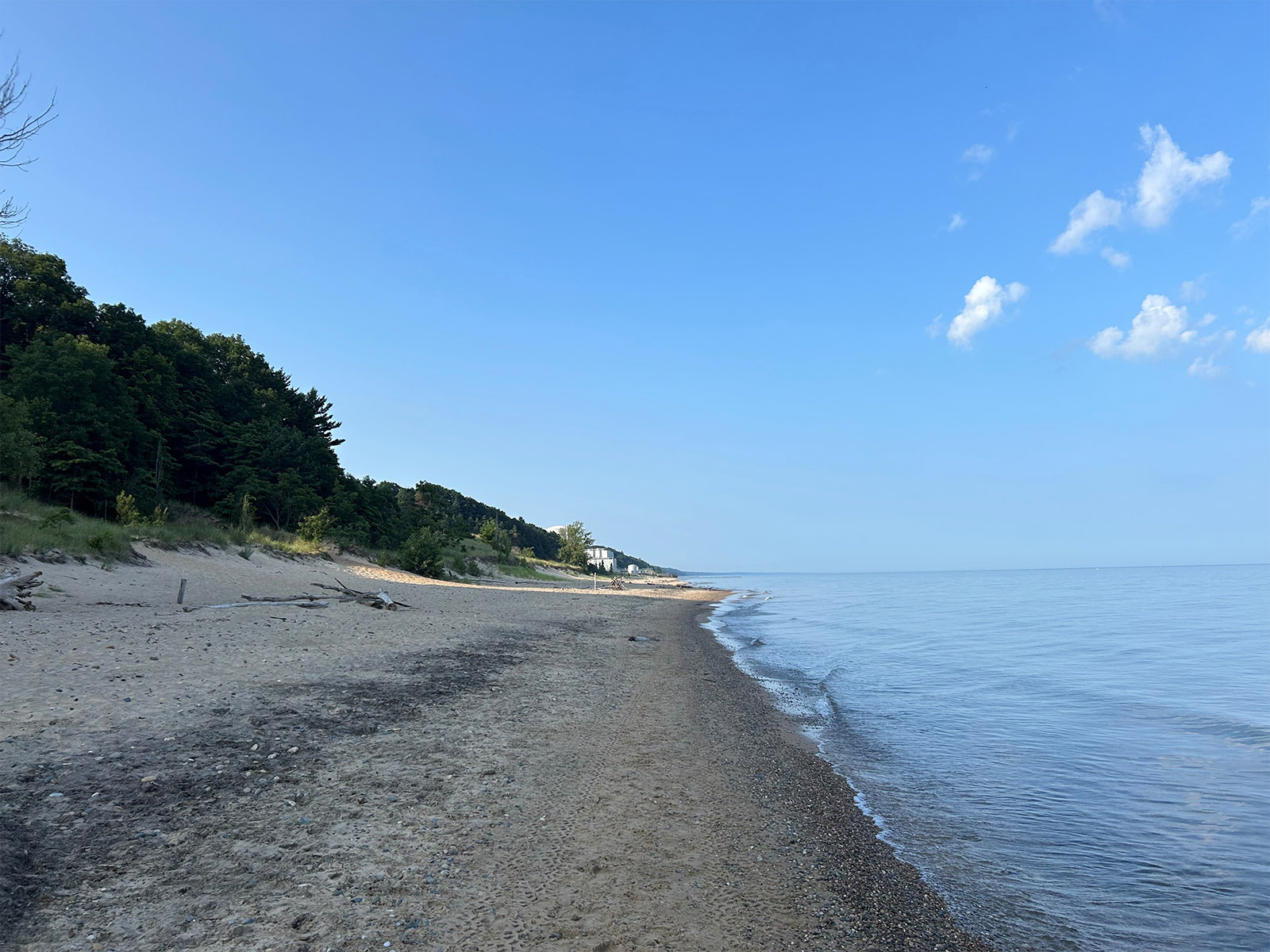
The team evaluated potential impacts across a range of resource areas, including land use, water resources, air quality, historic and cultural resources, as well as effects of potential radiological impacts on both the environment and nearby populations.
Looking ahead
PNNL has 50 years of expertise in supporting the NRC’s environmental review work, including analyses related to reactor construction, operation, and decommissioning.
In addition to Palisades, PNNL is supporting the NRC with the environmental reviews for restarts of two other nuclear power plants: the Christopher M. Crane Clean Energy Center (Crane, formerly Three Mile Island Nuclear Station, Unit 1) in Pennsylvania, which shut down in 2019, and the Duane Arnold Energy Center (Duane Arnold) in Iowa, which shut down in 2020.
“Working with the NRC, we were able to leverage experience and knowledge from previous environmental reviews to improve efficiency,” said Cyler Conrad, a PNNL Earth scientist and environmental assessment team lead for the restart projects.
For the Crane and Duane Arnold projects, the formal NEPA review timeline began with separate Federal Register notices issued in early 2026. The draft environmental assessment for Crane was issued on June 9, 2026, and the Duane Arnold draft environmental assessment was issued on August 3—with the NRC stating there would be no significant environmental impacts for either facility.
“PNNL has been a valued partner in our ability to perform these reviews and implement the NRC NEPA responsibilities,” said Steve Koenick, branch chief of the NRC License Renewal Environmental Branch.
Source: https://www.pnnl.gov/news-media/us-nuclear-power-plant-restarts-gain-momentum-pnnl-support