Machine learning doesn’t replace human intelligence, but it can outlast human endurance, which makes it a very helpful tool for chemistry and material discovery. Scientists know the machine learning models can make predictions based on the vast reams of data it is trained on, but can it take it a step further and massively scale up testing out those predictions? “We already see that AI is powerful
Environment & ClimateTechnology & InnovationData & Computer Science#Washington University in St. Louis#Newsroom#climate#decarbonization#advanced materials#innovation
Kidney disease is silent in its early stages, progressing without symptoms until the disease is advanced. Researchers in the McKelvey School of Engineering at Washington University in St. Louis, in collaboration with researchers at WashU Medicine and at Texas A&M University, have been developing a minimally invasive method to improve diagnosis in earlier stages. New research from the lab of Srikan
Medical ResearchEnvironment & ClimateTechnology & Innovation#Washington University in St. Louis#Newsroom#medical research#clinical research#climate#decarbonization#advanced materials#innovation
Graphene is an exceptionally useful material for creating batteries, catalysts, and electronic devices. Yet producing graphene typically requires temperatures as high as 900°C, limiting energy efficiency and making structural control difficult. To make graphene production more practical, a recent study has overcome this long-standing temperature barrier. In a study published in the Journal of the
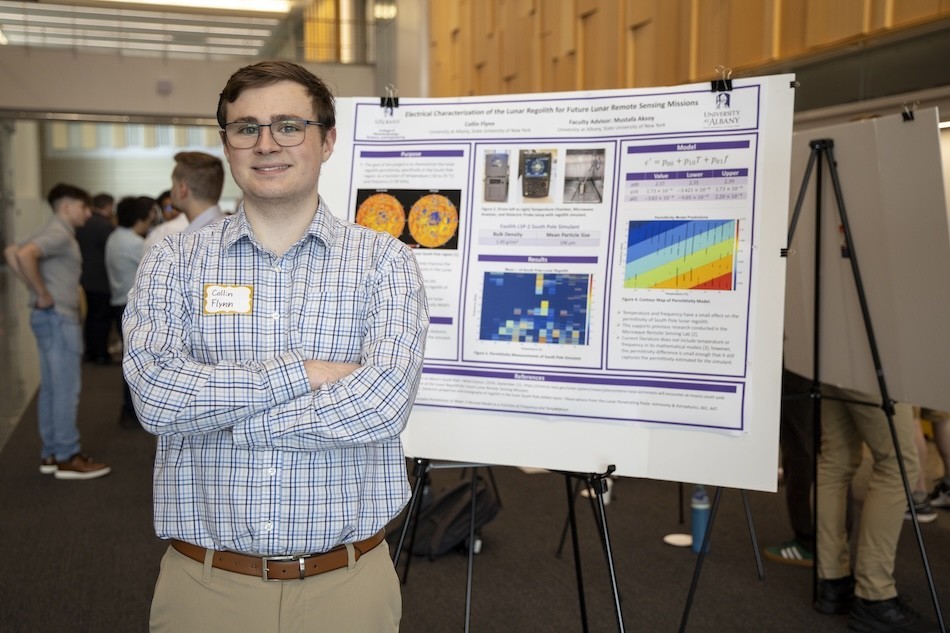
UAlbany sophomore Collin Flynn spent his summer studying the electrical properties of moon soil in support of ongoing efforts to get humans back to the moon, thanks to a 10-week research opportunity provided through the College of Nanotechnology, Science, and Engineering's Summer Undergraduate Research Program.
ResearchEnvironment & ClimateTechnology & Innovation#University at Albany#research#climate#decarbonization#advanced materials#innovation
Environment & ClimateQueen Mary University of London
The four projects, funded by the Leverhulme Trust and Wellcome , span all areas of the University and cover topics ranging from healthcare and artificial intelligence to waste management, pollution and sustainable technology. Funded by the Leverhulme Trust, the first of these DTPS will train the next generation of researchers to tackle the global waste crisis through interdisciplinary research and
Medical ResearchEnvironment & ClimateTechnology & Innovation#Queen Mary University of London#QMUL Latest News#Humanities And Social Sciences#medical research#clinical research#climate#decarbonization#advanced materials
The National Science Foundation renewed its funding for the AI-powered Earth system modeling center LEAP , aimed at improving Earth system projections through…
- KIMS, Pusan National University, Incheon National University, and Macquarie University Develop an Ultrasensitive Ammonia Gas Sensor Based on Eco-Friendly Perovskite Materials # Lead-free antimony-based perovskite enables highly sensitive ammonia detection down to 1 ppm # Newly identified sensing mechanism reveals reversible ammonia intercalation and enhanced electrical conductivity, offering pot
Environment & ClimateEnergy InfrastructureTechnology & Innovation#National Research Council of Science & Technology#GRIs News#Korea Institute of Materials Science (KIMS)#KIMS#climate#decarbonization#grid#energy security