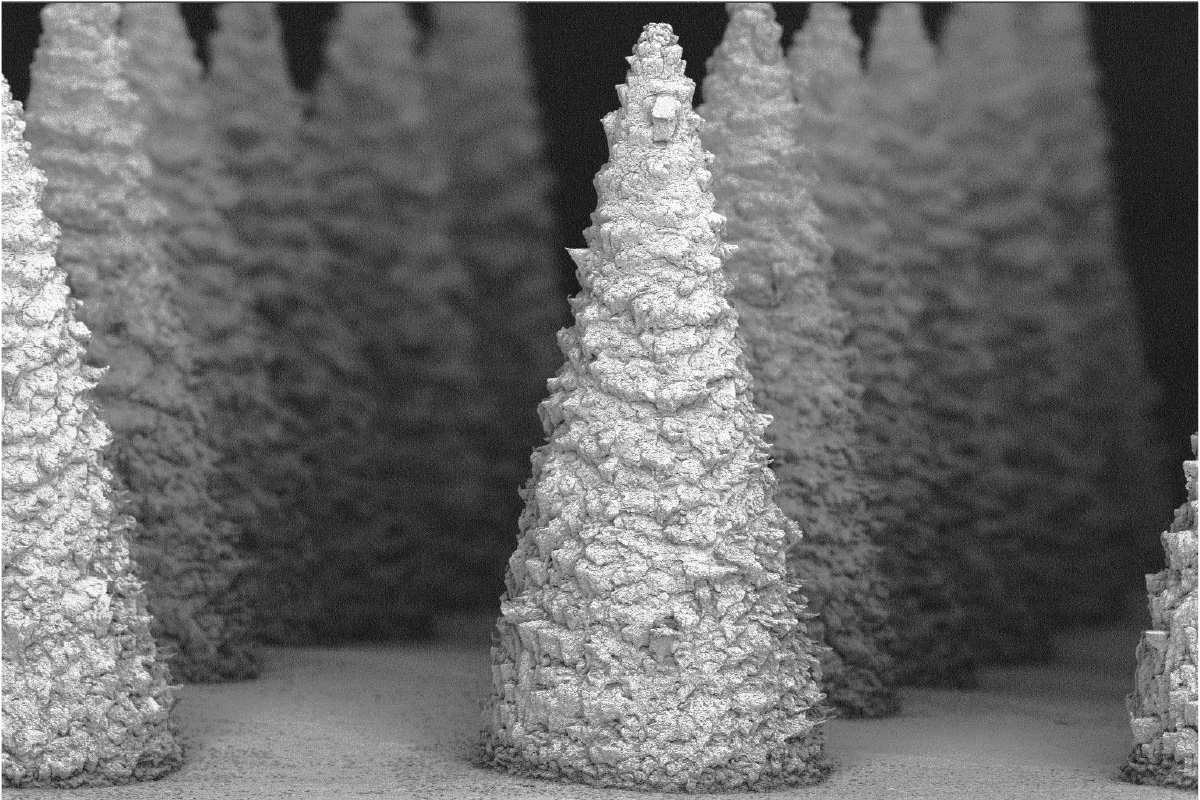
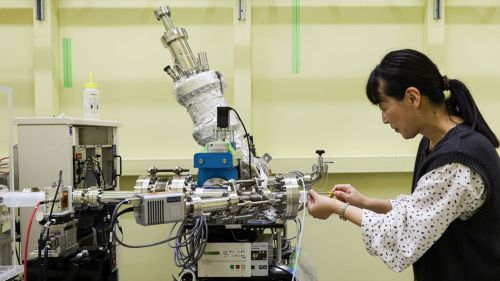
In partnership with A.J. Tuck Company, scientists at the U.S. Department of Energy’s (DOE) Oak Ridge National Laboratory (ORNL) have developed a new manufacturing approach that could simplify production of critical components for advanced nuclear reactors and other energy and defense applications. The method combines 3D printing and electroforming to produce complex, leak-free hot isostatic pressi
Energy InfrastructureTechnology & InnovationEnergy Policy#Oak Ridge National Laboratory#grid#energy security#advanced materials#innovation#energy policy
The Department of Energy's (DOE) Oak Ridge and Idaho national laboratories announced a collaboration to expand the domestic supply chain of industrial pressure vessels. Together, the labs will help enable wire arc 3D printing of these large components, which are critical for energy-related industries and capable of reliably withstanding harsh service conditions. The initiative boosts the rapid exp
Technology & InnovationEnergy Policy#Oak Ridge National Laboratory#advanced materials#innovation#energy policy
Internationally renowned radiopharmaceutical scientist Carolyn Anderson is joining the University of Tennessee and the Department of Energy’s Oak Ridge National Laboratory to advance targeted cancer therapies and strengthen Tennessee’s growing leadership in nuclear medicine.
Medical ResearchTechnology & Innovation#Oak Ridge National Laboratory#medical research#clinical research#advanced materials#innovation
The Department of Energy’s Oak Ridge National Laboratory scientists will lead nine and contribute to an additional 32 projects of the Genesis Mission , which aims to transform science in the U.S.
Researchers have successfully transmitted light particles containing quantum information through open air between Brookhaven Lab and Stony Brook University.
Space & AstronomyEnergy InfrastructureTechnology & Innovation#Brookhaven National Laboratory#astronomy#astrophysics#grid#energy security#advanced materials#innovation
Machine learning doesn’t replace human intelligence, but it can outlast human endurance, which makes it a very helpful tool for chemistry and material discovery. Scientists know the machine learning models can make predictions based on the vast reams of data it is trained on, but can it take it a step further and massively scale up testing out those predictions? “We already see that AI is powerful
Environment & ClimateTechnology & InnovationData & Computer Science#Washington University in St. Louis#Newsroom#climate#decarbonization#advanced materials#innovation
Funding from the National Science Foundation will expand the quantum workforce and advance research projects including more accurate atomic clocks and sensors for early detection of disease.
Medical ResearchTechnology & Innovation#University of Colorado Boulder#CU Boulder#CU Boulder Today#medical research#clinical research#advanced materials#innovation
Understanding and wielding the quantum properties of nature is the ambitious objective of eight research institutes that will collectively receive more than $290 million from the U.S. National Science…
Life SciencesTechnology & Innovation#U.S. National Science Foundation#genomics#biology#advanced materials#innovation
A quantum particle that crosses a ‘duality defect’ – a boundary between order and disorder – is never reflected. It always passes through, but it comes out changed: not a particle, but a spread-out, thread-like excitation that researchers compare to a wisp of fog.
Technology & Innovation#University of Cambridge#Sarah Collins#Quantum#magnetism#Quantum physics#advanced materials#innovation
Kidney disease is silent in its early stages, progressing without symptoms until the disease is advanced. Researchers in the McKelvey School of Engineering at Washington University in St. Louis, in collaboration with researchers at WashU Medicine and at Texas A&M University, have been developing a minimally invasive method to improve diagnosis in earlier stages. New research from the lab of Srikan
Medical ResearchEnvironment & ClimateTechnology & Innovation#Washington University in St. Louis#Newsroom#medical research#clinical research#climate#decarbonization#advanced materials#innovation
Developing safer solid-state batteries requires replacing flammable organic liquid electrolytes with solid-state electrolytes (SSEs) that can conduct ions well, remain stable, and have suitable mechanical properties. As interest in SSEs has grown, so has the volume of research in the field. However, the reported data remain scattered across the literature and vary widely in format and completeness
University of California San Diego researchers will lead one of the Department of Energy’s new Genesis Mission projects focused on accelerating fundamental physics and quantum computing by deploying intelligent AI agents.
ResearchTechnology & Innovation#University of California San Diego#UC San Diego#UCSD Today#advanced materials#innovation
Perched atop a seven-story building at the U.S. Department of Energy’s Brookhaven National Laboratory, the “Quantum Lighthouse” is a key pillar of the free-space optical (FSO) link spanning Brookhaven Lab, the State University of New York at Stony Brook and Yale University.
Space & AstronomyTechnology & Innovation#Brookhaven National Laboratory#astronomy#astrophysics#advanced materials#innovation#NSF–DOE Vera C. Rubin Observatory
Technology & InnovationChinese Academy of Sciences
In a study published in Nature on August 19, a team led by Profs. ZENG Changgan and CHENG Guanghui from the University of Science and Technology of China of the Chinese Academy of Sciences, along with Prof. JIANG Qingdong from Shanghai Jiao Tong University, Prof. Frank Wilczek from Massachusetts Institute of Technology, and other collaborators, for the first time, have achieved the enhancement of
Technology & InnovationQuantum#Chinese Academy of Sciences#Research News#Quantum#advanced materials#innovation
Technology & InnovationNational Research Council of Science & Technology
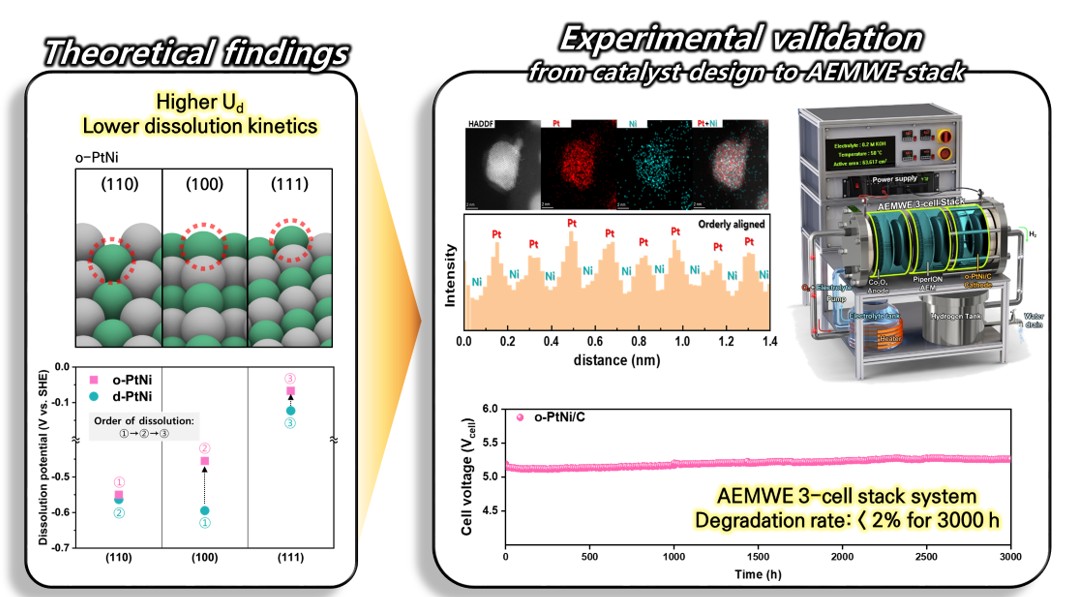
- KIMS Develops Highly Durable Platinum–Nickel Catalyst for Water Electrolysis # Atomic-Structure Control Suppresses Nickel Dissolution, Enabling a Highly Durable Water Electrolysis Catalyst to Operate for 3,000 Hours # Extended Catalyst Lifetime Expected to Reduce Green Hydrogen Production Costs and Support the Commercialization of Water Electrolysis Systems CHANGWON, South Korea — Korea Institut
Technology & Innovation#National Research Council of Science & Technology#GRIs News#Korea Institute of Materials Science (KIMS)#KIMS#advanced materials#innovation#Korea Institute of Materials Science
At the bottom of the ocean, optical fibers transmit telecommunications and internet data across the world. Waveguides make that feat possible by channeling and amplifying the light — and therefore the data within — over enormous distances. And the technology goes beyond undersea cables. Waveguiding optics are among the most important advances in photonics since the invention of the laser. They are fundamental to the structure of glass fiber lasers, which are used for high-power national security applications like counter-drone laser systems and missile defense. Now, researchers at
Technology & Innovation#Lawrence Livermore National Laboratory#Advanced Materials and Manufacturing#Defense#Engineering#Lasers and Optical S&T#Top Story#advanced materials#innovation