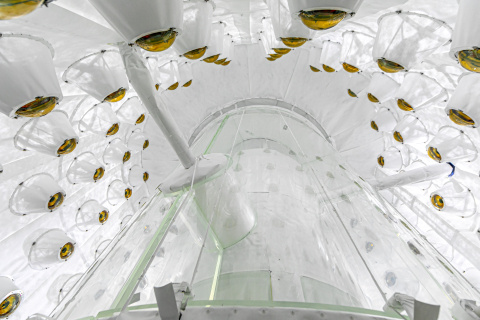
The LUX-ZEPLIN experiment observed an unusual particle interaction, but researchers will need more data to confirm.
FeaturesSpace & AstronomyParticle Physics#DOE#Office of Science#astronomy#astrophysics#Particle Physics#High Energy Physics#Lawrence Berkeley National Laboratory
The BESIII Collaboration, led by the Institute of High Energy Physics of the Chinese Academy of Sciences, has achieved the world's most precise measurement of the electric dipole moment (EDM) of the Lambda (Λ) hyperon using quantum-entangled Λ–anti-Λ pairs produced in J/ψ decays. The result improves the experimental sensitivity by about three orders of magnitude compared with the previous measurem
Space & AstronomyTechnology & InnovationParticle Physics#Chinese Academy of Sciences#Research News#Particle Physics#astronomy#astrophysics#advanced materials#innovation#Fermilab
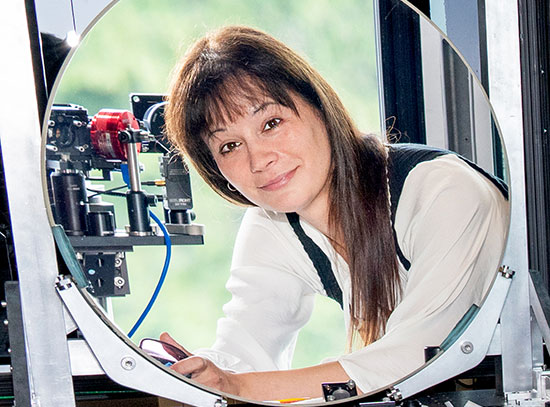
Perched atop a seven-story building at the U.S. Department of Energy’s Brookhaven National Laboratory, the “Quantum Lighthouse” is a key pillar of the free-space optical (FSO) link spanning Brookhaven Lab, the State University of New York at Stony Brook and Yale University.
Space & AstronomyTechnology & Innovation#Brookhaven National Laboratory#astronomy#astrophysics#advanced materials#innovation#NSF–DOE Vera C. Rubin Observatory
Researchers have successfully transmitted light particles containing quantum information through open air between Brookhaven Lab and Stony Brook University.
Space & AstronomyEnergy InfrastructureTechnology & Innovation#Brookhaven National Laboratory#astronomy#astrophysics#grid#energy security#advanced materials#innovation
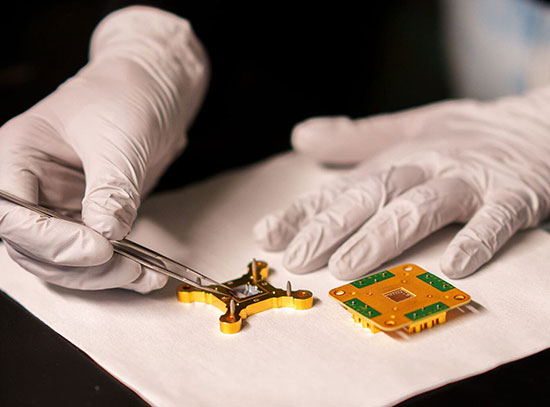
A partnership spanning chemistry, engineering, and quantum device design has yielded a millisecond-coherent transmon, proving that smarter materials may hold the key to the next quantum leap.
Space & AstronomyTechnology & Innovation#Brookhaven National Laboratory#astronomy#astrophysics#advanced materials#innovation